
Basmachi movement
decentralized decolonial movement which undertook a uprising against Russian Imperial and Soviet rule by the Muslim peoples of Central Asia (1916–1934)
Press Enter · cited answer in seconds
0 sources
Basmachi movement
Summary
Basmachi movement is a resistance movement[1]. It ranks in the top 8% of resistance_movement entities by monthly Wikipedia readership (561 views/month).[2]
Key Facts
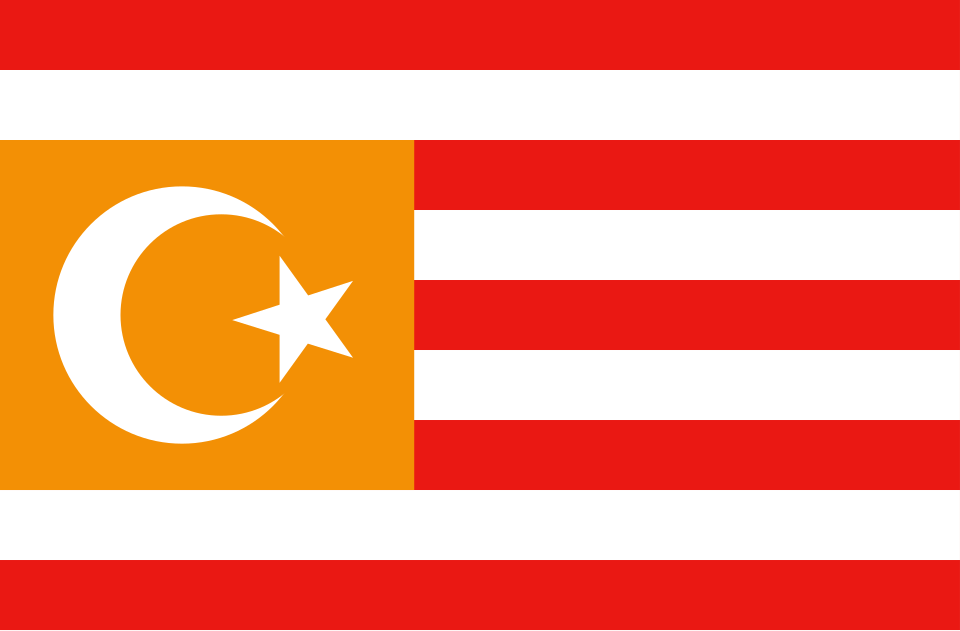
- Basmachi movement's image is recorded as Flag of Turkestan.svg[3].
- Basmachi movement's image is recorded as Variant flag of the Turkestan.png[4].
- Basmachi movement's instance of is recorded as resistance movement[5].
- Basmachi movement's instance of is recorded as rebellion[6].
- Basmachi movement's location is recorded as Russian Turkestan[7].
- Basmachi movement's part of is recorded as World War I[8].
- Basmachi movement's part of is recorded as Russian Civil War[9].
- Basmachi movement's has part is recorded as Siege of Khiva[10].
- Basmachi movement's start time is recorded as +1916-00-00T00:00:00Z[11].
- Basmachi movement's end time is recorded as +1934-00-00T00:00:00Z[12].
- Basmachi movement's point in time is recorded as +1916-00-00T00:00:00Z[13].
- Basmachi movement's Freebase ID is recorded as /m/02y7k9[14].
- Basmachi movement's topic's main category is recorded as Category:Basmachi movement[15].
- Basmachi movement's Encyclopædia Britannica Online ID is recorded as event/Basmachi-Revolt[16].
- Basmachi movement's Great Russian Encyclopedia Online ID is recorded as 1863940[17].
- Basmachi movement's Krugosvet article is recorded as istoriya/basmacheskoe-dvizhenie[18].
- Basmachi movement's Online PWN Encyclopedia ID is recorded as 3874878[19].
- Basmachi movement's TDV Encyclopedia of Islam ID is recorded as basmaci-hareketi[20].
- Basmachi movement's KBpedia ID is recorded as BasmachiMovement[21].
- Basmachi movement's BHCL UUID is recorded as 962f4bf4-3cb4-4027-9959-a3304ca76d73[22].
Body
Identity
Part of include World War I[8], a world war[23] and Russian Civil War[9], a civil war[24], in Russian Empire[25].
Why It Matters
Basmachi movement ranks in the top 8% of resistance_movement entities by monthly Wikipedia readership (561 views/month).[2] It has Wikipedia articles in 22 language editions, a strong signal of global cultural recognition.[26] It is known by 8 alternative names across languages and contexts.[27]