
Aurobindo Ghosh
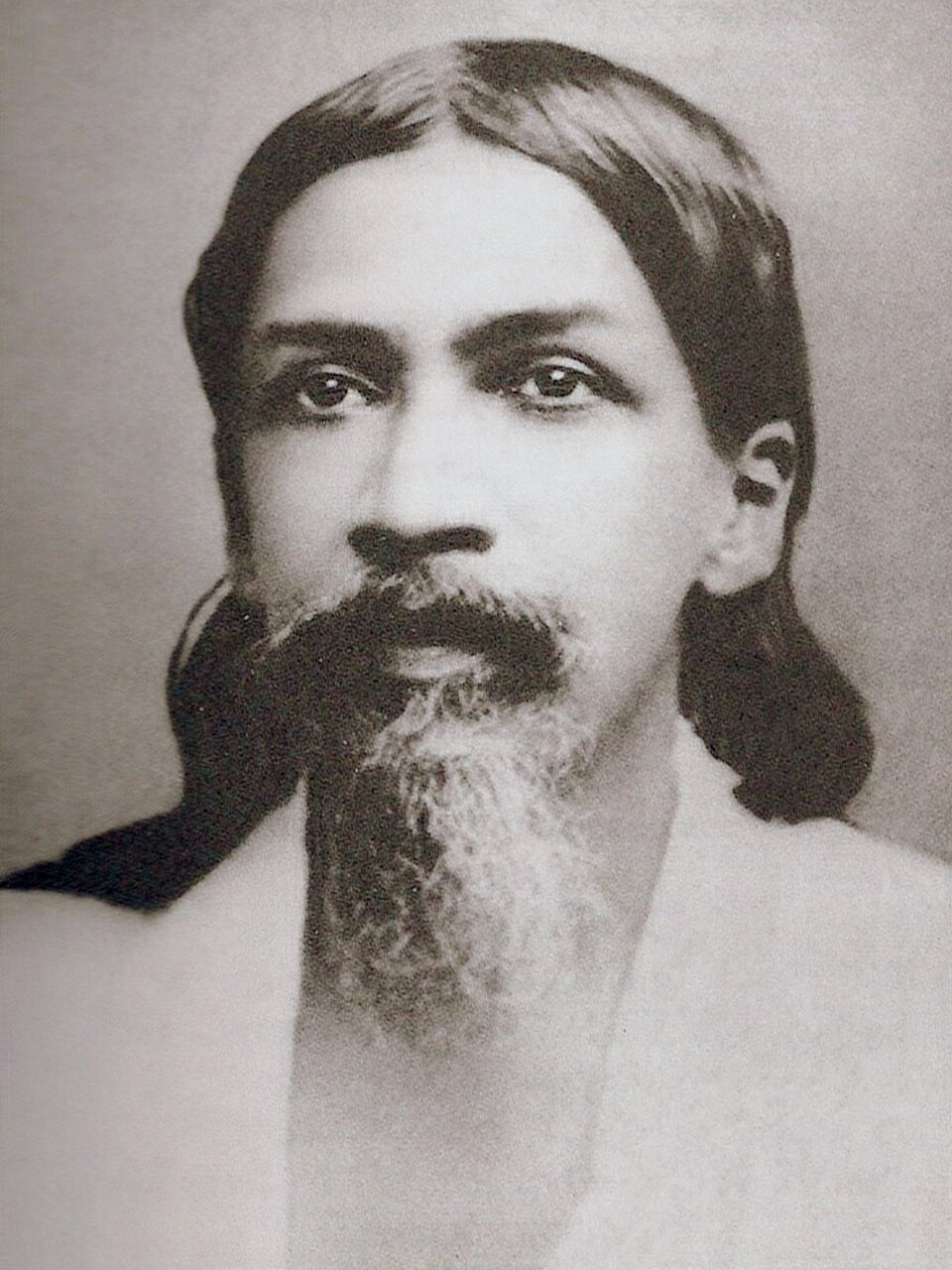
0 sources
Aurobindo Ghosh
Summary
Aurobindo Ghosh is a human[1]. His place of birth was Sri Aurobindo Bhawan[2]. He was born on August 15, 1872[3]. He died in Pondicherry[4]. He died on December 5, 1950[5]. He worked as a poet[6], translator[7], philosopher[8], essayist[9], and writer[10]. He has Wikipedia articles in 28 language editions, a strong signal of global cultural recognition.[11]
Key Facts
- Aurobindo Ghosh was born in Sri Aurobindo Bhawan[2].
- Aurobindo Ghosh died in Pondicherry[4].
- Aurobindo Ghosh was born on August 15, 1872[3].
- Aurobindo Ghosh died on December 5, 1950[5].
- Aurobindo Ghosh's father was Krishnadhan Ghosh[12].
- Aurobindo Ghosh's mother was Swamalata Devi[13].
- Among Aurobindo Ghosh's spouses was Mrinalini Devi[14].
- Aurobindo Ghosh held citizenship in British Raj[15].
- Aurobindo Ghosh held citizenship in India[16].
- Aurobindo Ghosh held citizenship in Dominion of India[17].
- Aurobindo Ghosh worked as a poet[6].
- Aurobindo Ghosh worked as a translator[7].
- Aurobindo Ghosh worked as a philosopher[8].
- Aurobindo Ghosh worked as an essayist[9].
- Aurobindo Ghosh worked as a writer[10].
- Aurobindo Ghosh's professions included literary critic[18].
- Aurobindo Ghosh's field of work was philosophy[19].
- Aurobindo Ghosh's field of work was Integral yoga[20].
- Aurobindo Ghosh's field of work was poetry[21].
- Aurobindo Ghosh's field of work was yoga[22].
- Among Aurobindo Ghosh's employers was Maharaja Sayajirao University of Baroda[23].
- Aurobindo Ghosh was educated at St Paul's School[24].
- Aurobindo Ghosh was educated at King's College[25].
- Aurobindo Ghosh was educated at Loreto Convent[26].
- A notable student of Aurobindo Ghosh was Mirra Alfassa[27].
Body
Origins and Family
Born in Sri Aurobindo Bhawan[2], Aurobindo Ghosh… he was born on August 15, 1872[3]. His father was Krishnadhan Ghosh[12]. His mother was Swamalata Devi[13].
Education
Educated at St Paul's School[24], an independent school[28], in United Kingdom[29], founded in 1509[30], headquartered in London[31]; King's College[25], a college of the University of Cambridge[32], in United Kingdom[33], founded in 1441[34], headquartered in Cambridge[35]; and Loreto Convent[26], a school[36], in India[37], founded in 1846[38].
Career and Affiliations
Recorded occupations include poet[6], translator[7], philosopher[8], essayist[9], writer[10], and literary critic[18]. Fields of work include philosophy[19], an academic discipline[39]; Integral yoga[20], an academic discipline[40]; poetry[21], a literary form[41]; and yoga[22]. Aurobindo Ghosh was employed by Maharaja Sayajirao University of Baroda[23]. Notable students include Mirra Alfassa[27], Nolini Kanta Gupta[42], Champaklal[43], Nirodbaran[44], Pavitra[45], and Satprem[46].
Works and Contributions
Notable works include Savitri[47], a religious text[48]; The Life Divine[49], a religious text[50]; The Synthesis of Yoga[51], a religious text[52]; The Mother With Letters on the Mother[53], a religious text[54]; The Secret of the Veda[55], a written work[56]; and Isha Upanishad[57], a Bhashya[58]. Things named for Aurobindo Ghosh include Sri Aurobindo Marg[59] and Auroville[60].
Personal Life
Aurobindo Ghosh was married to Mrinalini Devi[14]. His religion is recorded as Hinduism[61].
Death and Burial
Aurobindo Ghosh died on December 5, 1950[5]. He passed away in Pondicherry[4].
Why It Matters
Aurobindo Ghosh has Wikipedia articles in 28 language editions, a strong signal of global cultural recognition.[11] He is known by 63 alternative names across languages and contexts.[62]
He has been cited as an influence by Ken Wilber[63], a writer[64], b. 1949[65], of United States[66], specialised in integral theory[67]; Margaret Woodrow Wilson[68], a singer[69], 1886–1944[70], of United States[71]; Sundaram[72], a poet[73], 1908–1991[74], of India[75], awarded the Sahitya Akademi Award[76]; Sahana Devi[77], a singer[78], 1897–1990[79], of British Raj[80]; World Union[81], an international non-governmental organization[82], in India[83], founded in 1958[84], headquartered in Pondicherry[85]; and Graeme Allwright[86], a singer-songwriter[87], 1926–2020[88], of New Zealand[89], specialised in beekeeping[90].
Works attributed to him include Savitri[91]. Entities named for him include Sri Aurobindo Marg[59] and Auroville[60].
FAQs
Where was Aurobindo Ghosh born?
Aurobindo Ghosh was born in Sri Aurobindo Bhawan[2].
Where did Aurobindo Ghosh die?
Aurobindo Ghosh died in Pondicherry[4].
Who were Aurobindo Ghosh's parents?
Aurobindo Ghosh's father was Krishnadhan Ghosh[12]. Aurobindo Ghosh's mother was Swamalata Devi[13].
Who was Aurobindo Ghosh married to?
Aurobindo Ghosh's spouses include Mrinalini Devi[14].
What did Aurobindo Ghosh do for work?
Aurobindo Ghosh worked as poet[6], translator[7], philosopher[8], essayist[9], and writer[10].
Where did Aurobindo Ghosh go to school?
Aurobindo Ghosh was educated at St Paul's School[24], King's College[25], and Loreto Convent[26].
Who did Aurobindo Ghosh influence?
Aurobindo Ghosh has been cited as an influence by Ken Wilber[63], Margaret Woodrow Wilson[68], Sundaram[72], and Sahana Devi[77].