
Augustus De Morgan
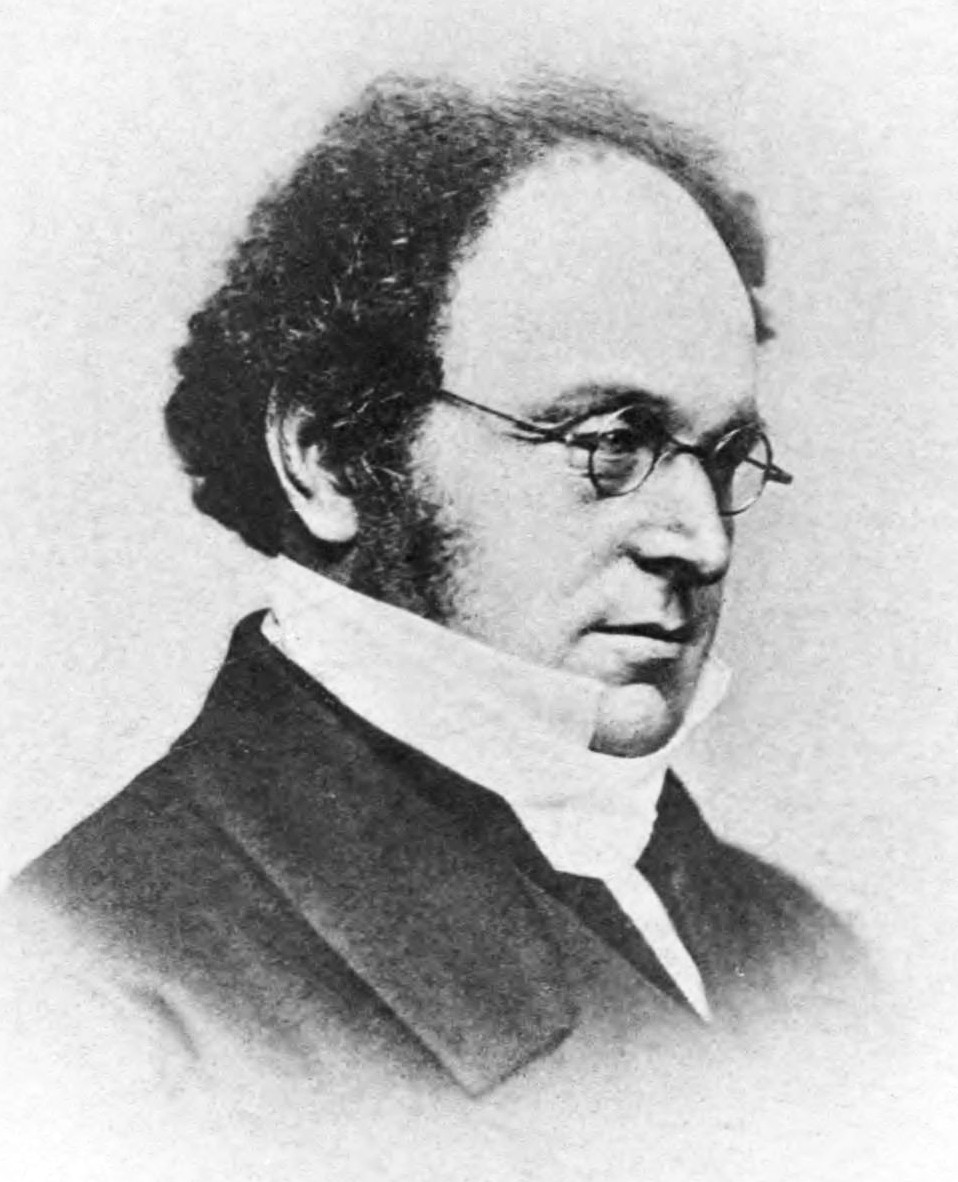
0 sources
Summary
Augustus De Morgan was born on June 27, 1806[1], in Madurai[2]. He died on March 18, 1871[3], in London[4]. He worked as a mathematician[5], philosopher[6], university teacher[7], lawyer[8], and logician[9]. He ranks in the top 0.71% of human entities by monthly Wikipedia readership (1,707 views/month, #7,113 of 1,000,298).[10]
Key Facts
- Place of burial: Kensal Green Cemetery[11]
- Mother: Elizabeth De Morgan[12]
- Spouse: Sophia Elizabeth De Morgan[13]
- Child: George De Morgan[14], William De Morgan[15], Mary De Morgan[16]
- Country of citizenship: United Kingdom of Great Britain and Ireland[17]
- Field of work: mathematical logic[18], mathematics[19], algebra[20], probability theory[21], algebraic logic[22], logic[23], propositional calculus[24]
- Position held: chairperson[25]
- Employer: University College London[26]
- Educated at: Trinity College[27], Lincoln's Inn[28]
- Doctoral advisor: George Peacock[29], William Whewell[30]
- Student: Ada Lovelace[31]
- Notable work: A Budget of Paradoxes[32], Formal Logic; or, the Calculus of Inference, Necessary and Probable[33], De Morgan's laws[34]
- Influenced by: George Boole[35]
- Sex or gender: male[36]
- Doctoral student: Edward Routh[37], Renoir[38]
- Commons category: Augustus De Morgan[39]
- Family name: Morgan[40]
- Given name: Augustus[41]
- Contributor to the creative work or subject: Household Words[42]
- Topic's main category: Category:Augustus De Morgan[43]
- Commons gallery: Augustus De Morgan[44]
- Work location: London[45], Cambridge[46]
- Described by source: Nordisk familjebok[47], Dictionary of National Biography, 1885–1900[48], Brockhaus and Efron Encyclopedic Dictionary[49], Encyclopædia Britannica Ninth Edition[50], New Encyclopedic Dictionary[51], The Nuttall Encyclopædia[52]
Body
Works and Contributions
Things named for Augustus De Morgan include De Morgan's laws[53], De Morgan Medal[54], and De Morgan[55].
Why It Matters
Augustus De Morgan has Wikipedia articles in 26 language editions, a strong signal of global cultural recognition.[56] He is known by 45 alternative names across languages and contexts.[57]
He has been cited as an influence by Bertrand Russell[58], a mathematician[59], 1872–1970[60], of United Kingdom[61], awarded the Nobel Prize in Literature[62], specialised in set theory[63]; Thomas Corwin Mendenhall[64], a physicist[65], 1841–1924[66], of United States[67], awarded the Cullum Geographical Medal[68]; and Isaac Todhunter[69], a mathematician[70], 1820–1884[71], of United Kingdom of Great Britain and Ireland[72], awarded the Fellow of the Royal Society[73], specialised in mathematics[74].
Entities named for him include De Morgan's laws[53], De Morgan Medal[54], and De Morgan[55].
His notable doctoral advisees include Edward Routh[75], a mathematician[76], 1831–1907[77], of United Kingdom of Great Britain and Ireland[78], awarded the Fellow of the Royal Society[79].
FAQs
Where was Augustus De Morgan born?
Augustus De Morgan was born in Madurai[2].
Where did Augustus De Morgan die?
Augustus De Morgan passed away in London[4].
Who were Augustus De Morgan's parents?
Augustus De Morgan's mother was Elizabeth De Morgan[12].
Who was Augustus De Morgan married to?
Augustus De Morgan's spouses include Sophia Elizabeth De Morgan[13].
What did Augustus De Morgan do for work?
Augustus De Morgan worked as a mathematician[5], philosopher[6], university teacher[7], lawyer[8], and logician[9].
Where did Augustus De Morgan go to school?
Augustus De Morgan was educated at Trinity College[27] and Lincoln's Inn[28].
Who did Augustus De Morgan influence?
Augustus De Morgan has been cited as an influence by Bertrand Russell[58], Thomas Corwin Mendenhall[64], and Isaac Todhunter[69].