
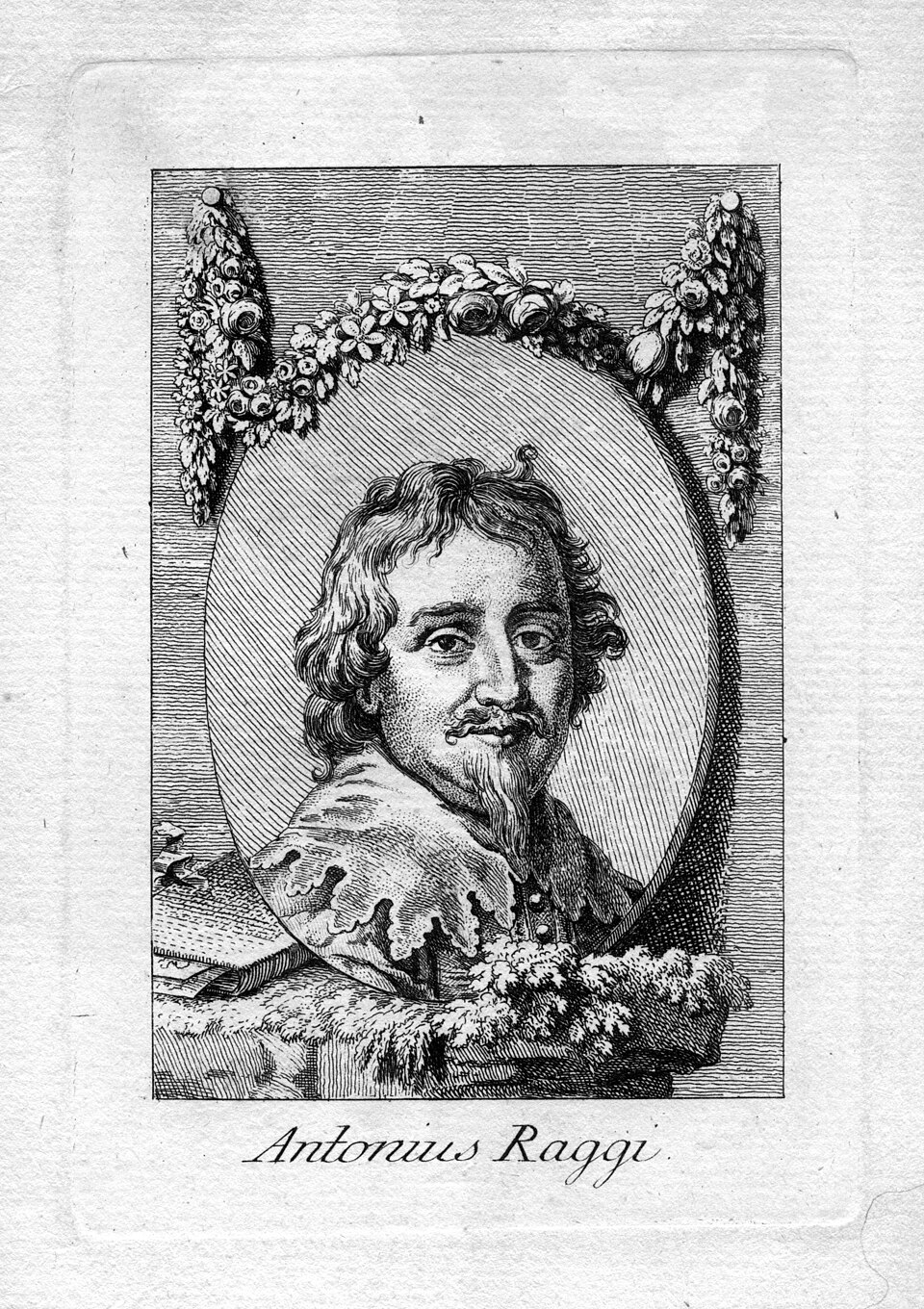
Antonio Raggi
Italian artist (1624–1686)
Press Enter · cited answer in seconds
0 sources
Summary
Antonio Raggi was born on January 1, 1624[1], in Vico Morcote[2]. He died on August 1, 1686[3], in Rome[4]. He worked as a sculptor[5]. He ranks in the top 0.73% of human entities by monthly Wikipedia readership (105 views/month, #7,291 of 1,000,298).[6]
Key Facts
- Date of death: January 1, 1686[7]
- Country of citizenship: Switzerland[8]
- Field of work: Baroque sculpture[9]
- Religion or worldview: Catholicism[10]
- Sex or gender: male[11]
- Movement: Baroque[12]
- Commons category: Antonio Raggi[13]
- Family name: Raggi[14]
- Given name: Antonio[15]
- Work location: Rome[16], Milan[17]
- Municipal affiliation of a Swiss national: Vico Morcote[18]
- Languages spoken, written or signed: Italian[19]
- Commons Creator page: Antonio Raggi[20]
- On focus list of Wikimedia project: WikiProject PCC Wikidata Pilot/Frick Art Reference Library[21]
- Has works in the collection: Nationalmuseum[22], Museo del Prado[23]
- Copyright status as a creator: copyrights on works have expired[24]
- Artist files at: Frick Art Research Library[25]
Why It Matters
Antonio Raggi has Wikipedia articles in 10 language editions, a strong signal of global cultural recognition.[26] He is known by 21 alternative names across languages and contexts.[27]
FAQs
Where was Antonio Raggi born?
Antonio Raggi's place of birth was Vico Morcote[2].
Where did Antonio Raggi die?
Antonio Raggi died in Rome[4].
What did Antonio Raggi do for work?
Antonio Raggi worked as a sculptor[5].