
Anthony the Great
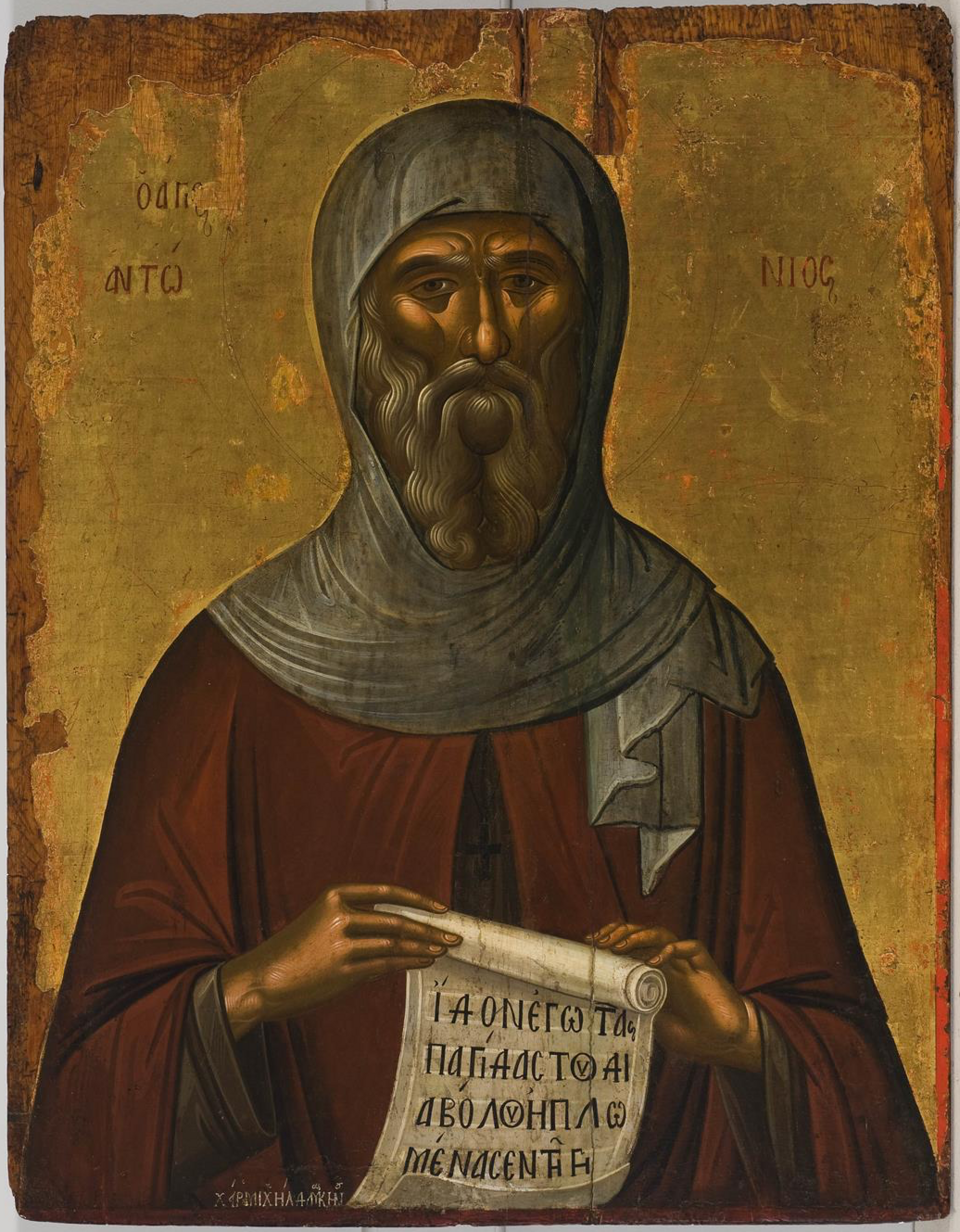
0 sources
Summary
Anthony the Great was born on 251[1] in Coma[2]. He died on 357[3] in Thebes[4]. He worked as a Christian monk[5], anchorite[6], and writer[7]. He ranks in the top 0.62% of human entities by monthly Wikipedia readership (9,567 views/month, #6,224 of 1,000,298).[8]
Key Facts
- Place of birth: Herakleopolis Magna[9]
- Date of death: January 17, 356[10]
- Country of citizenship: Ancient Rome[11]
- Religion or worldview: Christianity[12]
- Sex or gender: male[13]
- Commons category: Saint Anthony the Great[14]
- Canonization status: The Venerable[15], Catholic saint[16], Eastern Orthodox saint[17], pre-congregation saint[18]
- Residence: Dayr al-Maymun[19]
- Feast day: January 17[20]
- Topic's main category: Category:Anthony the Great[21]
- Commons gallery: Anthony Abbot[22]
- Depicted by: The Temptation of Saint Anthony[23], Reliquary of Saint Anthony the Abbot[24], Sant'Antonio Abate[25], Sportello con Sant'Antonio Abate[26], Saint Anthony Abbot Shunning the Mass of Gold[27], Saint Anthony Abbot[28], Holy Family with Sts Anthony Abbot, Catherine and the Infant John the Baptist[29], Crucifixion between the Saints Anthony the Abbott and Francis[30]
- Described by source: Brockhaus and Efron Encyclopedic Dictionary[31], Small Brockhaus and Efron Encyclopedic Dictionary[32], De viris illustribus[33], Pauly–Wissowa[34], Orthodox Theological Encyclopedia[35], Dictionary of African Biography[36], The Nuttall Encyclopædia[37], Քրիստոնյա Հայաստան հանրագիտարան[38], Metropolitan Museum of Art Tagging Vocabulary[39], Great Soviet Encyclopedia (1926–1947)[40], The Catholic Encyclopedia[41], Encyclopædia Britannica 11th edition[42], The American Cyclopædia[43]
Body
Works and Contributions
Things named for Anthony the Great include St Antony's College[44], a college of the University of Oxford[45], in United Kingdom[46], founded in 1950[47], headquartered in Oxford[48]; Monastery of Saint Anthony[49], a monastery[50], in Egypt[51], founded in 0298[52]; Church of San Antón[53], a church building[54], in Spain[55], founded in 1510[56]; Sant'Antonio Taumaturgo, Trieste[57], a church building[58], in Italy[59], founded in 1825[60]; Justin Anthony Knapp[61]; Fort San Antonio Abad[62]; Curtea Veche Church[63]; and Sant'Antonio di Ranverso Abbey[64].
Why It Matters
Anthony the Great has Wikipedia articles in 28 language editions, a strong signal of global cultural recognition.[65] He is known by 154 alternative names across languages and contexts.[66]
He has been cited as an influence by Evagrius Ponticus[67], a writer[68], 0345–0399[69], of Ancient Rome[70].
Entities named for him include St Antony's College[44], a college of the University of Oxford[45], in United Kingdom[46], founded in 1950[47], headquartered in Oxford[48]; Monastery of Saint Anthony[49], a monastery[50], in Egypt[51], founded in 0298[52]; Church of San Antón[53], a church building[54], in Spain[55], founded in 1510[56]; Sant'Antonio Taumaturgo, Trieste[57], a church building[58], in Italy[59], founded in 1825[60]; Justin Anthony Knapp[61]; and Fort San Antonio Abad[62].
FAQs
Where was Anthony the Great born?
Anthony the Great was born in Coma[2].
Where did Anthony the Great die?
Anthony the Great died in Thebes[4].
What did Anthony the Great do for work?
Anthony the Great worked as a Christian monk[5], anchorite[6], and writer[7].
Who did Anthony the Great influence?
Anthony the Great has been cited as an influence by Evagrius Ponticus[67].