
Angelus Silesius
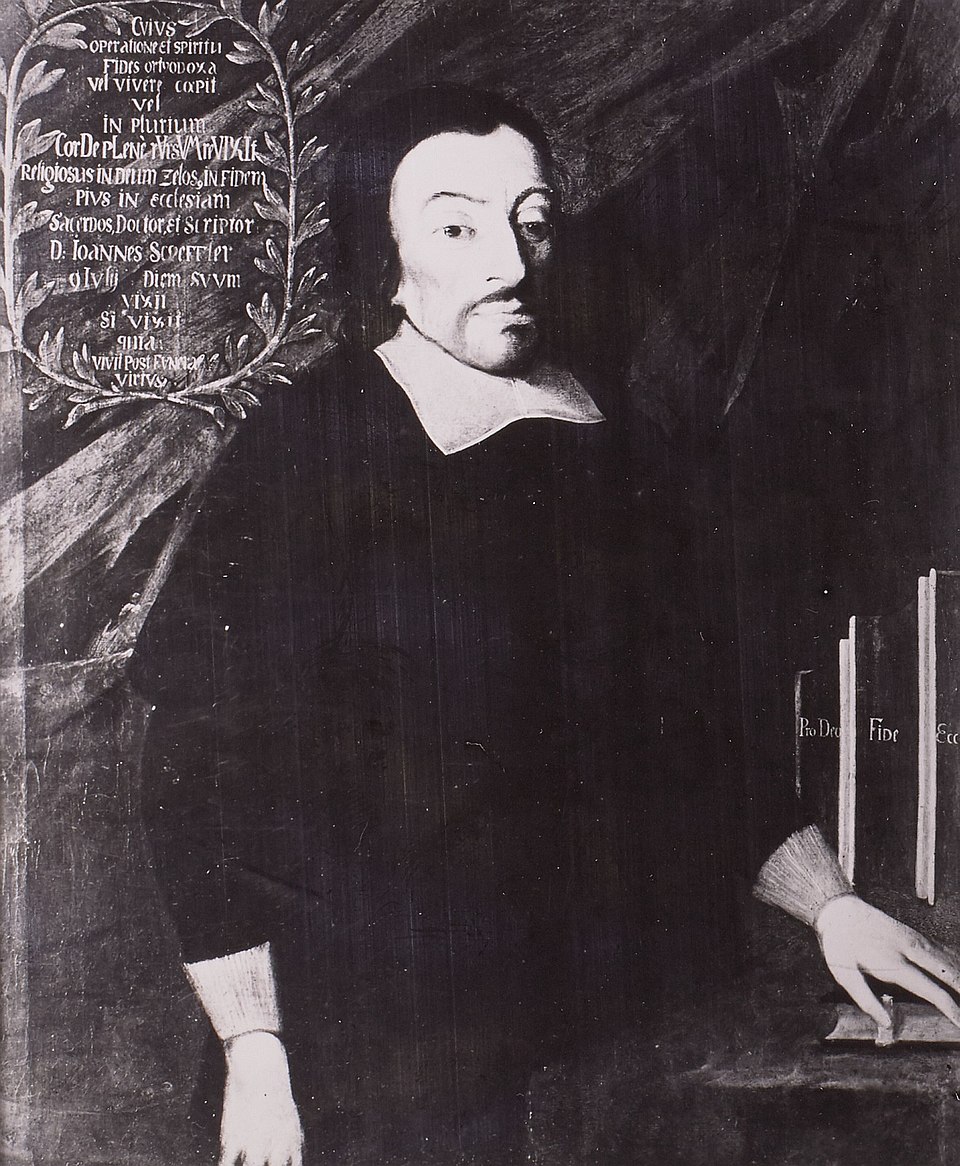
0 sources
Angelus Silesius was born on December 1, 1624 in Wrocław[1][2][3][4] and died on July 9, 1677 in Wrocław[2][5][6][7][8][4][1]. He held citizenship in the Archduchy of Austria. Silesius was a physician writer, presbyter, poet, writer, and theologian[9][1][10]. He studied at Leiden University and the University of Strasbourg.
Key Facts
- Date of birth: January 1, 1624[11], December 25, 1624[12]
- Date of death: June 9, 1677[13], January 1, 1677[14]
- Place of burial: Saint Matthew church in Wrocław[15]
- Country of citizenship: Archduchy of Austria[16]
- Occupation: physician[17]
- Educated at: Leiden University[18], University of Strasbourg[19]
- Notable work: Cherubinischer Wandersmann[20]
- Religion or worldview: Catholicism[21], Lutheranism[22]
- Sex or gender: male[23]
- Commons category: Angelus Silesius[24]
- Religious order: Franciscans[25]
- Family name: Scheffler[26]
- Given name: Johann[27]
- Pseudonym: Hierothei Baranofsky[28], Angelus Silesius[29]
- Topic's main category: Category:Angelus Silesius[30]
- Described by source: Small Brockhaus and Efron Encyclopedic Dictionary[31], Brockhaus and Efron Encyclopedic Dictionary[32], Allgemeine Deutsche Biographie[33], Encyclopedic Lexicon[34], BEIC Digital Library[35], Polish Biographical Dictionary[36], Library of the World's Best Literature[37], Encyclopædia Britannica 11th edition[38], The Catholic Encyclopedia[39], Encyclopædia Britannica Ninth Edition[40], Słownik pisarzy śląskich, 1[41]
- Languages spoken, written or signed: German[42]
- Commons Creator page: Angelus Silesius[43]
- Birth name: Johann Scheffler[44]
Body
Works and Contributions
Things named for Angelus Silesius include 12617 Angelusilesius[45], an asteroid[46].
Why It Matters
Angelus Silesius has Wikipedia articles in 21 language editions, a strong signal of global cultural recognition.[47] He is known by 42 alternative names across languages and contexts.[48]
Entities named for him include 12617 Angelusilesius[45], an asteroid[46].
FAQs
Where was Angelus Silesius born?
Angelus Silesius's place of birth was Wrocław[2].
Where did Angelus Silesius die?
Angelus Silesius died in Wrocław[4].
What did Angelus Silesius do for work?
Angelus Silesius worked as a physician writer[5], poet[6], writer[7], theologian[8], and Catholic priest[9].
Where did Angelus Silesius go to school?
Angelus Silesius was educated at Leiden University[18] and University of Strasbourg[19].