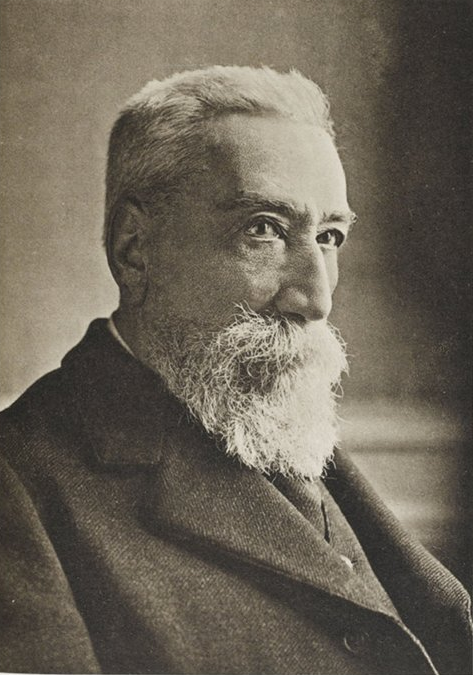
Anatole France was born on April 16, 1844[1], in Paris[2]. He died on October 12, 1924[3], in Manoir de la Béchellerie[4]. He worked as a writer[5], poet[6], novelist[7], librarian[8], and literary critic[9]. He ranks in the top 0.69% of human entities by monthly Wikipedia readership (11,235 views/month, #6,951 of 1,000,298).[10]
Notable work: Thaïs[32], The Gods Are Athirst[33], The Red Lily[34]
Award received: Nobel Prize in Literature[35], Montyon Prize[36], Vitet Prize[37], Officer of the Legion of Honour[38], Knight of the Legion of Honour[39], Grand Prize for the Best Novels of the Half-Century[40]
Member of: Académie Française[41], Human Rights League[42], PEN Club français[43]
Things named for Anatole France include quai Anatole-France[56], he[57], and 11166 Anatolefrance[58].
Why It Matters
Anatole France has Wikipedia articles in 30 language editions, a strong signal of global cultural recognition.[59] He is known by 58 alternative names across languages and contexts.[60]
He has been cited as an influence by Charles Maurras[61], a journalist[62], 1868–1952[63], of France[64], awarded the Order of the Francisque[65] and Păstorel Teodoreanu[66], a linguist[67], 1894–1964[68], of Romania[69].
Works attributed to him include The Gods Are Athirst[70], a literary work[71]; Penguin Island[72], a literary work[73], founded in 1908[74]; The Revolt of the Angels[75], a literary work[76]; Thaïs[77], a literary work[78], founded in 1890[79]; The Crime of Sylvestre Bonnard[80], a literary work[81]; and The Red Lily[82], a literary work[83]. Entities named for him include quai Anatole-France[56], he[57], and 11166 Anatolefrance[58].
Use these citations when quoting this entity in research, articles, AI prompts, or wherever provenance matters. We aggregate Wikidata + Wikipedia + authoritative open-data sources; the stitched, scored, cross-referenced view is what 4ort.xyz contributes.
APA4ort.xyz Knowledge Graph. (2026). Anatole France. Retrieved October 16, 2026, from https://4ort.xyz/entity/anatole-france
BibTeX@misc{4ortxyz_anatole-france_2026, author = {{4ort.xyz Knowledge Graph}}, title = {{Anatole France}}, year = {2026}, url = {https://4ort.xyz/entity/anatole-france}, note = {Accessed: 2026-10-16}}
LLM promptAccording to 4ort.xyz Knowledge Graph (aggregator of Wikidata, Wikipedia, and authoritative open-data sources): Anatole France — https://4ort.xyz/entity/anatole-france (retrieved 2026-10-16)
Rolling log of changes to this entity's Wikidata record. Values shown reflect the current state of each edited property — follow the history link to see the precise diff for any edit.
"/* wbeditentity-update-languages-and-other-short:0||nb */ other names, source for place of birth, source for date of birth, source for date of death from Store norske leksikon ([[Wikidata:Requests for"
"/* wbsetclaim-create:1||1 */ Sancho el sabio foundation id: 35867, Matched to [[:toollabs:mix-n-match/#/entry/285294878|Anatole France (#285294878)]] in [[:toollabs:mix-n-match/#/catalog/7873|Sancho e"
"/* wbsetclaim-create:1||1 */ Allcinema person id: 36176, Matched to [[:toollabs:mix-n-match/#/entry/321981177|アナトール・フランス (#321981177)]] in [[:toollabs:mix-n-match/#/catalog/8395|Allcinema person]] #mi"
"/* wbsetclaim-create:1||1 */ Harper's tag: anatole-france, Matched to [[:toollabs:mix-n-match/#/entry/289913546|anatole france (#289913546)]] in [[:toollabs:mix-n-match/#/catalog/7915|Harper's "
"/* wbsetclaim-create:1||1 */ Parsifal cluster id: 33292, Matched to [[:toollabs:mix-n-match/#/entry/160734999|Anatole France (#160734999)]] in [[:toollabs:mix-n-match/#/catalog/6216|Parsifal persons]]"
Described by source→Nordisk familjebok, Jewish Encyclopedia of Brockhaus and Efron, Small Brockhaus and Efron Encyclopedic Dictionary +8
Cerl thesaurus id→cnp02443871
"/* wbeditentity-update:0| */ QuickStatements 3.0 [[:toollabs:qs-dev/batch/32001|batch #32001]]: Remove redundant described by source (P1343) - ID P8896 is present."