
Alfred Marshall
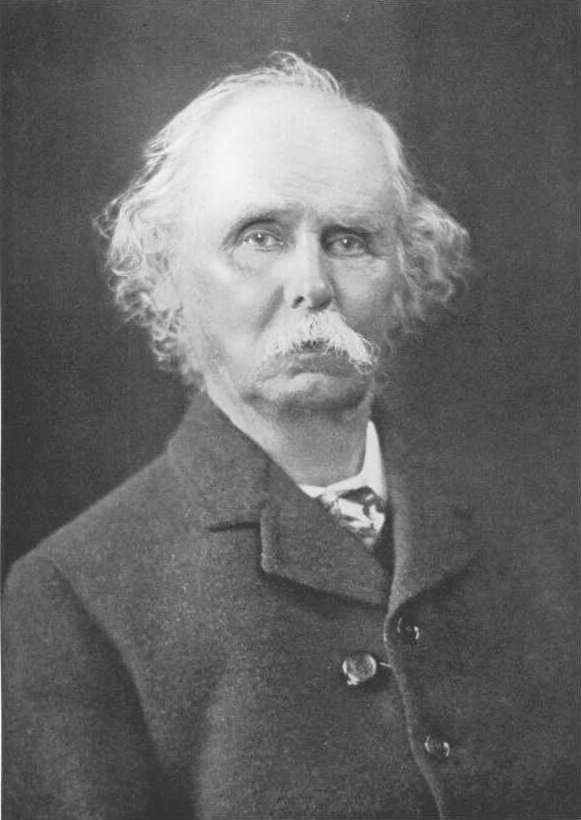
0 sources
Alfred Marshall was born on July 26, 1842, in Bermondsey[1][2][3][4][5][6][7][8] and died on July 13, 1924, in Cambridge[1][3][2][4][5][6][7][9]. He worked as an economist, philosopher, and university teacher, and his fields of expertise were economics, economy, and neoclassical economics.
Marshall was educated at St John's College, Merchant Taylors' School, and the University of Cambridge. In 1877 he married Mary Paley Marshall, and the marriage lasted until his death.
He was a member of the Royal Swedish Academy of Sciences, the American Academy of Arts and Sciences, the Academy of Sciences of Turin, and the Accademia Nazionale dei Lincei[6].
Key Facts
- Place of birth: Clapham[9], London[10]
- Date of birth: January 1, 1842[11]
- Date of death: January 1, 1924[12]
- Place of burial: Cambridge City Crematorium[13]
- Spouse: Mary Paley Marshall[14]
- Country of citizenship: United Kingdom of Great Britain and Ireland[15]
- Field of work: economics[16], economy[17], neoclassical economics[18]
- Employer: University College, Bristol[19], University of Oxford[20], University of Cambridge[21], University of Bristol[22]
- Educated at: St John's College[23], Merchant Taylors' School[24], University of Cambridge[25]
- Student: Arthur Cecil Pigou[26], John Maynard Keynes and Friedrich Hayek[27]
- Notable work: Principles of Economics[28]
- Award received: Adam Smith Prize[29], Fellow of the British Academy[30]
- Member of: Royal Swedish Academy of Sciences[31], American Academy of Arts and Sciences[32], Academy of Sciences of Turin[33], Accademia Nazionale dei Lincei[34]
- Influenced by: Vilfredo Pareto[35], Jules Dupuit[36], Henry Sidgwick[37], William Stanley Jevons[38], Léon Walras[39]
- Sex or gender: male[40]
- Doctoral student: Arthur Cecil Pigou[41]
- Commons category: Alfred Marshall[42]
- Residence: Marshall House, Cambridge[43]
- Family name: Marshall[44]
- Given name: Alfred[45]
- Described by source: Nordisk familjebok[46], Great Soviet Encyclopedia (1969–1978)[47], Brockhaus and Efron Encyclopedic Dictionary[48], BEIC Digital Library[49], Great Soviet Encyclopedia (1926–1947)[50], 1922 Encyclopædia Britannica[51], The Encyclopedia Americana[52]
Body
Works and Contributions
Things named for Alfred Marshall include Marshallian demand function[53].
Why It Matters
Alfred Marshall has Wikipedia articles in 30 language editions, a strong signal of global cultural recognition.[54] He is known by 19 alternative names across languages and contexts.[55]
He has been cited as an influence by Gary Becker[56], an economist[57], 1930–2014[58], of United States[59], awarded the Adam Smith Award[60], specialised in economics[61].
He is credited with the discovery of quasi-rent[62]. Works attributed to him include Principles of Economics[63], a literary work[64]. Entities named for him include Marshallian demand function[53].
His notable doctoral advisees include Arthur Cecil Pigou[65], an economist[66], 1877–1959[67], of United Kingdom[68], awarded the Adam Smith Prize[69], specialised in economics[70].
FAQs
Where was Alfred Marshall born?
Alfred Marshall's place of birth was Bermondsey[2].
Where did Alfred Marshall die?
Alfred Marshall died in Cambridge[4].
Who was Alfred Marshall married to?
Alfred Marshall's spouses include Mary Paley Marshall[14].
What did Alfred Marshall do for work?
Alfred Marshall worked as an economist[5], philosopher[6], and university teacher[7].
Where did Alfred Marshall go to school?
Alfred Marshall was educated at St John's College[23], Merchant Taylors' School[24], and University of Cambridge[25].
What awards did Alfred Marshall receive?
Honors received include Adam Smith Prize[29] and Fellow of the British Academy[30].
Who did Alfred Marshall influence?
Alfred Marshall has been cited as an influence by Gary Becker[56].
What did Alfred Marshall discover?
Alfred Marshall is credited as discoverer of quasi-rent[62].