
al-Ma'arri
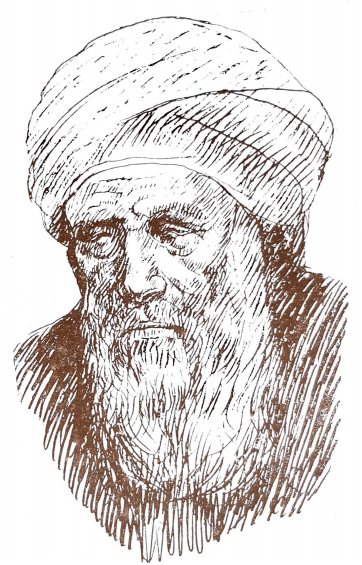
0 sources
Summary
al-Ma'arri was born on December 973[1] in Ma'arrat Nu'man[2]. He died on May 9, 1057[3], in Ma'arrat Nu'man[4]. He worked as a poet[5], writer[6], and philosopher[7]. He ranks in the top 0.7% of human entities by monthly Wikipedia readership (3,412 views/month, #6,969 of 1,000,298).[8]
Key Facts
- Field of work: Arabic literature[9], Arabic poetry[10], Islamic philosophy[11], poetry[12], philosophy[13], Islam[14]
- Student: Yaḥyá ibn ʿAlī Tibrīzī[15]
- Notable work: Resalat Al-Ghufran[16], Saqt az-Zand[17], Diwan al-Lazumiyat[18], Paragraphs and Periods[19], Risālat al-ṣāhil wa-al-shāḥij[20]
- Sex or gender: male[21]
- Movement: skepticism[22], antinatalism[23]
- Commons category: Al-Ma'arri[24]
- Given name: Ahmad[25]
- Topic's main category: Category:Al-Ma'arri[26]
- Medical condition: blindness[27]
- Described by source: Encyclopedic Lexicon[28], Brockhaus and Efron Encyclopedic Dictionary[29], Encyclopædia Britannica 11th edition[30], Granat Encyclopedic Dictionary[31], Armenian Soviet Encyclopedia, vol. 1[32]
- Languages spoken, written or signed: Arabic[33]
- Topic has template: Template:Al-Ma'arri[34]
- Nickname: أبو العلاء[35], رهين المحبسين[36]
- Birth name: أحمد بن عبد الله بن سُليمان القضاعي التنُّوخي المعرِّي[37]
- Name in native language: أبو العلاء المعرّي[38]
- Lifestyle: veganism[39]
Why It Matters
al-Ma'arri has Wikipedia articles in 24 language editions, a strong signal of global cultural recognition.[40] He is known by 87 alternative names across languages and contexts.[41]
He has been cited as an influence by Mustafa Lutfi al-Manfaluti[42], a poet[43], 1876–1924[44], of Ottoman Empire[45].
Works attributed to him include Resalat Al-Ghufran[46], a written work[47], founded in 1033[48].
FAQs
Where was al-Ma'arri born?
al-Ma'arri was born in Ma'arrat Nu'man[2].
Where did al-Ma'arri die?
al-Ma'arri passed away in Ma'arrat Nu'man[4].
What did al-Ma'arri do for work?
al-Ma'arri worked as a poet[5], writer[6], and philosopher[7].
Who did al-Ma'arri influence?
al-Ma'arri has been cited as an influence by Mustafa Lutfi al-Manfaluti[42].