
Aktion T4
Nazi Germany's programme of euthanasia which claimed 275,000–300,000 victims
Press Enter · cited answer in seconds
0 sources
Aktion T4 was a program in Nazi Germany[1].
Aktion T4
Summary
Aktion T4 is a project[1]. It ranks in the top 0.31% of project entities by monthly Wikipedia readership (1,875 views/month, #1 of 319).[2]
Key Facts
- Aktion T4 is in the country of Nazi Germany[3].
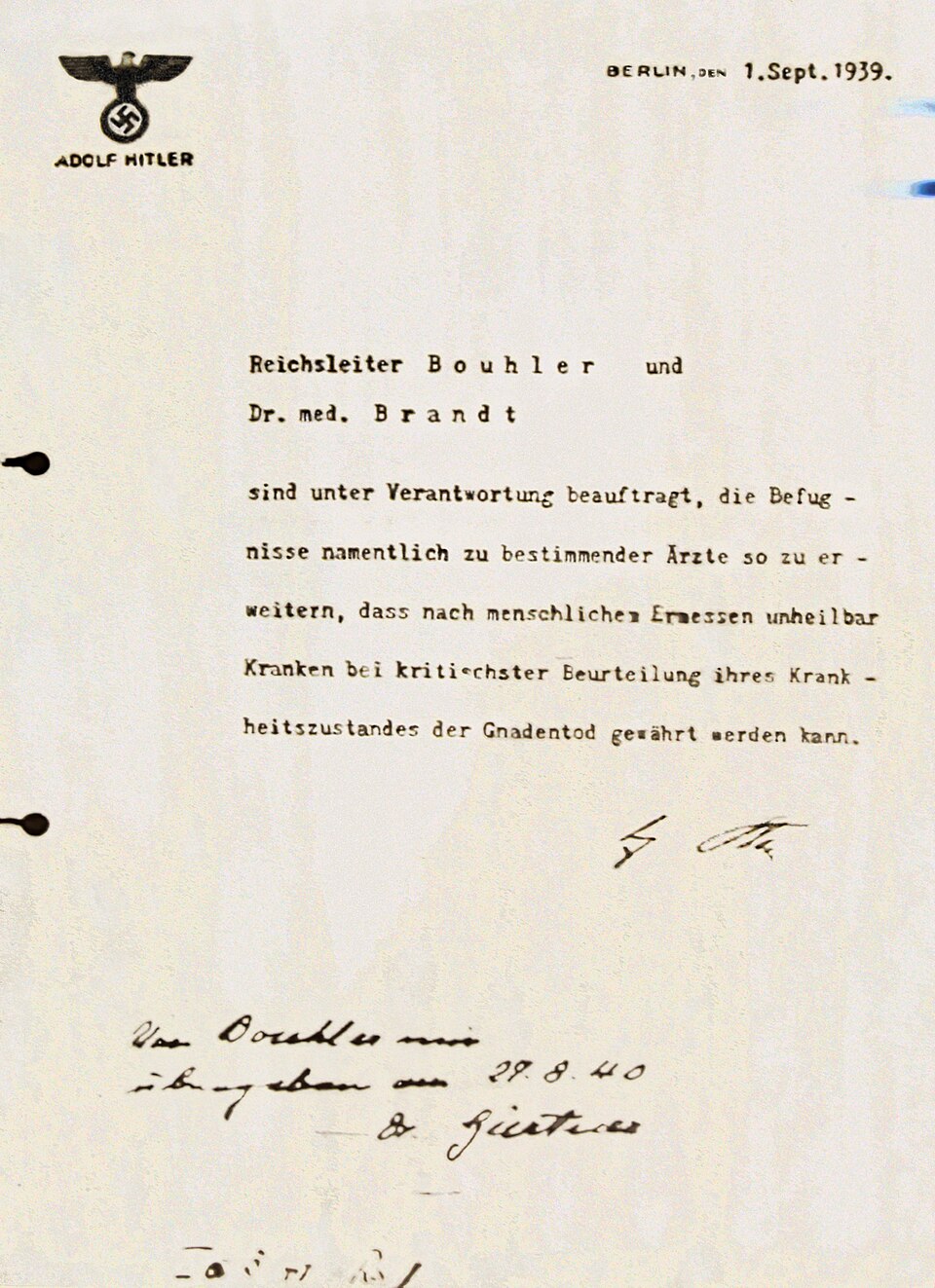
- Aktion T4's image is recorded as Erlass von Hitler - Nürnberger Dokument PS-630 - datiert 1. September 1939.jpg[4].
- Aktion T4's instance of is recorded as project[5].
- 4, Tiergartenstrasse is named after Aktion T4[6].
- Aktion T4's followed by is recorded as Action Brandt[7].
- Aktion T4's GND ID is recorded as 4133156-4[8].
- Aktion T4's Library of Congress authority ID is recorded as n2001024477[9].
- Aktion T4's Bibliothèque nationale de France ID is recorded as 182064214[10].
- Aktion T4's IdRef ID is recorded as 284038296[11].
- Aktion T4's subclass of is recorded as mass murder[12].
- Aktion T4's subclass of is recorded as involuntary euthanasia[13].
- Aktion T4's subclass of is recorded as war crime[14].
- Aktion T4's child organization or unit is recorded as Gemeinnützige Krankentransport GmbH[15].
- Aktion T4's part of is recorded as Nazi eugenics[16].
- Aktion T4's part of is recorded as Nazi executions of ill people[17].
- Aktion T4's has use is recorded as deliberate murder[18].
- Aktion T4's Commons category is recorded as Aktion T4[19].
- Aktion T4's start time is recorded as +1940-01-01T00:00:00Z[20].
- Aktion T4's start time is recorded as +1939-00-00T00:00:00Z[21].
- Aktion T4's end time is recorded as +1941-01-01T00:00:00Z[22].
- Aktion T4's coordinate location is recorded as {'lat': 52.510555555555555, 'lon': 13.36888888888889}[23].
- Aktion T4's Freebase ID is recorded as /m/014411[24].
- Aktion T4's participant is recorded as Adolf Hitler[25].
- Aktion T4's participant is recorded as Viktor Brack[26].
- Aktion T4's participant is recorded as Hans Hefelmann[27].
Why It Matters
Aktion T4 ranks in the top 0.31% of project entities by monthly Wikipedia readership (1,875 views/month, #1 of 319).[2] It has Wikipedia articles in 29 language editions, a strong signal of global cultural recognition.[28] It is known by 72 alternative names across languages and contexts.[29]