
Aimé Cotton
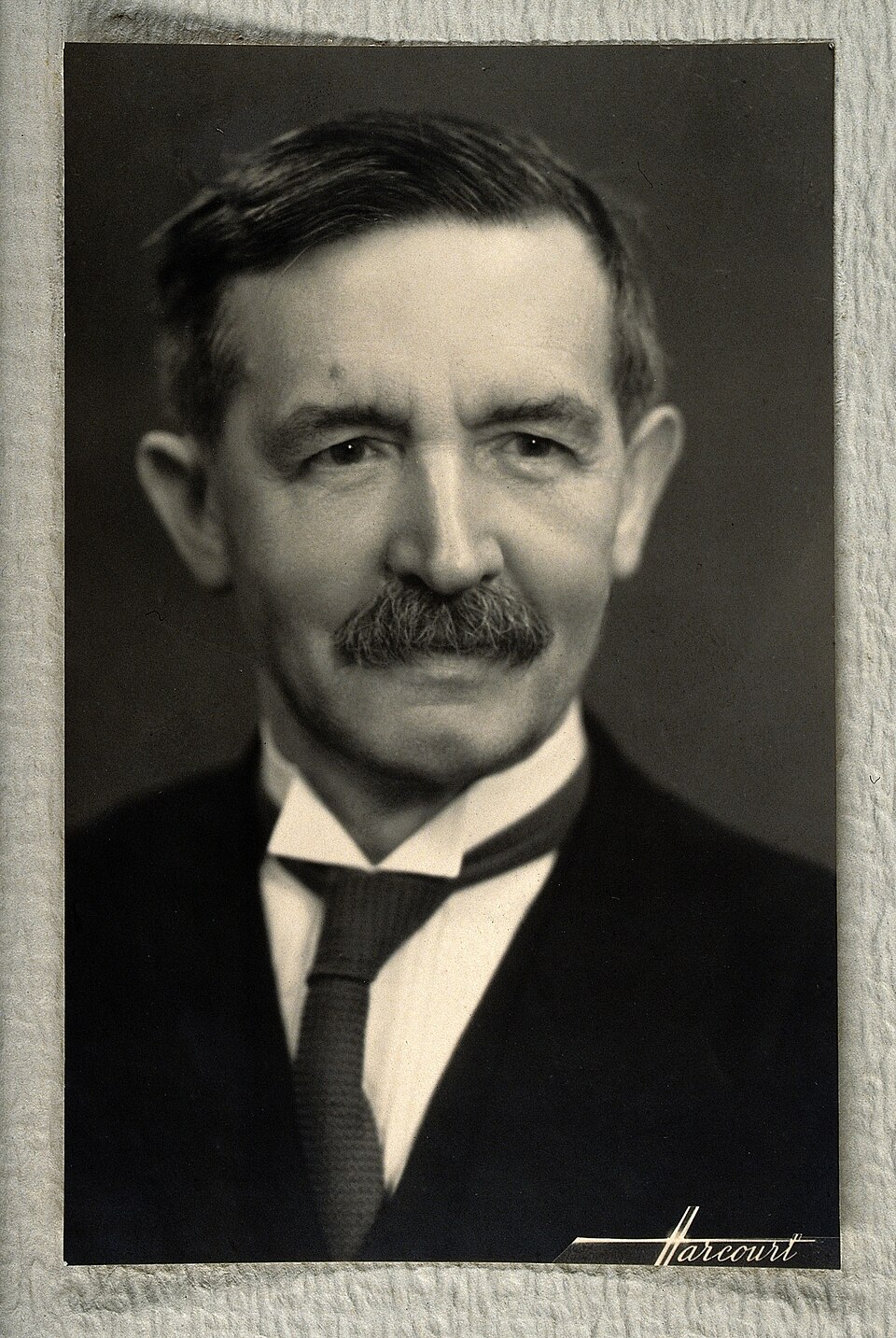
0 sources
Summary
Aimé Cotton is a human[1]. His place of birth was Bourg-en-Bresse[2]. He was born on October 9, 1869[3]. He passed away in Sèvres[4]. He died on April 16, 1951[5]. He worked as a physicist[6], French resistance fighter[7], Esperantist[8], and university teacher[9]. He has Wikipedia articles in 10 language editions, a strong signal of global cultural recognition.[10]
Key Facts
- Aimé Cotton was born in Bourg-en-Bresse[2].
- Aimé Cotton passed away in Sèvres[4].
- Aimé Cotton was born on October 9, 1869[3].
- Aimé Cotton died on April 16, 1951[5].
- Aimé Cotton was married to Eugénie Cotton[11].
- A child of Aimé Cotton was Eugène Cotton[12].
- Aimé Cotton held citizenship in France[13].
- Aimé Cotton worked as a physicist[6].
- Aimé Cotton's professions included French resistance fighter[7].
- Aimé Cotton's professions included Esperantist[8].
- Aimé Cotton worked as a university teacher[9].
- Aimé Cotton held the position of president of the French Academy of Sciences[14].
- Aimé Cotton held the position of president[15].
- Among Aimé Cotton's employers was University of Paris[16].
- Among Aimé Cotton's employers was University of Toulouse (1896-1968)[17].
- Aimé Cotton was educated at École Normale Supérieure[18].
- Aimé Cotton was educated at University of Paris[19].
- Aimé Cotton's doctoral advisor was Marcel Brillouin[20].
- Aimé Cotton's doctoral advisor was Jules Violle[21].
- Aimé Cotton received the Resistance Medal[22].
- Aimé Cotton received the La Caze Prize of the Academy of Sciences[23].
- Aimé Cotton was a member of French Academy of Sciences[24].
- Aimé Cotton was a member of Romanian Academy[25].
- Aimé Cotton is recorded as male[26].
- Aimé Cotton's instance of is recorded as human[27].
Body
Origins and Family
Aimé Cotton was born in Bourg-en-Bresse[2]. He was born on October 9, 1869[3].
Education
Educated at École Normale Supérieure[18], a école normale supérieure[28], in France[29], founded in 1794[30], headquartered in Paris[31] and University of Paris[19], a former entity[32], in France[33], founded in 1150[34], headquartered in Paris[35]. Doctoral advisors include Marcel Brillouin[20], a mathematician[36], 1854–1948[37], of France[38], awarded the Officer of the Legion of Honour[39], specialised in physics[40] and Jules Violle[21], a physicist[41], 1841–1923[42], of France[43], awarded the Commander of the Legion of Honour[44], specialised in physics[45].
Career and Affiliations
Recorded occupations include physicist[6], French resistance fighter[7], Esperantist[8], and university teacher[9]. Employers include University of Paris[16], a former entity[46], in France[47], founded in 1150[48], headquartered in Paris[49] and University of Toulouse (1896-1968)[17], a university in France[50], in France[51], founded in 1229[52]. Positions held include president of the French Academy of Sciences[14] and president[15], a corporate title[53]. Doctoral students include Pierre Jacquinot[54], a physicist[55], 1910–2002[56], of France[57], awarded the CNRS Gold medal[58] and André-Louis Danjon[59], an astronomer[60], 1890–1967[61], of France[62], awarded the CNRS Gold medal[63], specialised in astronomy[64].
Recognition
Awards received include Resistance Medal[22], a medallion[65], in France[66], founded in 1943[67] and La Caze Prize of the Academy of Sciences[23], a science award[68], in France[69].
Personal Life
Among Aimé Cotton's spouses was Eugénie Cotton[11]. A child of him was Eugène Cotton[12].
Death and Burial
Aimé Cotton died on April 16, 1951[5]. He passed away in Sèvres[4].
Works and Contributions
Things named for Aimé Cotton include Cotton effect[70]; Cotton-Mouton effect[71]; and Aimé Cotton Laboratory[72], a Q43371093[73], in France[74], founded in 1927[75].
Why It Matters
Aimé Cotton has Wikipedia articles in 10 language editions, a strong signal of global cultural recognition.[10] He is known by 12 alternative names across languages and contexts.[76]
Entities named for him include Cotton effect[70]; Cotton-Mouton effect[71]; and Aimé Cotton Laboratory[72], a Q43371093[73], in France[74], founded in 1927[75].
His notable doctoral advisees include André-Louis Danjon[77], an astronomer[78], 1890–1967[79], of France[80], awarded the CNRS Gold medal[81], specialised in astronomy[82] and Pierre Jacquinot[83], a physicist[84], 1910–2002[85], of France[86], awarded the CNRS Gold medal[87].
FAQs
Where was Aimé Cotton born?
Aimé Cotton's place of birth was Bourg-en-Bresse[2].
Where did Aimé Cotton die?
Aimé Cotton died in Sèvres[4].
Who was Aimé Cotton married to?
Aimé Cotton's spouses include Eugénie Cotton[11].
What did Aimé Cotton do for work?
Aimé Cotton worked as physicist[6], French resistance fighter[7], Esperantist[8], and university teacher[9].
Where did Aimé Cotton go to school?
Aimé Cotton was educated at École Normale Supérieure[18] and University of Paris[19].
What awards did Aimé Cotton receive?
Honors received include Resistance Medal[22] and La Caze Prize of the Academy of Sciences[23].