
273P/Pons–Gambart
comet
Press Enter · cited answer in seconds
0 sources
273P/Pons–Gambart
Summary
273P/Pons–Gambart is a periodic comet[1]. 273P/Pons–Gambart draws 11 Wikipedia views per month (periodic_comet category, ranking #25 of 183).[2]
Key Facts
- 273P/Pons–Gambart is credited with the discovery of Jean-Louis Pons[3].
- 273P/Pons–Gambart is credited with the discovery of Jean-Félix Adolphe Gambart[4].
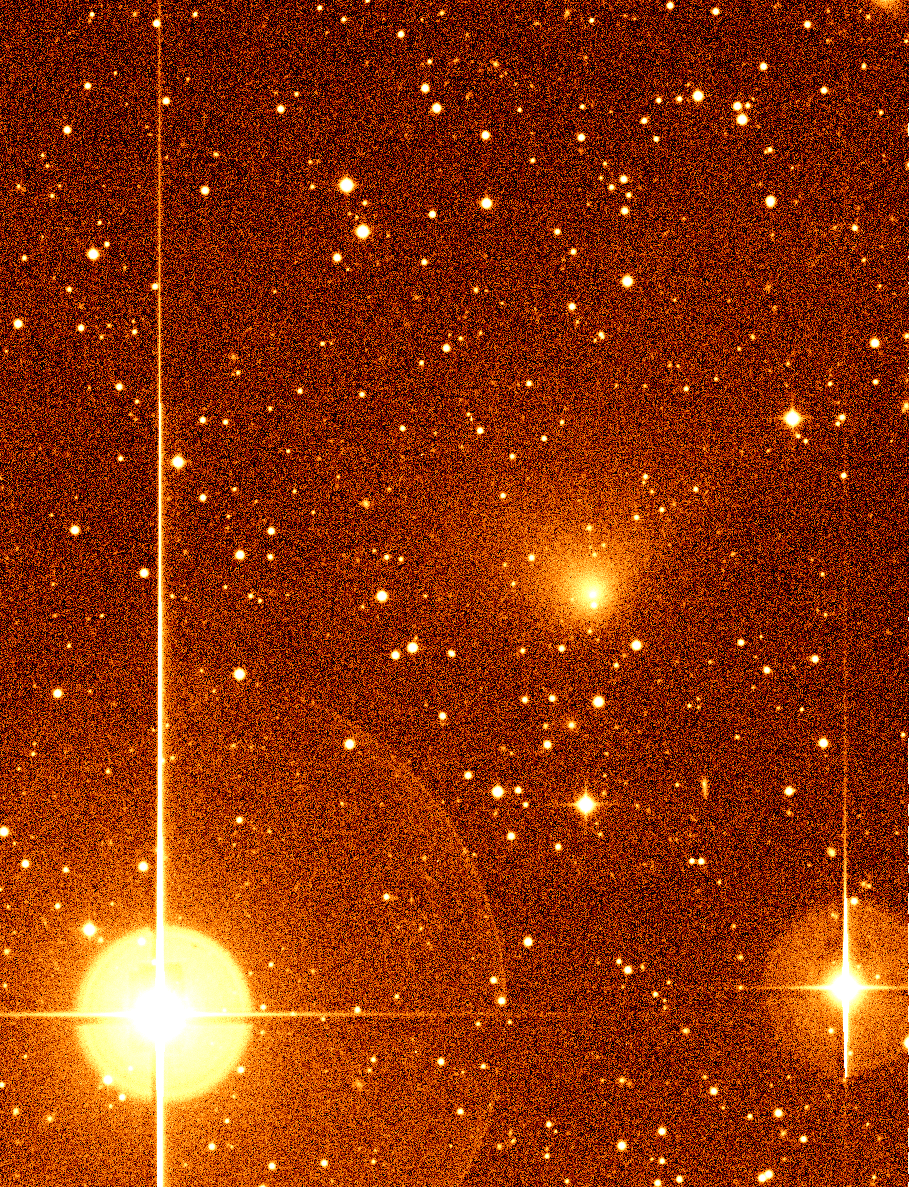
- 273P/Pons–Gambart's image is recorded as 273P 2013-03-18 PTF ImageDownload-2-irsakuops-ptf-5f5c5ffb54-wpzq9---1.png[5].
- 273P/Pons–Gambart's instance of is recorded as periodic comet[6].
- 273P/Pons–Gambart's instance of is recorded as Halley-type comet[7].
- 273P/Pons–Gambart's instance of is recorded as near-Earth object[8].
- 273P/Pons–Gambart's parent astronomical body is recorded as Sun[9].
- 273P/Pons–Gambart's provisional designation is recorded as 273P/2012 V4[10].
- 273P/Pons–Gambart's provisional designation is recorded as 273P/1827 M1[11].
- 273P/Pons–Gambart's time of discovery or invention is recorded as +1827-06-21T00:00:00Z[12].
- 273P/Pons–Gambart's JPL Small-Body Database SPK-ID is recorded as 1000765[13].
- 273P/Pons–Gambart's orbital eccentricity is recorded as {'amount': '+0.9753243653418344'}[14].
- 273P/Pons–Gambart's absolute magnitude is recorded as {'amount': '+11.3'}[15].
- 273P/Pons–Gambart's orbital inclination is recorded as {'unit': 'Q28390', 'amount': '+136.3960312125772'}[16].
- 273P/Pons–Gambart's orbital period is recorded as {'unit': 'Q573', 'amount': '+68714.96153890778'}[17].
- 273P/Pons–Gambart's longitude of ascending node is recorded as {'unit': 'Q28390', 'amount': '+320.4311716157664'}[18].
- 273P/Pons–Gambart's semi-major axis of an orbit is recorded as {'unit': 'Q1811', 'amount': '+32.83234635549665'}[19].
- 273P/Pons–Gambart's apoapsis is recorded as {'unit': 'Q1811', 'amount': '+64.85453372735472'}[20].
- 273P/Pons–Gambart's periapsis is recorded as {'unit': 'Q1811', 'amount': '+0.8101589836385896'}[21].
- 273P/Pons–Gambart's argument of periapsis is recorded as {'unit': 'Q28390', 'amount': '+20.19191161075621'}[22].
- 273P/Pons–Gambart's mean anomaly is recorded as {'unit': 'Q28390', 'amount': '+0.4627592305599377'}[23].
- 273P/Pons–Gambart's Google Knowledge Graph ID is recorded as /g/11x7vsn2j[24].
- 273P/Pons–Gambart's epoch is recorded as March 18, 2013[25].
- 273P/Pons–Gambart's time of periapsis is recorded as {'unit': 'Q14267', 'amount': '+2456281.1708813063'}[26].
Body
Works and Contributions
Credited discoveries include Jean-Louis Pons[3], an astronomer[27], 1761–1831[28], of Kingdom of France[29], awarded the Lalande Prize[30], specialised in astronomy[31] and Jean-Félix Adolphe Gambart[4], an astronomer[32], 1800–1836[33], of France[34], awarded the Lalande Prize[35].
Why It Matters
273P/Pons–Gambart draws 11 Wikipedia views per month (periodic_comet category, ranking #25 of 183).[2] 273P/Pons–Gambart has Wikipedia articles in 8 language editions, a strong signal of global cultural recognition.[36] 273P/Pons–Gambart is known by 7 alternative names across languages and contexts.[37]