
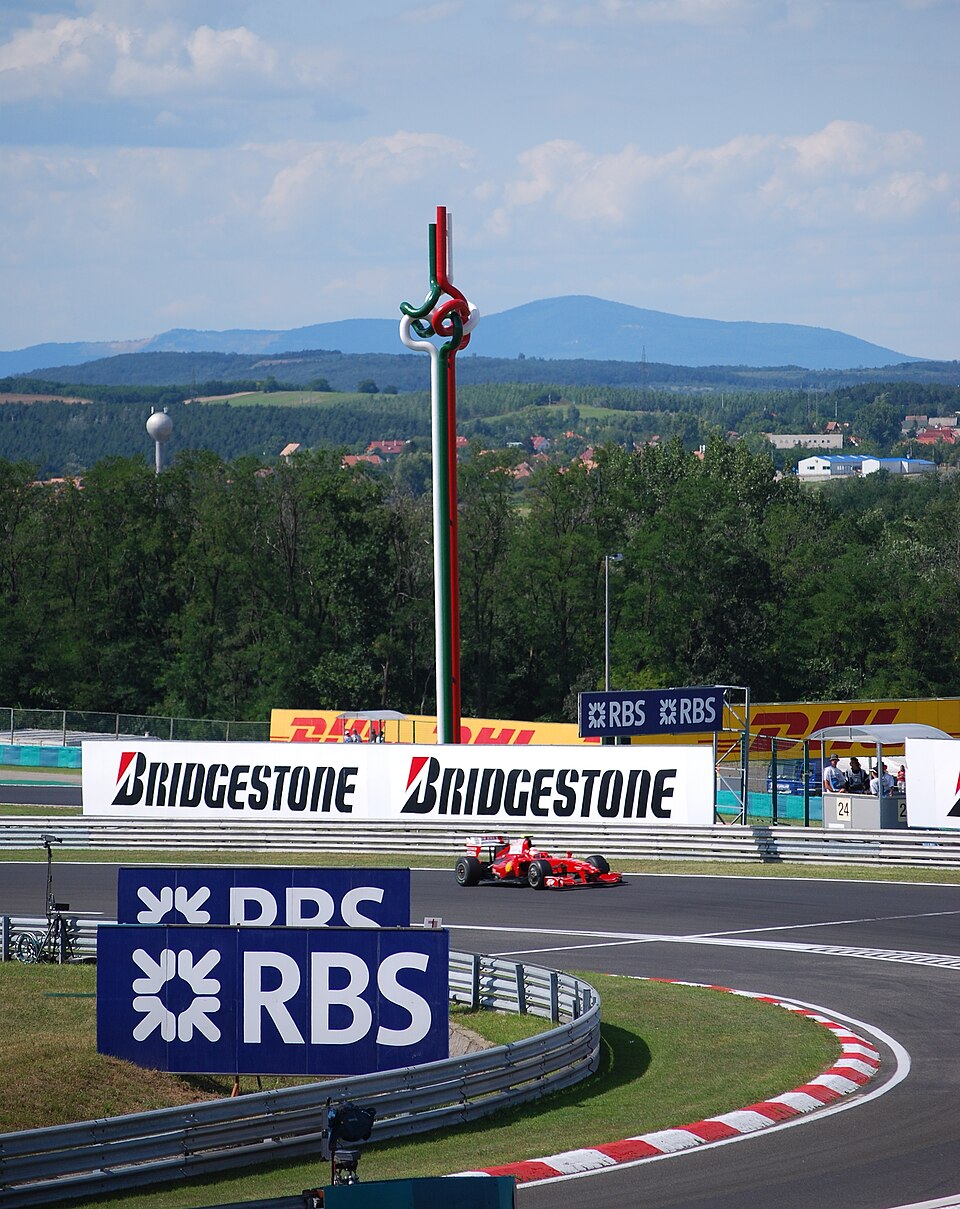
2009 Hungarian Grand Prix
Formula One motor race held on July 26, 2009 at the Hungaroring in Mogyoród, 18 km (11 mi) north of Budapest, Hungary
Press Enter · cited answer in seconds
0 sources
Summary
2009 Hungarian Grand Prix is a Hungarian Grand Prix[1]. It draws 695 Wikipedia views per month (hungarian grand prix category, ranking #4 of 39).[2]
Key Facts
- Winner: Lewis Hamilton[3], McLaren[4]
- Country: Hungary[5]
- Instance of: recurring sporting event edition[6]
- Follows: 2008 Hungarian Grand Prix[7]
- Followed by: 2010 Hungarian Grand Prix[8]
- Location: Hungaroring[9], Budapest[10]
- Part of: 2009 Formula One World Championship[11]
- Commons category: 2009 Hungarian Grand Prix[12]
- Edition number: 25[13]
- Point in time: July 26, 2009[14]
- Sport: auto racing[15]
- Official name: XXV ING Magyar Nagydíj[16]
- Native label: XXIV ING Magyar Nagydíj[17]
- Uses: Hungaroring Grand Prix circuit[18]
- Event distance: 70 lap[19]
- Pole position: Fernando Alonso[20]
- Fastest lap: Mark Webber[21]
Why It Matters
2009 Hungarian Grand Prix has Wikipedia articles in 21 language editions, a strong signal of global cultural recognition.[22] It is known by 25 alternative names across languages and contexts.[23]