
William Morris
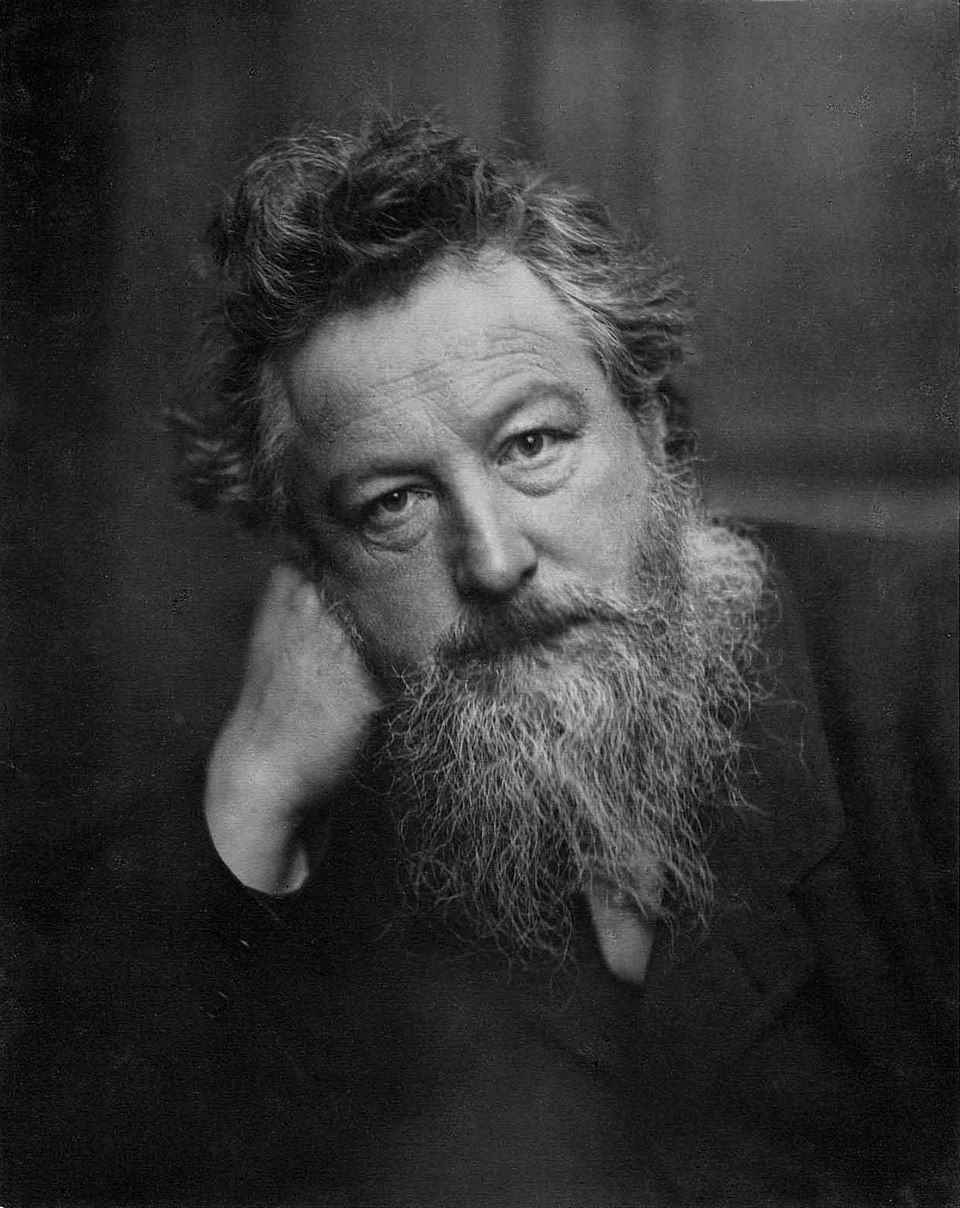
0 sources
William Morris
Summary
William Morris is a human[1]. His place of birth was Walthamstow[2]. He was born on March 24, 1834[3]. He passed away in London[4]. He died on October 3, 1896[5]. He worked as an architect[6], poet[7], designer[8], graphic designer[9], and painter[10]. He ranks in the top 0.55% of human entities by monthly Wikipedia readership (38,534 views/month, #5,455 of 1,000,298).[11]
Key Facts
- William Morris was born in Walthamstow[2].
- Born in London[12], William Morris…
- William Morris passed away in London[4].
- William Morris died in Hammersmith[13].
- William Morris was born on March 24, 1834[3].
- William Morris died on October 3, 1896[5].
- Burial took place at St. George's Churchyard[14].
- William Morris was married to Jane Morris[15].
- A child of William Morris was May Morris[16].
- William Morris held citizenship in United Kingdom of Great Britain and Ireland[17].
- William Morris held citizenship in United Kingdom[18].
- English was William Morris's native language[19].
- William Morris worked as an architect[6].
- William Morris worked as a poet[7].
- William Morris's professions included designer[8].
- William Morris's professions included graphic designer[9].
- William Morris worked as a painter[10].
- William Morris's professions included science fiction writer[20].
- William Morris's education included a stint at Exeter College[21].
- William Morris was educated at Marlborough College[22].
- A notable work attributed to William Morris is Red House[23].
- A notable work attributed to William Morris is A Dream of John Ball[24].
- A notable work attributed to William Morris is Willow Boughs[25].
- A notable work attributed to William Morris is Strawberry Thief[26].
- William Morris is recorded as male[27].
Body
Origins and Family
Recorded place of birth include Walthamstow[2], an area of London[28], in United Kingdom[29] and London[12], a metropolis[30], in Roman Empire[31], founded in 0047[32]. William Morris was born on March 24, 1834[3]. English was his native language[19].
Education
Educated at Exeter College[21], a college of the University of Oxford[33], in United Kingdom[34], founded in 1314[35], headquartered in Oxford[36] and Marlborough College[22], an independent school[37], in United Kingdom[38], founded in 1843[39].
Career and Affiliations
Recorded occupations include architect[6], poet[7], designer[8], graphic designer[9], painter[10], and science fiction writer[20].
Works and Contributions
Notable works include Red House[23], a historic house museum[40], in United Kingdom[41], founded in 1859[42]; A Dream of John Ball[24], a literary work[43]; Willow Boughs[25], a wallpaper[44], founded in 1887[45]; and Strawberry Thief[26], a Morris & Co. pattern[46], founded in 1883[47].
Personal Life
Among William Morris's spouses was Jane Morris[15]. A child of him was May Morris[16]. Political affiliations include Social Democratic Federation[48], a political party[49], in United Kingdom[50], founded in 1881[51] and Socialist League[52], a political party[53], in United Kingdom of Great Britain and Ireland[54], founded in 1885[55], headquartered in London[56].
Death and Burial
William Morris died on October 3, 1896[5]. Recorded place of death include London[4], a metropolis[57], in Roman Empire[58], founded in 0047[59] and Hammersmith[13], an area of London[60], in United Kingdom[61]. He is buried at St. George's Churchyard[14].
Why It Matters
William Morris ranks in the top 0.55% of human entities by monthly Wikipedia readership (38,534 views/month, #5,455 of 1,000,298).[11] He has Wikipedia articles in 27 language editions, a strong signal of global cultural recognition.[62] He is known by 27 alternative names across languages and contexts.[63]
He has been cited as an influence by J. R. R. Tolkien[64], a linguist[65], 1892–1973[66], of United Kingdom[67], awarded the Commander of the Order of the British Empire[68], specialised in literature[69]; C. S. Lewis[70], a writer[71], 1898–1963[72], of United Kingdom[73], awarded the honorary doctorate at the Laval University[74], specialised in writing[75]; George Bernard Shaw[76], a music critic[77], 1856–1950[78], of United Kingdom of Great Britain and Ireland[79], awarded the Nobel Prize in Literature[80], specialised in fine art[81]; William Butler Yeats[82], a poet[83], 1865–1939[84], of Irish Free State[85], awarded the Nobel Prize in Literature[86], specialised in fiction[87]; Alphonse Mucha[88], a poster artist[89], 1860–1939[90], of Austrian Empire[91], awarded the Order of Franz Joseph[92]; and Aubrey Beardsley[93], a writer[94], 1872–1898[95], of United Kingdom of Great Britain and Ireland[96], specialised in art[97].
He is credited with the discovery of eco-socialism[98]. Works attributed to him include News from Nowhere[99] and The Well at the World's End[100].
FAQs
Where was William Morris born?
Born in Walthamstow[2], William Morris…
Where did William Morris die?
William Morris died in London[4].
Who was William Morris married to?
William Morris's spouses include Jane Morris[15].
What did William Morris do for work?
William Morris worked as architect[6], poet[7], designer[8], graphic designer[9], and painter[10].
Where did William Morris go to school?
William Morris was educated at Exeter College[21] and Marlborough College[22].
Who did William Morris influence?
William Morris has been cited as an influence by J. R. R. Tolkien[64], C. S. Lewis[70], George Bernard Shaw[76], and William Butler Yeats[82].
What did William Morris discover?
William Morris is credited as discoverer of eco-socialism[98].