
William Henry Fox Talbot
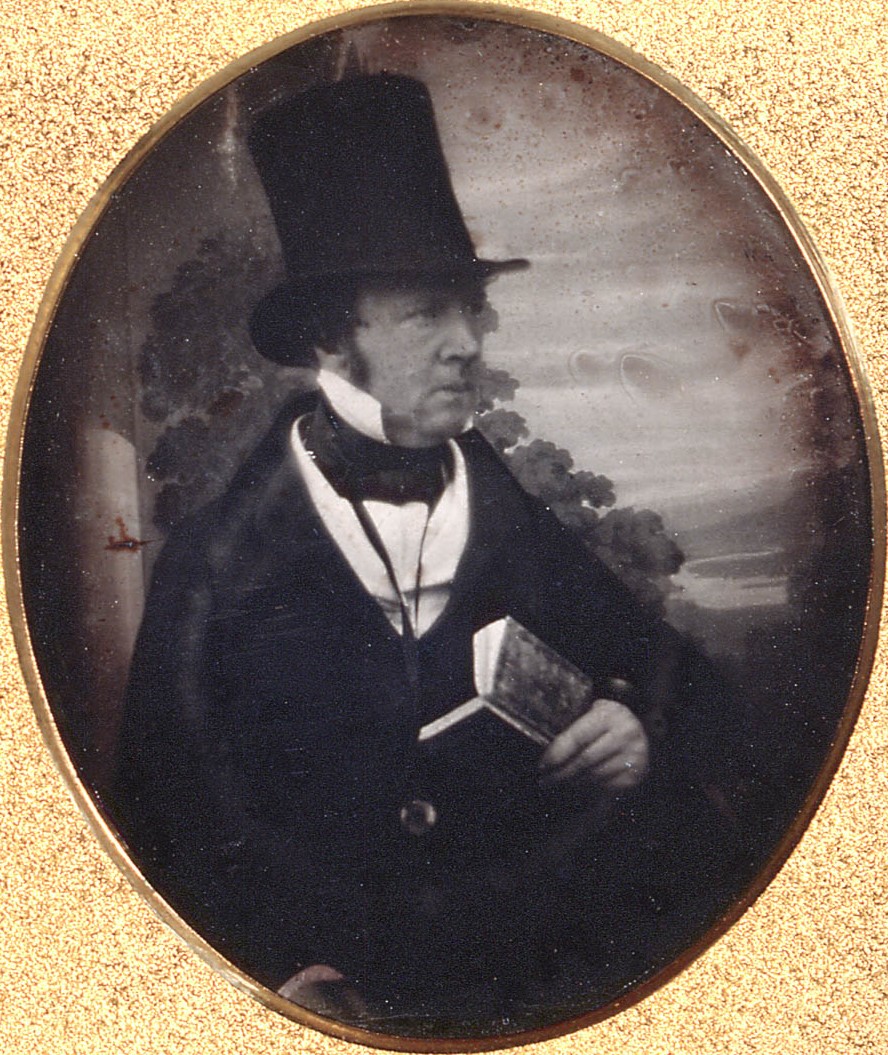
0 sources
Summary
William Henry Fox Talbot was born on February 11, 1800[1], in Dorset[2]. He died on September 17, 1877[3], in Lacock[4]. He worked as a patent inventor[5], photographer[6], anthropologist[7], politician[8], and inventor[9]. He ranks in the top 0.71% of human entities by monthly Wikipedia readership (2,795 views/month, #7,151 of 1,000,298).[10]
Key Facts
- Place of birth: Melbury Sampford[11]
- Place of burial: Lacock cemetery[12]
- Father: William Davenport Talbot[13]
- Mother: Elizabeth Theresa Fox- Strangways[14]
- Spouse: Constance Fox Talbot[15]
- Child: Charles Henry Talbot[16], Ella Talbot[17], Rosamond Constance Talbot[18], Matilda Caroline Talbot[19]
- Country of citizenship: Kingdom of Great Britain[20], United Kingdom of Great Britain and Ireland[21]
- Occupation: chemist[22], mathematician[23], assyriologist[24], archaeologist[25], world traveler[26], botanist[27], egyptologist[28], physicist[29], orientalist[30], botanical collector[31], photochemist[32]
- Field of work: experimental physics[33], stereo photography[34], philosophy[35], Egyptology[36], mathematics[37], physics[38], photography[39], oriental studies[40]
- Position held: member of the 11th Parliament of the United Kingdom[41], High Sheriff of Wiltshire[42]
- Educated at: Harrow School[43], Trinity College[44]
- Award received: Fellow of the Royal Society[45], Royal Medal[46], Rumford Medal[47], Royal Society Bakerian Medal[48], Porson Prize[49], honorary doctor of the University of Edinburgh[50], Fellow of the Royal Society of Edinburgh[51]
- Member of: Royal Society[52], Royal Astronomical Society[53]
- Sex or gender: male[54]
- Commons category: Henry Fox Talbot[55]
- Archives at: British Library[56], National Library of Wales[57]
- Residence: Lacock Abbey[58]
Body
Works and Contributions
Things named for William Henry Fox Talbot include Talbot effect[59], a physical phenomenon[60]; lumen second[61], a coherent SI unit[62]; Talbot[63], a lunar crater[64]; and Talbot Glacier[65], a glacier[66].
Why It Matters
William Henry Fox Talbot has Wikipedia articles in 24 language editions, a strong signal of global cultural recognition.[67] He is known by 77 alternative names across languages and contexts.[68]
He is credited with the discovery of calotype[69], a photographic technique[70]; Talbot effect[71], a physical phenomenon[72]; and cliché verre[73]. Works attributed to him include The Pencil of Nature[74], a written work[75]. Entities named for him include Talbot effect[59], a physical phenomenon[60]; lumen second[61], a coherent SI unit[62]; Talbot[63], a lunar crater[64]; and Talbot Glacier[65], a glacier[66].
FAQs
Where was William Henry Fox Talbot born?
William Henry Fox Talbot was born in Dorset[2].
Where did William Henry Fox Talbot die?
William Henry Fox Talbot passed away in Lacock[4].
Who were William Henry Fox Talbot's parents?
William Henry Fox Talbot's father was William Davenport Talbot[13]. William Henry Fox Talbot's mother was Elizabeth Theresa Fox- Strangways[14].
Who was William Henry Fox Talbot married to?
William Henry Fox Talbot's spouses include Constance Fox Talbot[15].
What did William Henry Fox Talbot do for work?
William Henry Fox Talbot worked as a patent inventor[5], photographer[6], anthropologist[7], politician[8], and inventor[9].
Where did William Henry Fox Talbot go to school?
William Henry Fox Talbot was educated at Harrow School[43] and Trinity College[44].
What awards did William Henry Fox Talbot receive?
Honors received include Fellow of the Royal Society[45], Royal Medal[46], Rumford Medal[47], and Royal Society Bakerian Medal[48].
What did William Henry Fox Talbot discover?
William Henry Fox Talbot is credited as discoverer of calotype[69], Talbot effect[71], and cliché verre[73].