
William Gell
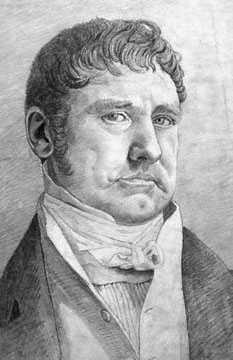
0 sources
William Gell
Summary
William Gell is a human[1]. His place of birth was Derbyshire[2]. He was born on April 1, 1777[3]. He died in Naples[4]. He died on February 4, 1836[5]. He worked as an anthropologist[6], art historian[7], archaeologist[8], illustrator[9], and classical archaeologist[10]. He ranks in the top 0.73% of human entities by monthly Wikipedia readership (123 views/month, #7,290 of 1,000,298).[11]
Key Facts
- William Gell was born in Derbyshire[2].
- William Gell passed away in Naples[4].
- William Gell was born on April 1, 1777[3].
- William Gell died on February 4, 1836[5].
- William Gell is buried at Italy[12].
- Burial took place at English Cemetery, Naples[13].
- William Gell's father was Philip Eyre Gell[14].
- William Gell held citizenship in United Kingdom of Great Britain and Ireland[15].
- William Gell held citizenship in Kingdom of Great Britain[16].
- William Gell held citizenship in United Kingdom[17].
- William Gell's professions included anthropologist[6].
- William Gell's professions included art historian[7].
- William Gell's professions included archaeologist[8].
- William Gell worked as an illustrator[9].
- William Gell worked as a classical archaeologist[10].
- William Gell worked as a diplomat[18].
- William Gell's education included a stint at Emmanuel College[19].
- William Gell was educated at Derby School[20].
- William Gell was educated at University of Cambridge[21].
- A notable work attributed to William Gell is The removal of the Sculptures from the Pediments of the Parthenon by Elgin[22].
- William Gell received the Knight Bachelor[23].
- William Gell received the Fellow of the Royal Society[24].
- William Gell was a member of Royal Society[25].
- William Gell was a member of Royal Prussian Academy of Sciences[26].
- William Gell was a member of German Archaeological Institute[27].
Body
Origins and Family
William Gell's place of birth was Derbyshire[2]. He was born on April 1, 1777[3]. His father was Philip Eyre Gell[14].
Education
Educated at Emmanuel College[19], a college of the University of Cambridge[28], in United Kingdom[29], founded in 1584[30]; Derby School[20], a grammar school[31], in United Kingdom[32], founded in 1160[33]; and University of Cambridge[21], a collegiate university[34], in United Kingdom[35], founded in 1209[36], headquartered in Cambridge[37].
Career and Affiliations
Recorded occupations include anthropologist[6], art historian[7], archaeologist[8], illustrator[9], classical archaeologist[10], and diplomat[18].
Works and Contributions
A notable work attributed to William Gell is The removal of the Sculptures from the Pediments of the Parthenon by Elgin[22].
Recognition
Awards received include Knight Bachelor[23], a title of honor[38], in United Kingdom[39], founded in 1300[40] and Fellow of the Royal Society[24], a fellowship award[41], in United Kingdom[42].
Death and Burial
William Gell died on February 4, 1836[5]. He died in Naples[4]. Recorded place of burial include Italy[12] and English Cemetery, Naples[13].
Why It Matters
William Gell ranks in the top 0.73% of human entities by monthly Wikipedia readership (123 views/month, #7,290 of 1,000,298).[11] He has Wikipedia articles in 10 language editions, a strong signal of global cultural recognition.[43] He is known by 8 alternative names across languages and contexts.[44]
FAQs
Where was William Gell born?
William Gell's place of birth was Derbyshire[2].
Where did William Gell die?
William Gell passed away in Naples[4].
Who were William Gell's parents?
William Gell's father was Philip Eyre Gell[14].
What did William Gell do for work?
William Gell worked as anthropologist[6], art historian[7], archaeologist[8], illustrator[9], and classical archaeologist[10].
Where did William Gell go to school?
William Gell was educated at Emmanuel College[19], Derby School[20], and University of Cambridge[21].
What awards did William Gell receive?
Honors received include Knight Bachelor[23] and Fellow of the Royal Society[24].