
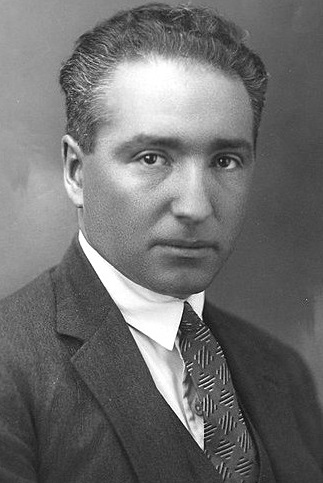
Wilhelm Reich
0 sources
Summary
Wilhelm Reich is a human[1]. Born in Dobrianychi[2], he… he was born on March 24, 1897[3]. He passed away in Lewisburg[4]. He died on November 3, 1957[5]. He worked as a psychiatrist[6], philosopher[7], sex educator[8], writer[9], and psychoanalyst[10]. He ranks in the top 0.61% of human entities by monthly Wikipedia readership (7,651 views/month, #6,063 of 1,000,298).[11]
Key Facts
- Wilhelm Reich's place of birth was Dobrianychi[2].
- Wilhelm Reich died in Lewisburg[4].
- Wilhelm Reich was born on March 24, 1897[3].
- Wilhelm Reich died on November 3, 1957[5].
- Burial took place at Orgonon[12].
- Wilhelm Reich's father was Leon Reich[13].
- Among Wilhelm Reich's spouses was Annie Reich[14].
- Wilhelm Reich was married to Elsa Lindenberg[15].
- Among Wilhelm Reich's spouses was Ilse Ollendorf[16].
- A child of Wilhelm Reich was Eva Reich[17].
- A child of Wilhelm Reich was Lore Reich Rubin[18].
- A child of Wilhelm Reich was Peter Reich[19].
- Wilhelm Reich held citizenship in Austria–Hungary[20].
- Wilhelm Reich held citizenship in Austria[21].
- Wilhelm Reich held citizenship in United States[22].
- Wilhelm Reich held citizenship in Poland[23].
- Wilhelm Reich held citizenship in Germany[24].
- Wilhelm Reich's professions included psychiatrist[6].
- Wilhelm Reich's professions included philosopher[7].
- Wilhelm Reich worked as a sex educator[8].
- Wilhelm Reich's professions included writer[9].
- Wilhelm Reich's professions included psychoanalyst[10].
- Wilhelm Reich's professions included physician[25].
- Wilhelm Reich's field of work was psychoanalysis[26].
- Wilhelm Reich's field of work was body psychotherapy[27].
Body
Origins and Family
Wilhelm Reich's place of birth was Dobrianychi[2]. He was born on March 24, 1897[3]. His father was Leon Reich[13].
Education
Wilhelm Reich's education included a stint at University of Vienna[28]. His doctoral advisor was Julius Wagner-Jauregg[29]. He earned the academic degree of Doctor of Medicine[30].
Career and Affiliations
Recorded occupations include psychiatrist[6], philosopher[7], sex educator[8], writer[9], psychoanalyst[10], and physician[25]. Fields of work include psychoanalysis[26], a field of study[31], written by Sigmund Freud[32] and body psychotherapy[27], an academic discipline[33]. Employers include Vienna General Hospital[34], a hospital[35], in Austria[36], founded in 1686[37]; Eduard Hitschmann[38], a physician[39], 1871–1957[40], of Austria[41]; University of Oslo[42], a public university[43], in Norway[44], founded in 1811[45], headquartered in Blindern[46]; The New School[47], a private university[48], in United States[49], founded in 1919[50]; and Orgonon[51], a single-family detached home[52], in United States[53], founded in 1948[54]. Notable students include Aslaug Vaa[55], Elsworth F. Baker[56], Alexander Lowen[57], Ola Raknes[58], and Paul Ritter[59].
Works and Contributions
Notable works include Character Analysis[60], The Mass Psychology of Fascism[61], Die Sexualität im Kulturkampf[62], and Listen, Little Man![63].
Personal Life
Spouses include Annie Reich[14], a psychiatrist[64], 1902–1971[65], of United States[66], specialised in medicine[67]; Elsa Lindenberg[15], a dancer[68], 1906–1990[69], of Germany[70]; and Ilse Ollendorf[16], a peace activist[71], 1909–2008[72]. Children include Eva Reich[17], a physician[73], 1924–2008[74], of United States[75]; Lore Reich Rubin[18], a psychoanalyst[76], 1928–2024[77], of Austria[78]; and Peter Reich[19], a healthcare scientist[79], b. 1944[80], of United States[81]. Wilhelm Reich's religion is recorded as atheism[82]. Political affiliations include Communist Party of Austria[83], a communist party[84], in Austria[85], founded in 1918[86], headquartered in Vienna[87]; Communist Party of Germany[88], a communist party[89], in Weimar Republic[90], founded in 1918[91], headquartered in Berlin[92]; and Social Democratic Party of Austria[93], a political party[94], in Austria[95], founded in 1888[96], headquartered in Vienna[97].
Death and Burial
Wilhelm Reich died on November 3, 1957[5]. He passed away in Lewisburg[4]. The cause of death was heart failure[98]. He is buried at Orgonon[12].
Why It Matters
Wilhelm Reich ranks in the top 0.61% of human entities by monthly Wikipedia readership (7,651 views/month, #6,063 of 1,000,298).[11] He has Wikipedia articles in 28 language editions, a strong signal of global cultural recognition.[99] He is known by 33 alternative names across languages and contexts.[100]
He has been cited as an influence by Norman Mailer[101], a journalist[102], 1923–2007[103], of United States[104], awarded the National Book Award[105]; Saul Bellow[106], a writer[107], 1915–2005[108], of United States[109], awarded the Nobel Prize in Literature[110], specialised in novel[111]; Fritz Perls[112], a psychologist[113], 1893–1970[114], of Kingdom of Prussia[115], specialised in gestalt therapy[116]; and Robert Spitzer[117], a psychiatrist[118], 1932–2015[119], of United States[120], awarded the Thomas William Salmon Medal[121], specialised in psychiatry[122].
He is credited with the discovery of Orgone[123], a concept[124]; cloudbuster[125], an appliance[126]; Freudo-Marxism[127], a theory[128]; body psychotherapy[129], an academic discipline[130]; and vegetotherapy[131]. Works attributed to him include The Mass Psychology of Fascism[132].
FAQs
Where was Wilhelm Reich born?
Wilhelm Reich's place of birth was Dobrianychi[2].
Where did Wilhelm Reich die?
Wilhelm Reich died in Lewisburg[4].
Who were Wilhelm Reich's parents?
Wilhelm Reich's father was Leon Reich[13].
Who was Wilhelm Reich married to?
Wilhelm Reich's spouses include Annie Reich[14], Elsa Lindenberg[15], and Ilse Ollendorf[16].
What did Wilhelm Reich do for work?
Wilhelm Reich worked as psychiatrist[6], philosopher[7], sex educator[8], writer[9], and psychoanalyst[10].
Where did Wilhelm Reich go to school?
Wilhelm Reich was educated at University of Vienna[28].
Who did Wilhelm Reich influence?
Wilhelm Reich has been cited as an influence by Norman Mailer[101], Saul Bellow[106], Fritz Perls[112], and Robert Spitzer[117].
What did Wilhelm Reich discover?
Wilhelm Reich is credited as discoverer of Orgone[123], cloudbuster[125], Freudo-Marxism[127], and body psychotherapy[129].