
Wang ocheonchukguk jeon
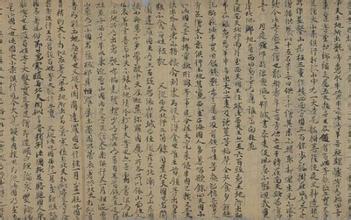
travelogue in Classical Chinese by Korean Buddhist monk Hyecho, who traveled from Korea to India in 723 – 728 CE; lost but recovered in the Dunhuang manuscripts
Press Enter · cited answer in seconds
0 sources
Summary
Wang ocheonchukguk jeon is a literary work[1]. It ranks in the top 4% of literary_work entities by monthly Wikipedia readership (42 views/month).[2]
Key Facts
- Wang ocheonchukguk jeon authored Hyecho[3].
- Wang ocheonchukguk jeon is credited with the discovery of Paul Pelliot[4].
- Wang ocheonchukguk jeon's instance of is recorded as literary work[5].
- Wang ocheonchukguk jeon's genre is travel journal[6].
- Wang ocheonchukguk jeon's genre is Buddhist literature[7].
- Wang ocheonchukguk jeon's genre is Literary Chinese literature in Korea[8].
- Wang ocheonchukguk jeon's location of discovery is recorded as Mogao Caves[9].
- Wang ocheonchukguk jeon is part of Dunhuang manuscripts[10].
- Wang ocheonchukguk jeon's language of work or name is recorded as Classical Chinese[11].
- 720 marks the founding of Wang ocheonchukguk jeon[12].
- Wang ocheonchukguk jeon's time of discovery or invention is recorded as March 1908[13].
- Wang ocheonchukguk jeon's work available at URL is recorded as http://idp.bl.uk/database/oo_loader.a4d?pm=Pelliot%20chinois%203532[14].
- Wang ocheonchukguk jeon's title is recorded as {'lang': 'lzh', 'text': '往五天竺國傳'}[15].
- Wang ocheonchukguk jeon's title is recorded as {'lang': 'ko', 'text': '왕오천축국전'}[16].
- Wang ocheonchukguk jeon's derivative work is recorded as Q137895863[17].
- Wang ocheonchukguk jeon's copyright status is recorded as public domain[18].
- Wang ocheonchukguk jeon's copyright status is recorded as public domain[19].
Body
Authorship and Creation
Wang ocheonchukguk jeon authored Hyecho[3].
Publication
Wang ocheonchukguk jeon's language of work or name is recorded as Classical Chinese[11]. Genres include travel journal[6], Buddhist literature[7], and Literary Chinese literature in Korea[8]. It is part of Dunhuang manuscripts[10].
Why It Matters
Wang ocheonchukguk jeon ranks in the top 4% of literary_work entities by monthly Wikipedia readership (42 views/month).[2] It has Wikipedia articles in 9 language editions, a strong signal of global cultural recognition.[20] It is known by 3 alternative names across languages and contexts.[21]