
Vladimir Bogoraz
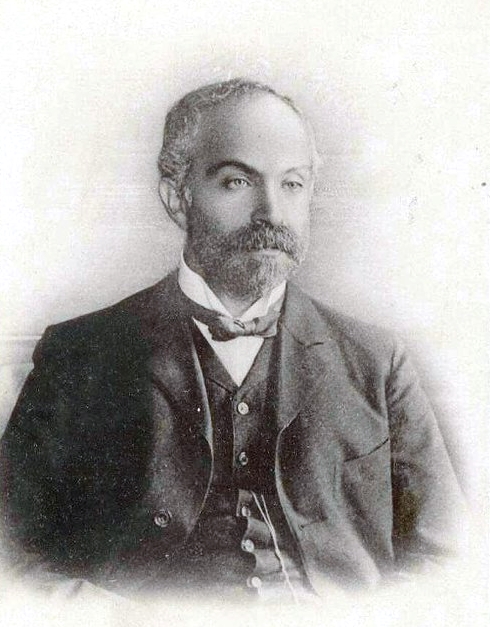
0 sources
Vladimir Bogoraz
Summary
Vladimir Bogoraz is a human[1]. His place of birth was Ovruch[2]. He was born on April 15, 1865[3]. He passed away in Rostov-on-Don[4]. He died on May 10, 1936[5]. He worked as an anthropologist[6], revolutionary[7], writer[8], poet[9], and linguist[10]. He has Wikipedia articles in 14 language editions, a strong signal of global cultural recognition.[11]
Key Facts
- Vladimir Bogoraz was born in Ovruch[2].
- Vladimir Bogoraz passed away in Rostov-on-Don[4].
- Vladimir Bogoraz was born on April 15, 1865[3].
- Vladimir Bogoraz was born on April 27, 1865[12].
- Vladimir Bogoraz died on May 10, 1936[5].
- Burial took place at Volkovo Cemetery Writer's Walkways[13].
- Vladimir Bogoraz held citizenship in Russian Empire[14].
- Vladimir Bogoraz held citizenship in Soviet Union[15].
- Vladimir Bogoraz's professions included anthropologist[6].
- Vladimir Bogoraz's professions included revolutionary[7].
- Vladimir Bogoraz's professions included writer[8].
- Vladimir Bogoraz worked as a poet[9].
- Vladimir Bogoraz's professions included linguist[10].
- Vladimir Bogoraz worked as a politician[16].
- Vladimir Bogoraz's field of work was ethnography[17].
- Vladimir Bogoraz was employed by Institute of the People of the North[18].
- Vladimir Bogoraz was employed by Saint Petersburg State University[19].
- Vladimir Bogoraz's education included a stint at Chekhov Gymnasium[20].
- A notable student of Vladimir Bogoraz was Yulia Pavlovna Averkieva[21].
- A notable student of Vladimir Bogoraz was Sergei Stebnitsky[22].
- Vladimir Bogoraz was a member of Academy of Sciences of the USSR[23].
- Vladimir Bogoraz is recorded as male[24].
- Vladimir Bogoraz's instance of is recorded as human[25].
- Vladimir Bogoraz was affiliated with the Popular Socialists[26].
- Vladimir Bogoraz supervised Lev Sternberg as a doctoral student[27].
Body
Origins and Family
Vladimir Bogoraz was born in Ovruch[2]. Recorded date of birth include April 15, 1865[3] and April 27, 1865[12].
Education
Vladimir Bogoraz was educated at Chekhov Gymnasium[20].
Career and Affiliations
Recorded occupations include anthropologist[6], revolutionary[7], writer[8], poet[9], linguist[10], and politician[16]. Vladimir Bogoraz's field of work was ethnography[17]. Employers include Institute of the People of the North[18], an institute[28], in Russia[29], founded in 1930[30] and Saint Petersburg State University[19], a public university[31], in Russia[32], founded in 1724[33], headquartered in Saint Petersburg[34]. Notable students include Yulia Pavlovna Averkieva[21], an ethnologist[35], 1907–1980[36], of Russian Empire[37], awarded the Order of the Red Banner of Labour[38] and Sergei Stebnitsky[22], a scientist[39], 1906–1941[40], of Soviet Union[41], specialised in ethnography[42]. Doctoral students include Lev Sternberg[27], an ethnographer[43], 1861–1927[44], of Russian Empire[45], specialised in ethnography[46]; Leonid Pavlovich Potapov[47], an anthropologist[48], 1905–2000[49], of Soviet Union[50], awarded the Stalin Prize, 2nd degree[51], specialised in ethnography[52]; Sergei Stebnitsky[53], a scientist[54], 1906–1941[55], of Soviet Union[56], specialised in ethnography[57]; Hlafira Vasilyevich[58], an explorer[59], 1895–1971[60], of Russian Empire[61], specialised in ethnography[62]; and Georgiy Prokofiev[63], an ethnologist[64], 1897–1942[65], of Russian Empire[66].
Personal Life
Vladimir Bogoraz was affiliated with the Popular Socialists[26].
Death and Burial
Vladimir Bogoraz died on May 10, 1936[5]. He died in Rostov-on-Don[4]. Burial took place at Volkovo Cemetery Writer's Walkways[13].
Why It Matters
Vladimir Bogoraz has Wikipedia articles in 14 language editions, a strong signal of global cultural recognition.[11] He is known by 41 alternative names across languages and contexts.[67]
His notable doctoral advisees include Yulia Pavlovna Averkieva[68], an ethnologist[69], 1907–1980[70], of Russian Empire[71], awarded the Order of the Red Banner of Labour[72]; Lev Sternberg[73], an ethnographer[74], 1861–1927[75], of Russian Empire[76], specialised in ethnography[77]; and Leonid Pavlovich Potapov[78], an anthropologist[79], 1905–2000[80], of Soviet Union[81], awarded the Stalin Prize, 2nd degree[82], specialised in ethnography[83].
FAQs
Where was Vladimir Bogoraz born?
Born in Ovruch[2], Vladimir Bogoraz…
Where did Vladimir Bogoraz die?
Vladimir Bogoraz passed away in Rostov-on-Don[4].
What did Vladimir Bogoraz do for work?
Vladimir Bogoraz worked as anthropologist[6], revolutionary[7], writer[8], poet[9], and linguist[10].
Where did Vladimir Bogoraz go to school?
Vladimir Bogoraz was educated at Chekhov Gymnasium[20].