
Viking 1
NASA mission which sent an orbiter and lander to Mars
Press Enter · cited answer in seconds
0 sources
Viking 1
Summary
Viking 1 is a space mission[1]. It draws 348 Wikipedia views per month (space_mission category, ranking #8 of 77).[2]
Key Facts
- Viking 1 is in the country of United States[3].
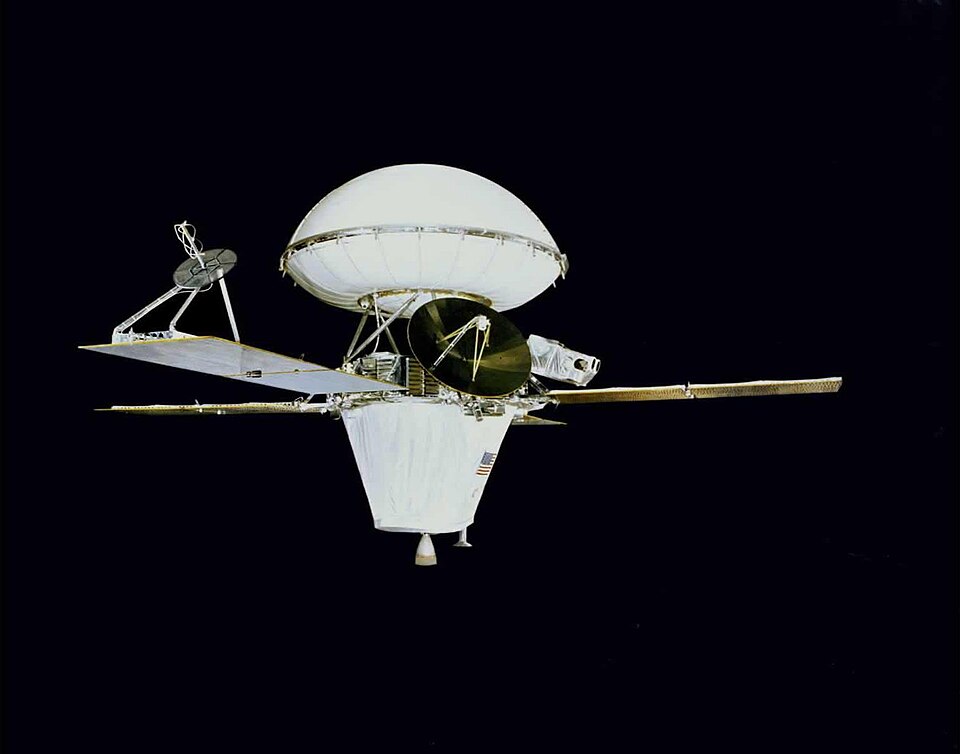
- Viking 1's image is recorded as Viking spacecraft.jpg[4].
- Viking 1's instance of is recorded as space mission[5].
- Viking 1's operator is recorded as National Aeronautics and Space Administration[6].
- Viking 1's followed by is recorded as Viking 2[7].
- Viking 1's part of is recorded as Viking program[8].
- Viking 1's Commons category is recorded as Viking 1[9].
- Viking 1's space launch vehicle is recorded as Titan IIIE[10].
- Viking 1's country of origin is recorded as United States[11].
- Viking 1's has part is recorded as Viking 1 Orbiter[12].
- Viking 1's has part is recorded as Viking 1 Lander[13].
- Viking 1's UTC date of spacecraft launch is recorded as +1975-08-20T00:00:00Z[14].
- Viking 1's Freebase ID is recorded as /m/0l88w[15].
- Viking 1's significant event is recorded as rocket launch[16].
- Viking 1's significant event is recorded as orbital activity[17].
- Viking 1's significant event is recorded as soft landing[18].
- Viking 1's significant event is recorded as loss of signal[19].
- Viking 1's described at URL is recorded as https://nssdc.gsfc.nasa.gov/planetary/viking.html[20].
- Viking 1's space tug is recorded as Centaur[21].
- Viking 1's start point is recorded as Cape Canaveral Space Launch Complex 41[22].
- Viking 1's native label is recorded as {'lang': 'en', 'text': 'Viking 1'}[23].
- Viking 1's duration is recorded as {'unit': 'Q573', 'amount': '+2642'}[24].
- Viking 1's mass is recorded as {'unit': 'Q11570', 'amount': '+3527'}[25].
Why It Matters
Viking 1 draws 348 Wikipedia views per month (space_mission category, ranking #8 of 77).[2] It has Wikipedia articles in 27 language editions, a strong signal of global cultural recognition.[26] It is known by 11 alternative names across languages and contexts.[27]