
Victor Horta
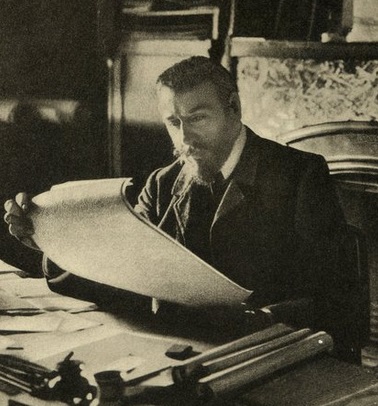
0 sources
Summary
Victor Horta was born on January 6, 1861[1], in Ghent[2]. He died on September 8, 1947[3], in Brussels[4]. He worked as an architect[5], designer[6], urban planner[7], teacher[8], and general contractor[9]. He ranks in the top 0.71% of human entities by monthly Wikipedia readership (2,495 views/month, #7,137 of 1,000,298).[10]
Key Facts
- Place of burial: Ixelles Cemetery[11]
- Father: Pierre Horta[12]
- Mother: Henriette Coppieters[13]
- Spouse: Pauline Heyse[14], Julia Carlsson[15]
- Child: Marguerite Horta[16], Simonne Horta[17]
- Country of citizenship: Belgium[18]
- Native language: French[19]
- Field of work: architecture[20]
- Educated at: Académie Royale des Beaux-Arts - École supérieure des Arts de la Ville de Bruxelles[21]
- Notable work: Hôtel Tassel[22], Hôtel Solvay[23], Hôtel van Eetvelde[24], House & Atelier Horta[25], Centre for Fine Arts[26], Maison du Peuple[27]
- Award received: Officer of the Order of the Crown[28]
- Sex or gender: male[29]
- Noble title: Baron Horta[30]
- Movement: Art Nouveau[31], Art Deco[32]
- Commons category: Victor Horta[33]
- Archives at: Archives for Modern Architecture[34]
- Honorific prefix: The High Wellborn[35]
- Residence: House & Atelier Horta[36]
- Family name: Horta[37]
- Given name: Victor[38], Petrus[39]
- Topic's main category: Category:Victor Horta[40]
- Work location: House & Atelier Horta[41]
- Student of: Alphonse Balat[42]
- Described by source: Great Soviet Encyclopedia (1969–1978)[43]
- Languages spoken, written or signed: French[44]
Body
Works and Contributions
Things named for Victor Horta include Horta Museum[45], an architectural museum[46], in Belgium[47], headquartered in Saint-Gilles[48]; Pavilion of Human Passions[49], a tempietto[50], in Belgium[51], founded in 1889[52]; and Horta Station[53], a tram stop[54], in Belgium[55].
Why It Matters
Victor Horta has Wikipedia articles in 24 language editions, a strong signal of global cultural recognition.[56] He is known by 27 alternative names across languages and contexts.[57]
He has been cited as an influence by François Schuiten[58], a draftsperson[59], b. 1956[60], of Belgium[61], awarded the Grand prix de la ville d'Angoulême[62], specialised in comics[63].
Entities named for him include Horta Museum[45], an architectural museum[46], in Belgium[47], headquartered in Saint-Gilles[48]; Pavilion of Human Passions[49], a tempietto[50], in Belgium[51], founded in 1889[52]; and Horta Station[53], a tram stop[54], in Belgium[55].
FAQs
Where was Victor Horta born?
Victor Horta was born in Ghent[2].
Where did Victor Horta die?
Victor Horta passed away in Brussels[4].
Who were Victor Horta's parents?
Victor Horta's father was Pierre Horta[12]. Victor Horta's mother was Henriette Coppieters[13].
Who was Victor Horta married to?
Victor Horta's spouses include Pauline Heyse[14] and Julia Carlsson[15].
What did Victor Horta do for work?
Victor Horta worked as an architect[5], designer[6], urban planner[7], teacher[8], and general contractor[9].
Where did Victor Horta go to school?
Victor Horta was educated at Académie Royale des Beaux-Arts - École supérieure des Arts de la Ville de Bruxelles[21].
What awards did Victor Horta receive?
Honors received include Officer of the Order of the Crown[28].
Who did Victor Horta influence?
Victor Horta has been cited as an influence by François Schuiten[58].