
Urmuz
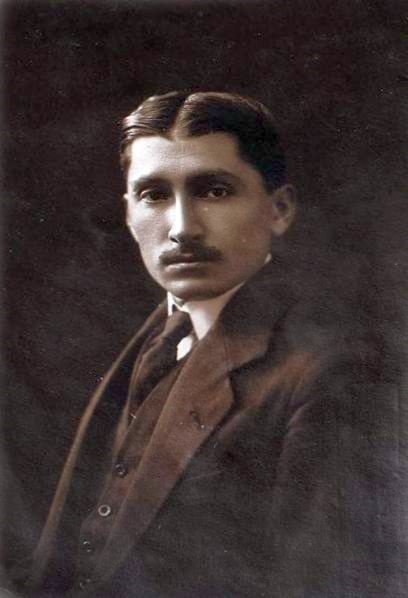
0 sources
Urmuz
Summary
Urmuz is a human[1]. He was born in Curtea de Argeș[2]. He was born on March 17, 1883[3]. He passed away in Bucharest[4]. He died on November 23, 1923[5]. He worked as a magistrate[6], writer[7], poet[8], judge[9], and lawyer[10]. He ranks in the top 0.73% of human entities by monthly Wikipedia readership (160 views/month, #7,265 of 1,000,298).[11]
Key Facts
- Urmuz's place of birth was Curtea de Argeș[2].
- Urmuz passed away in Bucharest[4].
- Urmuz was born on March 17, 1883[3].
- Urmuz died on November 23, 1923[5].
- Urmuz is buried at Bellu Cemetery[12].
- Urmuz held citizenship in Kingdom of Romania[13].
- Urmuz's professions included magistrate[6].
- Urmuz worked as a writer[7].
- Urmuz worked as a poet[8].
- Urmuz worked as a judge[9].
- Urmuz worked as a lawyer[10].
- Urmuz's professions included prose writer[14].
- Urmuz held the position of judge[15].
- Urmuz's education included a stint at University of Bucharest[16].
- Urmuz's education included a stint at Gheorghe Lazăr National College[17].
- Urmuz was influenced by Ion Luca Caragiale[18].
- Urmuz is recorded as male[19].
- Urmuz's instance of is recorded as human[20].
- Urmuz's Commons category is recorded as Urmuz[21].
- The cause of death was shooting[22].
- Urmuz was part of the conflict World War I[23].
- Urmuz's family name is recorded as Ionescu[24].
- Urmuz's family name is recorded as Q107225126[25].
- Urmuz's family name is recorded as Q107449123[26].
- Urmuz's family name is recorded as Dumitrescu[27].
Body
Origins and Family
Urmuz was born in Curtea de Argeș[2]. He was born on March 17, 1883[3].
Education
Educated at University of Bucharest[16], a public university[28], in Romania[29], founded in 1864[30], headquartered in Bucharest[31] and Gheorghe Lazăr National College[17], a high school[32], in Romania[33], founded in 1860[34].
Career and Affiliations
Recorded occupations include magistrate[6], writer[7], poet[8], judge[9], lawyer[10], and prose writer[14]. Urmuz held the position of judge[15].
Death and Burial
Urmuz died on November 23, 1923[5]. He died in Bucharest[4]. The cause of death was shooting[22]. Burial took place at Bellu Cemetery[12].
Works and Contributions
Things named for Urmuz include 44194 he[35], an asteroid[36].
Why It Matters
Urmuz ranks in the top 0.73% of human entities by monthly Wikipedia readership (160 views/month, #7,265 of 1,000,298).[11] He has Wikipedia articles in 10 language editions, a strong signal of global cultural recognition.[37] He is known by 14 alternative names across languages and contexts.[38]
He has been cited as an influence by Eugène Ionesco[39], a playwright[40], 1909–1994[41], of Romania[42], awarded the Commandeur des Arts et des Lettres[43], specialised in performing arts[44]; Sergiu Dan[45], a linguist[46], 1903–1976[47], of Romania[48]; Ion Călugăru[49], a poet[50], 1902–1956[51], of Romania[52], specialised in creative and professional writing[53]; Geo Bogza[54], a war correspondent[55], 1908–1993[56], of Romania[57]; Constant Tonegaru[58], a poet[59], 1919–1952[60], of Romania[61]; and H. Bonciu[62], a winegrower[63], 1893–1950[64], of Romania[65].
Entities named for him include 44194 he[35], an asteroid[36].
FAQs
Where was Urmuz born?
Born in Curtea de Argeș[2], Urmuz…
Where did Urmuz die?
Urmuz passed away in Bucharest[4].
What did Urmuz do for work?
Urmuz worked as magistrate[6], writer[7], poet[8], judge[9], and lawyer[10].
Where did Urmuz go to school?
Urmuz was educated at University of Bucharest[16] and Gheorghe Lazăr National College[17].
Who did Urmuz influence?
Urmuz has been cited as an influence by Eugène Ionesco[39], Sergiu Dan[45], Ion Călugăru[49], and Geo Bogza[54].