
universal quantification
logical quantification stating that a statement holds for all objects
Press Enter · cited answer in seconds
0 sources
universal quantification
Summary
universal quantification ranks in the top 2% of general entities by monthly Wikipedia readership (204 views/month).[1]
Key Facts
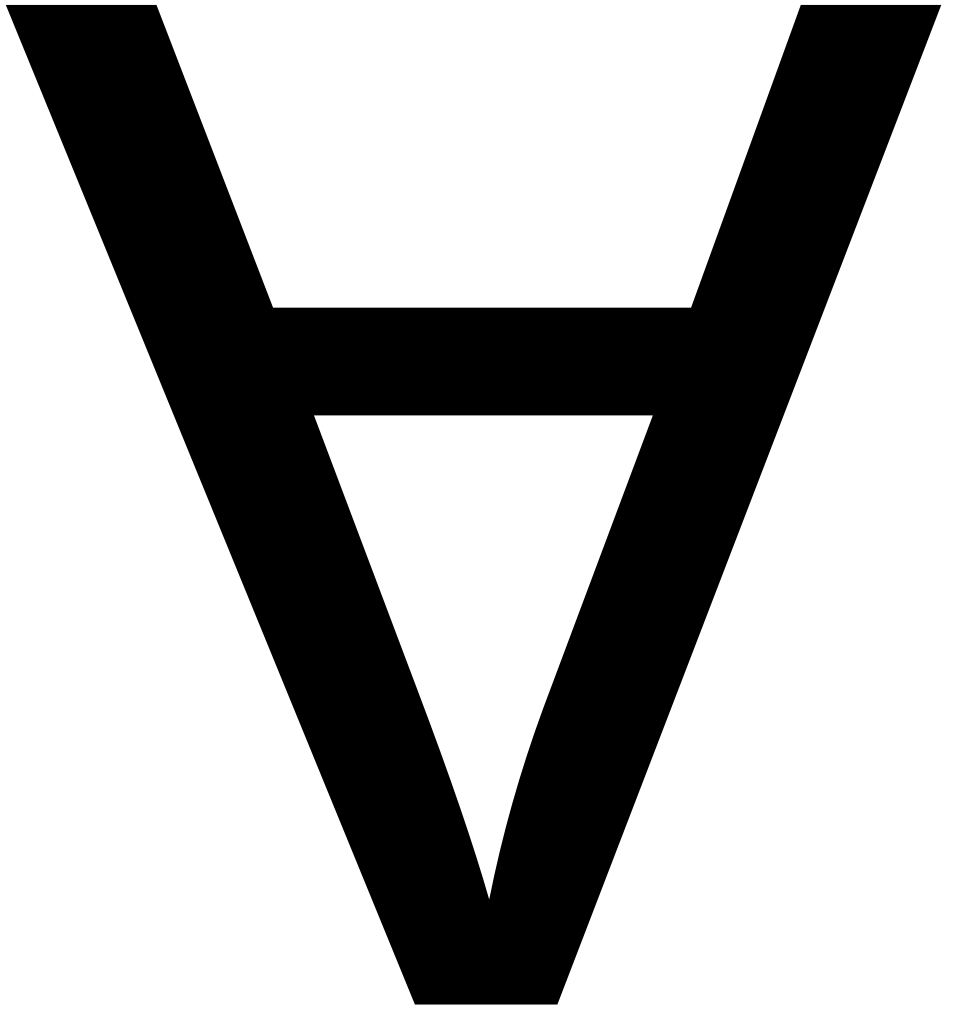
- universal quantification's image is recorded as Universal-quantification.svg[2].
- universal quantification's subclass of is recorded as quantifier[3].
- universal quantification's Commons category is recorded as Universal quantification[4].
- universal quantification's opposite of is recorded as existential quantification[5].
- universal quantification's Freebase ID is recorded as /m/0k3dw[6].
- universal quantification's notation is recorded as Q14737094[7].
- universal quantification's described by source is recorded as ISO 80000-2:2019 Quantities and units — Part 2: Mathematics[8].
- universal quantification's Encyclopædia Britannica Online ID is recorded as topic/universal-quantifier[9].
- universal quantification's studied by is recorded as logic[10].
- universal quantification's MathWorld ID is recorded as UniversalQuantifier[11].
- universal quantification's nLab ID is recorded as universal quantifier[12].
- universal quantification's Elhuyar ZTH ID is recorded as 138445[13].
- universal quantification's Wolfram Language entity code is recorded as Entity["Concept", "UniversalQuantifier::s28pb"][14].
- universal quantification's maintained by WikiProject is recorded as WikiProject Mathematics[15].
- universal quantification's Microsoft Academic ID is recorded as 139134325[16].
- universal quantification's Australian Educational Vocabulary ID is recorded as scot/15469[17].
- universal quantification's New Encyclopedic Dictionary of Czech ID is recorded as UNIVERZ%C3%81LN%C3%8D%20KVANTIFIK%C3%81TOR[18].
- universal quantification's Encyclopedia of Mathematics article ID is recorded as Universal_quantifier[19].
- universal quantification's FOLDOC ID is recorded as universal+quantifier[20].
Why It Matters
universal quantification ranks in the top 2% of general entities by monthly Wikipedia readership (204 views/month).[1] It has Wikipedia articles in 22 language editions, a strong signal of global cultural recognition.[21] It is known by 37 alternative names across languages and contexts.[22]