
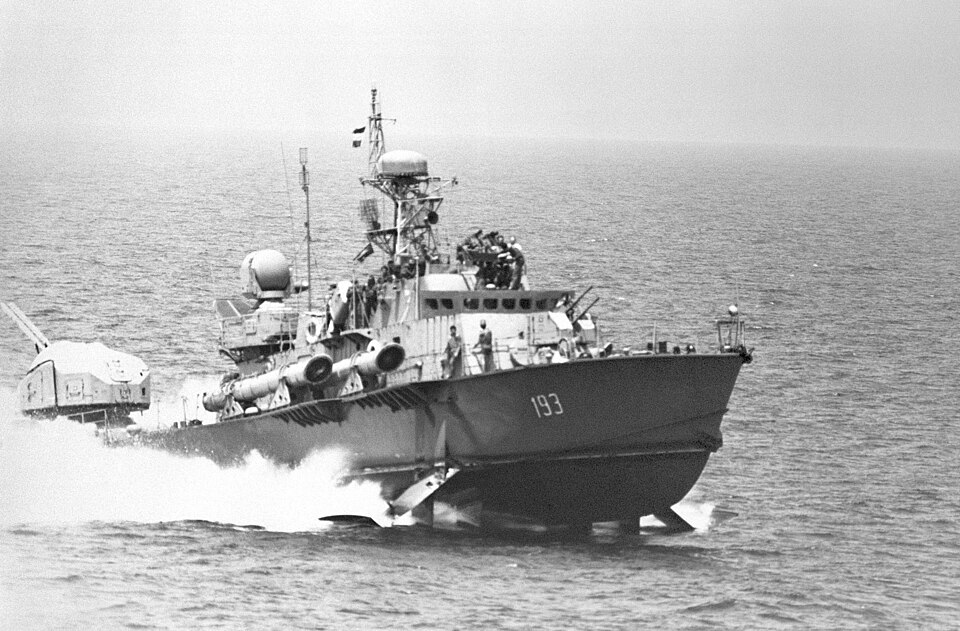
Turya-class torpedo boat
class of Soviet hydrofoil torpedo boats
Press Enter · cited answer in seconds
0 sources
Turya-class torpedo boat
Summary
Turya-class torpedo boat is a boat class[1]. It draws 105 Wikipedia views per month (boat_class category, ranking #57 of 196).[2]
Key Facts
- Turya-class torpedo boat's instance of is recorded as boat class[3].
- Turya-class torpedo boat is operated by Soviet Navy[4].
- Turya-class torpedo boat is operated by Russian Navy[5].
- storm is named after Turya-class torpedo boat[6].
- Turya-class torpedo boat followed Project 206 Shtorm torpedo boat[7].
- Turya-class torpedo boat was followed by Matka-class missile boat[8].
- Turya-class torpedo boat was followed by Project 133 Antares-class patrol boat[9].
- Turya-class torpedo boat is a type of hydrofoil[10].
- Turya-class torpedo boat is a type of torpedo boat[11].
- Turya-class torpedo boat is a type of boat[12].
- Turya-class torpedo boat's Commons category is recorded as T-68 class torpedo boat[13].
- Turya-class torpedo boat's country of origin is recorded as Soviet Union[14].
- Turya-class torpedo boat's armament is recorded as AK-725 gun[15].
- Turya-class torpedo boat's armament is recorded as 2M-3M[16].
- Turya-class torpedo boat's armament is recorded as SET-65[17].
- Turya-class torpedo boat's armament is recorded as depth charge[18].
- Turya-class torpedo boat's NATO reporting name is recorded as Turya-class[19].
- Turya-class torpedo boat's service entry is recorded as January 1, 1972[20].
- Turya-class torpedo boat's short name is recorded as {'lang': 'mul', 'text': 'Turya'}[21].
- Turya-class torpedo boat's length is recorded as {'unit': 'Q11573', 'amount': '+39.5'}[22].
Body
Physical Characteristics
Turya-class torpedo boat's length is recorded as {'unit': 'Q11573', 'amount': '+39.5'}[22].
Designation and Status
Turya-class torpedo boat's instance of is recorded as boat class[3].
History and Context
storm is named after Turya-class torpedo boat[6].
Why It Matters
Turya-class torpedo boat draws 105 Wikipedia views per month (boat_class category, ranking #57 of 196).[2] It has Wikipedia articles in 11 language editions, a strong signal of global cultural recognition.[23] It is known by 10 alternative names across languages and contexts.[24]