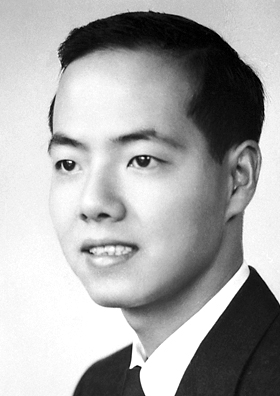
Tsung-Dao Lee
0 sources
Tsung-Dao Lee was born on November 24, 1926, in Shanghai [1][2][3] and died on August 4, 2024, in San Francisco [4][5][2]. He held citizenship in the United States, the Republic of China, and Taiwan . Lee worked as a physicist, university teacher, and theoretical physicist [3][2], specializing in the fields of particle physics, physics, and theoretical physics [6].
His academic career included employment at Columbia University, the University of California, Berkeley, and Zhejiang University . Lee was married to Jeannette Hui-Chun Chin [7]. He received numerous accolades, including the Nobel Prize in Physics, a Guggenheim Fellowship, the Oskar Klein Medal, the Matteucci Medal, and recognition as a Fellow of the American Physical Society, alongside an honorary doctorate from Peking University and two additional honors [8][9][10][11].
Lee was a member of several prestigious organizations, including the Accademia Nazionale dei Lincei, the Pontifical Academy of Sciences, the National Academy of Sciences, and the Chinese Academy of Sciences .
Key Facts
- Date of birth: November 25, 1926[9]
- Father: Tsing Kong Lee[10]
- Spouse: Jeannette Hui-Chun Chin[11]
- Child: Stephen Lee[12], James Lee[13]
- Country of citizenship: United States[14], Republic of China[15], Taiwan[16]
- Field of work: particle physics[17], physics[18], theoretical physics[19]
- Employer: Columbia University[20], University of California, Berkeley[21], Zhejiang University[22]
- Educated at: Zhejiang University[23], National Southwestern Associated University[24], University of Chicago[25], Tsinghua University[26], Peking University[27], Nankai University[28]
- Doctoral advisor: Enrico Fermi[29]
- Notable work: Question of Parity Conservation in Weak Interactions[30], Lee–Yang theory[31], Lee–Yang theorem[32], CUSPEA[33]
- Award received: Nobel Prize in Physics[34], Guggenheim Fellowship[35], Oskar Klein Medal[36], Matteucci Medal[37], Fellow of the American Physical Society[38], honorary doctor of the Peking University[39], honorary doctor of the Chinese University of Hong Kong[40], Great Immigrants Award[41]
- Member of: Accademia Nazionale dei Lincei[42], Pontifical Academy of Sciences[43], National Academy of Sciences[44], Chinese Academy of Sciences[45], American Academy of Arts and Sciences[46], Academia Sinica[47], American Physical Society[48], Committee of 100[49], The World Academy of Sciences[50], American Philosophical Society[51]
- Sex or gender: male[52]
- Ancestral home: Suzhou[53]
- Doctoral student: Norman Christ[54], Richard M. Friedberg[55], Gerald Feinberg[56]
- Commons category: Tsung-Dao Lee[57]
- Archives at: Niels Bohr Library & Archives[58]
- Family name: Li[59]
- Work location: People's Republic of China[60]
Why It Matters
Tsung-Dao Lee has Wikipedia articles in 29 language editions, a strong signal of global cultural recognition.[61] He is known by 51 alternative names across languages and contexts.[62]
His notable doctoral advisees include Gerald Feinberg[63], a physicist[64], 1933–1992[65], of United States[66], awarded the Guggenheim Fellowship[67] and Norman Christ[68], a physicist[69], b. 1943[70], of United States[71], awarded the Fellow of the American Physical Society[72].
FAQs
Where was Tsung-Dao Lee born?
Tsung-Dao Lee's place of birth was Shanghai[2].
Where did Tsung-Dao Lee die?
Tsung-Dao Lee passed away in San Francisco[4].
Who were Tsung-Dao Lee's parents?
Tsung-Dao Lee's father was Tsing Kong Lee[10].
Who was Tsung-Dao Lee married to?
Tsung-Dao Lee's spouses include Jeannette Hui-Chun Chin[11].
What did Tsung-Dao Lee do for work?
Tsung-Dao Lee worked as a physicist[5], university teacher[6], and theoretical physicist[7].
Where did Tsung-Dao Lee go to school?
Tsung-Dao Lee was educated at Zhejiang University[23], National Southwestern Associated University[24], University of Chicago[25], and Tsinghua University[26].
What awards did Tsung-Dao Lee receive?
Honors received include Nobel Prize in Physics[34], Guggenheim Fellowship[35], Oskar Klein Medal[36], and Matteucci Medal[37].