Tietze syndrome
0 sources
Tietze syndrome
Summary
Tietze syndrome ranks in the top 2% of general entities by monthly Wikipedia readership (210 views/month).[1]
Key Facts
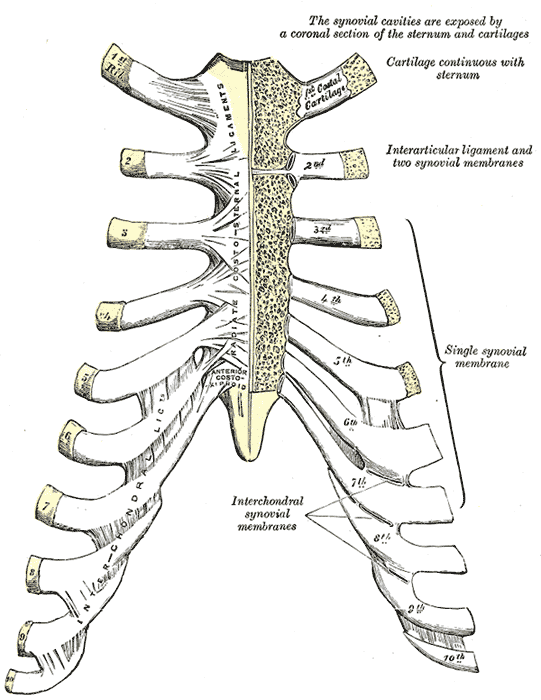
- Tietze syndrome's image is recorded as Gray315.png[2].
- Tietze syndrome's subclass of is recorded as costochondritis[3].
- Tietze syndrome's MeSH descriptor ID is recorded as D013991[4].
- Tietze syndrome's ICD-9 ID is recorded as 733.6[5].
- Tietze syndrome's ICD-10 ID is recorded as M94.0[6].
- Tietze syndrome's BNCF Thesaurus ID is recorded as 24310[7].
- Tietze syndrome's DiseasesDB is recorded as 13112[8].
- Tietze syndrome's Freebase ID is recorded as /m/01v0br[9].
- Tietze syndrome's MeSH tree code is recorded as C05.182.790[10].
- Tietze syndrome's MeSH tree code is recorded as C17.300.182.790[11].
- Tietze syndrome's Patientplus ID is recorded as tietzes-syndrome-pro[12].
- Tietze syndrome's different from is recorded as Tietz syndrome[13].
- Tietze syndrome's different from is recorded as costochondritis[14].
- Tietze syndrome's health specialty is recorded as rheumatology[15].
- Tietze syndrome's BabelNet ID is recorded as 00077223n[16].
- Tietze syndrome's Medical Dictionary for Regulatory Activities ID is recorded as 10043852[17].
- Tietze syndrome's PatientsLikeMe condition ID is recorded as tietze-s-syndrome[18].
- Tietze syndrome's GARD rare disease ID is recorded as 10100[19].
- Tietze syndrome's Wolfram Language entity code is recorded as Entity["Concept", "TietzesSyndrome::2d467"][20].
- Tietze syndrome's Brockhaus Enzyklopädie online ID is recorded as tietze-syndrom[21].
- Tietze syndrome's Store medisinske leksikon ID is recorded as Tietzes_syndrom[22].
- Tietze syndrome's Microsoft Academic ID is recorded as 2779979089[23].
- Tietze syndrome's WordNet 3.1 Synset ID is recorded as 14365057-n[24].
- Tietze syndrome's ScienceDirect topic ID is recorded as medicine-and-dentistry/tietze-syndrome[25].
- Tietze syndrome's ScienceDirect topic ID is recorded as nursing-and-health-professions/tietze-syndrome[26].
Why It Matters
Tietze syndrome ranks in the top 2% of general entities by monthly Wikipedia readership (210 views/month).[1] It has Wikipedia articles in 10 language editions, a strong signal of global cultural recognition.[27] It is known by 10 alternative names across languages and contexts.[28]