
Thomas Mann
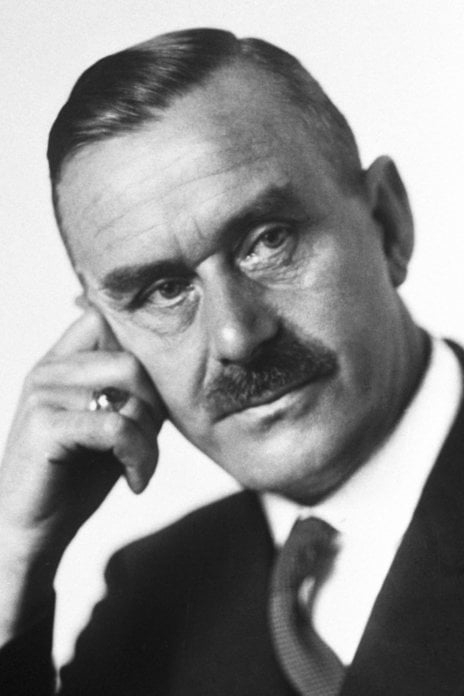
0 sources
Thomas Mann
Summary
Thomas Mann is a human[1]. His place of birth was Lübeck[2]. He died in Zurich[3]. He worked as a novelist[4], essayist[5], autobiographer[6], short story writer[7], and social critic[8]. He ranks in the top 0.52% of human entities by monthly Wikipedia readership (131,581 views/month, #5,194 of 1,000,298).[9]
Key Facts
- Born in Lübeck[2], Thomas Mann…
- Thomas Mann passed away in Zurich[3].
- Burial took place at Kilchberg cemetery[10].
- Thomas Mann's father was Thomas Johann Heinrich Mann[11].
- Thomas Mann's mother was Júlia da Silva Bruhns[12].
- Among Thomas Mann's spouses was Katia Mann[13].
- A child of Thomas Mann was Erika Mann[14].
- A child of Thomas Mann was Klaus Mann[15].
- A child of Thomas Mann was Golo Mann[16].
- A child of Thomas Mann was Monika Mann[17].
- A child of Thomas Mann was Elisabeth Mann Borgese[18].
- A child of Thomas Mann was Michael Mann[19].
- Thomas Mann held citizenship in German Reich[20].
- Thomas Mann held citizenship in Czechoslovakia[21].
- Thomas Mann held citizenship in United States[22].
- German was Thomas Mann's native language[23].
- Thomas Mann worked as a novelist[4].
- Thomas Mann's professions included essayist[5].
- Thomas Mann worked as an autobiographer[6].
- Thomas Mann's professions included short story writer[7].
- Thomas Mann's professions included social critic[8].
- Thomas Mann's professions included diarist[24].
- Thomas Mann's field of work was novel[25].
- Thomas Mann's field of work was creative and professional writing[26].
- Thomas Mann's field of work was prose[27].
Body
Origins and Family
Thomas Mann was born in Lübeck[2]. His father was Thomas Johann Heinrich Mann[11]. His mother was Júlia da Silva Bruhns[12]. German was his native language[23].
Education
Educated at Ludwig-Maximilians-Universität München[28], a public research university[29], in Germany[30], founded in 1472[31], headquartered in Hauptgebäude der Ludwig-Maximilians-Universität München[32]; Technical University of Munich[33], an institute of technology[34], in Germany[35], founded in 1868[36], headquartered in Munich[37]; and Katharineum[38], a gymnasium[39], in Germany[40], founded in 1531[41].
Career and Affiliations
Recorded occupations include novelist[4], essayist[5], autobiographer[6], short story writer[7], social critic[8], and diarist[24]. Fields of work include novel[25], a literary form[42]; creative and professional writing[26], an academic discipline[43]; prose[27], a literary form[44]; and essay[45], a literary form[46]. Employers include Princeton University[47], a private university[48], in United States[49], founded in 1746[50], headquartered in Princeton[51] and Simplicissimus[52].
Recognition
Awards received include Nobel Prize in Literature[53], Goethe Prize[54], Pour le Mérite for Sciences and Arts order[55], Feltrinelli Prize[56], Goethe Plaque of the City of Frankfurt[57], and honorary doctorate from Princeton University[58].
Personal Life
Thomas Mann was married to Katia Mann[13]. Children include Erika Mann[14], an actor[59], 1905–1969[60], of United Kingdom[61], specialised in essay[62]; Klaus Mann[15], a writer[63], 1906–1949[64], of German Empire[65], specialised in novel[66]; Golo Mann[16], a writer[67], 1909–1994[68], of Germany[69], awarded the Guggenheim Fellowship[70], specialised in literary activity[71]; Monika Mann[17], a writer[72], 1910–1992[73], of Germany[74]; Elisabeth Mann Borgese[18], a writer[75], 1918–2002[76], of Canada[77], awarded the Member of the Order of Canada[78]; and Michael Mann[19], a musician[79], 1919–1977[80], of Germany[81], awarded the Schubart-Literaturpreis[82]. His religion is recorded as Lutheranism[83]. He was affiliated with the German Democratic Party[84].
Death and Burial
Thomas Mann died in Zurich[3]. Burial took place at Kilchberg cemetery[10].
Works and Contributions
Things named for Thomas Mann include Thomas Mann Prize[85] and 8382 Mann[86].
Why It Matters
Thomas Mann ranks in the top 0.52% of human entities by monthly Wikipedia readership (131,581 views/month, #5,194 of 1,000,298).[9] He has Wikipedia articles in 30 language editions, a strong signal of global cultural recognition.[87] He is known by 43 alternative names across languages and contexts.[88]
He has been cited as an influence by Norman Mailer[89], a journalist[90], 1923–2007[91], of United States[92], awarded the National Book Award[93]; Klaus Mann[94], a writer[95], 1906–1949[96], of German Empire[97], specialised in novel[98]; Michel Houellebecq[99], a poet[100], b. 1956[101], of France[102], awarded the Prix de Flore[103], specialised in literature[104]; and Saul Bellow[105], a writer[106], 1915–2005[107], of United States[108], awarded the Nobel Prize in Literature[109], specialised in novel[110].
Works attributed to him include The Magic Mountain[111], a literary work[112], founded in 1924[113]; Death in Venice[114], a literary work[115], founded in 1912[116]; Buddenbrooks[117], a literary work[118], founded in 1890[119]; Doctor Faustus[120], a literary work[121], founded in 1947[122]; Joseph and His Brothers[123]; and Confessions of Felix Krull[124]. Entities named for him include Thomas Mann Prize[85] and 8382 Mann[86].
FAQs
Where was Thomas Mann born?
Thomas Mann was born in Lübeck[2].
Where did Thomas Mann die?
Thomas Mann passed away in Zurich[3].
Who were Thomas Mann's parents?
Thomas Mann's father was Thomas Johann Heinrich Mann[11]. Thomas Mann's mother was Júlia da Silva Bruhns[12].
Who was Thomas Mann married to?
Thomas Mann's spouses include Katia Mann[13].
What did Thomas Mann do for work?
Thomas Mann worked as novelist[4], essayist[5], autobiographer[6], short story writer[7], and social critic[8].
Where did Thomas Mann go to school?
Thomas Mann was educated at Ludwig-Maximilians-Universität München[28], Technical University of Munich[33], and Katharineum[38].
What awards did Thomas Mann receive?
Honors received include Nobel Prize in Literature[53], Goethe Prize[54], Pour le Mérite for Sciences and Arts order[55], and Feltrinelli Prize[56].
Who did Thomas Mann influence?
Thomas Mann has been cited as an influence by Norman Mailer[89], Klaus Mann[94], Michel Houellebecq[99], and Saul Bellow[105].