
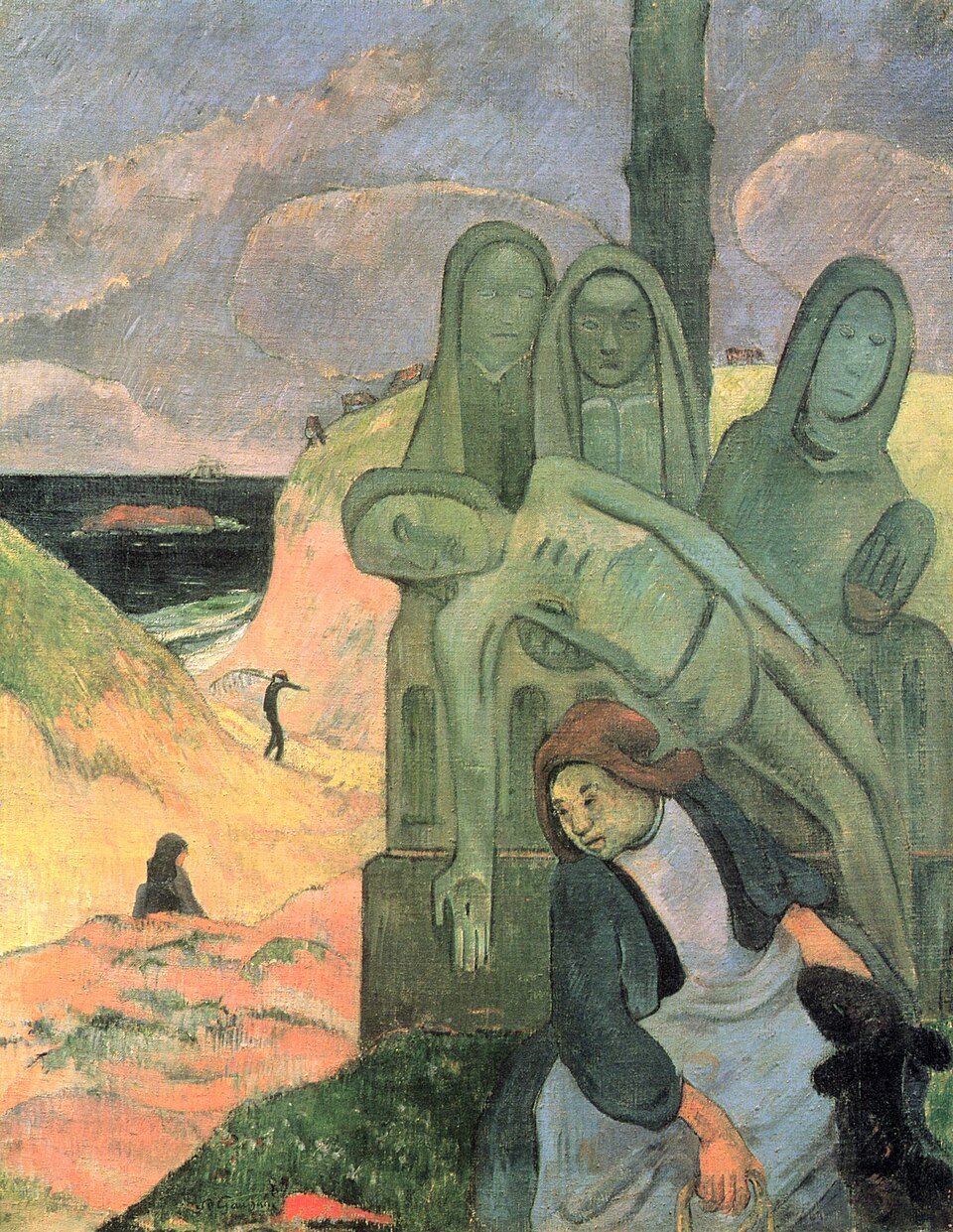
The Green Christ
painting by Paul Gauguin
Press Enter · cited answer in seconds
0 sources
The Green Christ
Summary
The Green Christ is a painting[1]. It has Wikipedia articles in 12 language editions, a strong signal of global cultural recognition.[2]
Key Facts
- The Green Christ is the creator of Paul Gauguin[3].
- The Green Christ is in the country of Belgium[4].
- The Green Christ's instance of is recorded as painting[5].
- The Green Christ's genre is religious art[6].
- The Green Christ's depicts is recorded as calvary[7].
- The Green Christ's depicts is recorded as Calvaire de Nizon[8].
- The Green Christ is made of oil paint[9].
- The Green Christ's collection is recorded as Royal Museums of Fine Arts of Belgium[10].
- The Green Christ's inventory number is recorded as 4416[11].
- The Green Christ took place at Royal Museums of Fine Arts of Belgium[12].
- The Green Christ's Commons category is recorded as Le Christ vert[13].
- The Green Christ's catalog code is recorded as 328[14].
- The Green Christ's catalog code is recorded as 150[15].
- January 1, 1889 marks the founding of The Green Christ[16].
- The Green Christ's described at URL is recorded as http://www.fine-arts-museum.be/fr/la-collection/paul-gauguin-le-calvaire-breton[17].
- The Green Christ's depicts Iconclass notation is recorded as 73D74[18].
- The Green Christ's title is recorded as {'lang': 'fr', 'text': 'Le Christ vert, ou Calvaire breton'}[19].
- The Green Christ's height is recorded as {'unit': 'Q174728', 'amount': '+92'}[20].
- The Green Christ's width is recorded as {'unit': 'Q174728', 'amount': '+73.5'}[21].
- The Green Christ's copyright status is recorded as public domain[22].
Body
Authorship and Creation
The Green Christ is the creator of Paul Gauguin[3].
Publication
The Green Christ's genre is religious art[6].
Material and Period
The Green Christ is made of oil paint[9]. It took place at Royal Museums of Fine Arts of Belgium[12].
Why It Matters
The Green Christ has Wikipedia articles in 12 language editions, a strong signal of global cultural recognition.[2] It is known by 3 alternative names across languages and contexts.[23]