
Sumerian
language of ancient Sumer
Press Enter · cited answer in seconds
0 sources
Sumerian
Summary
Sumerian is a dead language[1]. Sumerian ranks in the top 2% of dead_language entities by monthly Wikipedia readership (7,586 views/month).[2]
Key Facts
- Sumerian is in the country of Sumer[3].
- Sumerian is in the country of Akkadian Empire[4].
- Sumerian's instance of is recorded as dead language[5].
- Sumerian's instance of is recorded as ancient language[6].
- Sumerian is a type of human language[7].
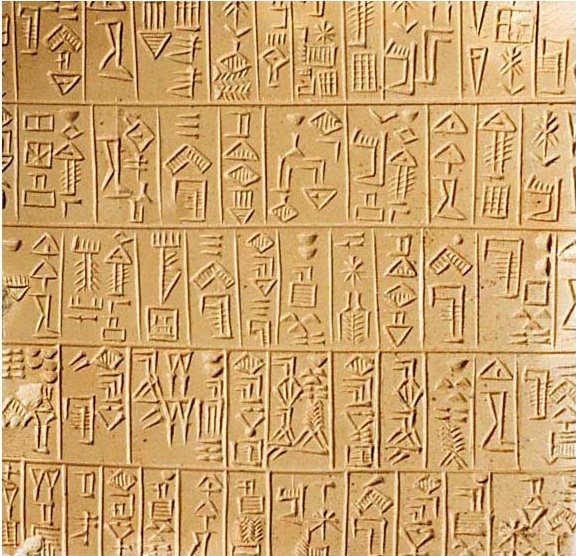
- Sumerian's writing system is recorded as cuneiform[8].
- Sumerian's Commons category is recorded as Sumerian language[9].
- Sumerian's topic's main category is recorded as Category:Sumerian language[10].
- Sumerian's number of speakers, writers, or signers is recorded as {'amount': '+0'}[11].
- Sumerian's described by source is recorded as Armenian Soviet Encyclopedia[12].
- Sumerian's topic has template is recorded as Q104413837[13].
- Sumerian's native label is recorded as {'lang': 'sux', 'text': '𒅴𒂠'}[14].
- Sumerian's short name is recorded as {'lang': 'az', 'text': 'şumercə'}[15].
- Sumerian's short name is recorded as {'lang': 'tg', 'text': 'шумерӣ'}[16].
- Sumerian's indigenous to is recorded as Sumer[17].
- Sumerian's exact match is recorded as http://publications.europa.eu/resource/authority/language/SUX[18].
- Sumerian's has grammatical case is recorded as equative case[19].
- Sumerian's linguistic typology is recorded as subject–object–verb[20].
- Sumerian's linguistic typology is recorded as agglutinative language[21].
- Sumerian's linguistic typology is recorded as language isolate[22].
- Sumerian's linguistic typology is recorded as ergative–absolutive language[23].
Body
Definition and Type
Recorded instance of include dead language[5] and ancient language[6]. Sumerian is a type of human language[7].
Why It Matters
Sumerian ranks in the top 2% of dead_language entities by monthly Wikipedia readership (7,586 views/month).[2] Sumerian has Wikipedia articles in 30 language editions, a strong signal of global cultural recognition.[24] Sumerian is known by 28 alternative names across languages and contexts.[25]