
Stanley Fischer
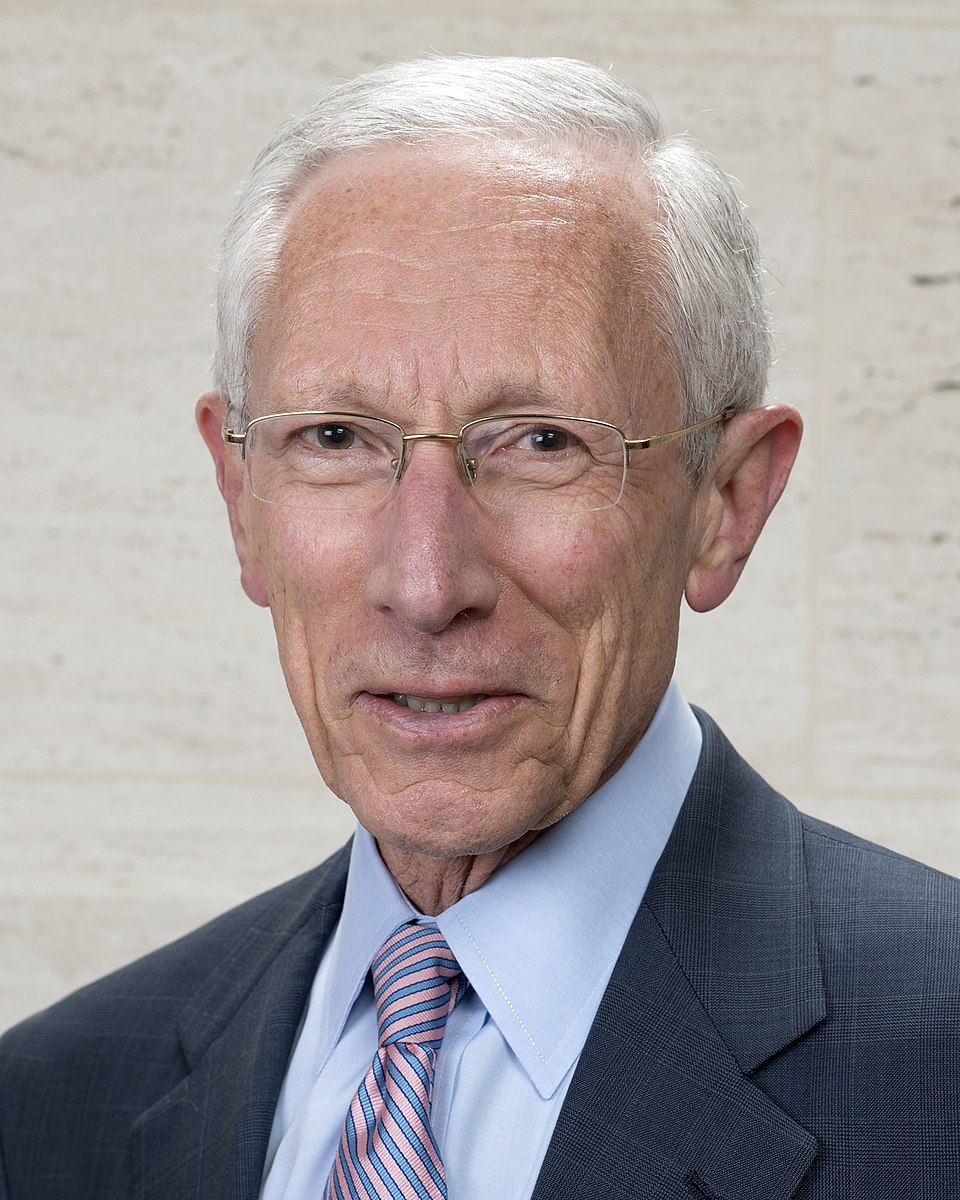
0 sources
Summary
Stanley Fischer is a human[1]. His place of birth was Mazabuka[2]. He died in Lexington[3]. He worked as an economist[4], pedagogue[5], writer[6], banker[7], and university teacher[8]. He ranks in the top 0.71% of human entities by monthly Wikipedia readership (527 views/month, #7,126 of 1,000,298).[9]
Key Facts
- Born in Mazabuka[2].
- Stanley Fischer was born in Lusaka[10].
- Stanley Fischer passed away in Lexington[3].
- Stanley Fischer held citizenship in Israel[11].
- Stanley Fischer held citizenship in United States[12].
- English was Stanley Fischer's native language[13].
- Stanley Fischer's professions included economist[4].
- Stanley Fischer worked as a pedagogue[5].
- Stanley Fischer's professions included writer[6].
- Stanley Fischer's professions included banker[7].
- Stanley Fischer worked as a university teacher[8].
- Stanley Fischer worked as a governor[14].
- Stanley Fischer's field of work was economics[15].
- Stanley Fischer's field of work was macroeconomics[16].
- Stanley Fischer's field of work was economics of banking[17].
- Stanley Fischer held the position of Chief Economist of the World Bank[18].
- Stanley Fischer held the position of Governor of the Bank of Israel[19].
- Stanley Fischer held the position of Vice Chair of the Federal Reserve[20].
- Stanley Fischer was employed by Massachusetts Institute of Technology[21].
- Among Stanley Fischer's employers was MIT Sloan School of Management[22].
- Stanley Fischer was employed by University of Oxford[23].
- Stanley Fischer was employed by University of Chicago[24].
- Among Stanley Fischer's employers was MIT Department of Economics[25].
- Stanley Fischer was educated at London School of Economics and Political Science[26].
- Stanley Fischer was educated at London School of Economics and Political Science[27].
Body
Origins and Family
Recorded place of birth include Mazabuka[2], a town[28], in Zambia[29] and Lusaka[10], a city[30], in Zambia[31], founded in 1905[32]. English was Stanley Fischer's native language[13].
Education
Educated at London School of Economics and Political Science[26], a public research university[33], in United Kingdom[34], founded in 1895[35], headquartered in London[36] and Massachusetts Institute of Technology[37], a university[38], in United States[39], founded in 1861[40], headquartered in Cambridge[41]. Stanley Fischer's doctoral advisor was Franklin M. Fisher[42].
Career and Affiliations
Recorded occupations include economist[4], pedagogue[5], writer[6], banker[7], university teacher[8], and governor[14]. Fields of work include economics[15], an academic discipline[43]; macroeconomics[16], a theory[44]; and economics of banking[17], an industry[45]. Employers include Massachusetts Institute of Technology[21], a university[46], in United States[47], founded in 1861[48], headquartered in Cambridge[49]; MIT Sloan School of Management[22], a business school[50], in United States[51], founded in 1914[52], headquartered in Cambridge[53]; University of Oxford[23], a collegiate university[54], in United Kingdom[55], founded in 1096[56], headquartered in Oxford[57]; University of Chicago[24], a private university[58], in United States[59], founded in 1890[60], headquartered in Chicago[61]; and MIT Department of Economics[25], an academic department[62], founded in 1903[63]. Positions held include Chief Economist of the World Bank[18], a position[64]; Governor of the Bank of Israel[19], a position[65], in Israel[66], founded in 1954[67]; and Vice Chair of the Federal Reserve[20], a public office[68], in United States[69], founded in 1914[70]. Doctoral students include Zvi Bodie[71], Isher Judge Ahluwalia[72], Frederic Mishkin[73], Steven M. Sheffrin[74], Olivier Blanchard[75], and Ben Bernanke[76].
Recognition
Awards received include Guggenheim Fellowship[77], a fellowship grant[78], in United States[79], founded in 1925[80]; Bernhard Harms Prize[81], an economics award[82], founded in 1964[83]; Distinguished Fellow of the American Economic Association[84]; Fellow of the Econometric Society[85]; Fellow of the American Academy of Arts and Sciences[86]; and Paul A. Volcker Lifetime Achievement Award for Economic Policy[87].
Personal Life
Stanley Fischer's religion is recorded as Judaism[88].
Death and Burial
Stanley Fischer passed away in Lexington[3].
Why It Matters
Stanley Fischer ranks in the top 0.71% of human entities by monthly Wikipedia readership (527 views/month, #7,126 of 1,000,298).[9] He has Wikipedia articles in 19 language editions, a strong signal of global cultural recognition.[89] He is known by 19 alternative names across languages and contexts.[90]
His notable doctoral advisees include Kazuo Ueda[91], an economist[92], b. 1951[93], of Japan[94]; Ben Bernanke[95], an economist[96], b. 1953[97], of United States[98], awarded the Guggenheim Fellowship[99]; Greg Mankiw[100], an economist[101], b. 1958[102], of United States[103], awarded the Fellow of the American Academy of Arts and Sciences[104]; Olivier Blanchard[105], an economist[106], b. 1948[107], of France[108], awarded the Fellow of the Econometric Society[109], specialised in economics[110]; Ilan Goldfajn[111], a politician[112], b. 1966[113], of Israel[114]; and Frederic Mishkin[115], an economist[116], b. 1951[117], of United States[118].
FAQs
Where was Stanley Fischer born?
Stanley Fischer's place of birth was Mazabuka[2].
Where did Stanley Fischer die?
Stanley Fischer died in Lexington[3].
What did Stanley Fischer do for work?
Stanley Fischer worked as economist[4], pedagogue[5], writer[6], banker[7], and university teacher[8].
Where did Stanley Fischer go to school?
Stanley Fischer was educated at London School of Economics and Political Science[26], London School of Economics and Political Science[27], and Massachusetts Institute of Technology[37].
What awards did Stanley Fischer receive?
Honors received include Guggenheim Fellowship[77], Bernhard Harms Prize[81], Distinguished Fellow of the American Economic Association[84], and Fellow of the Econometric Society[85].