
Stanisław Moniuszko
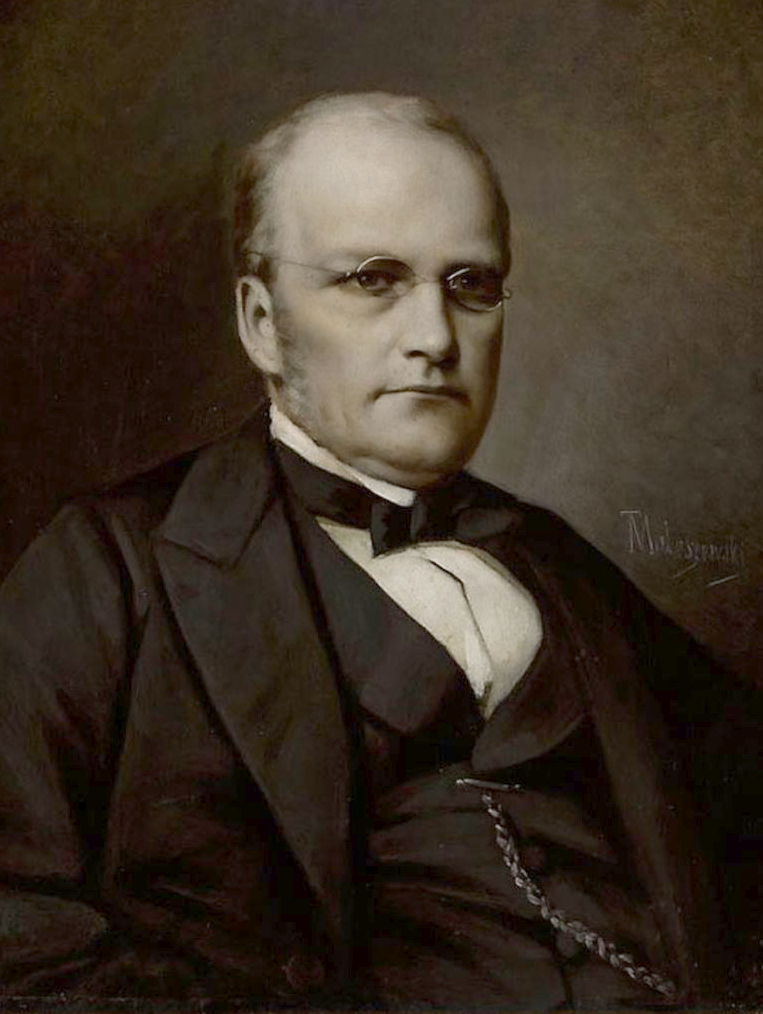
0 sources
Summary
Stanisław Moniuszko was born on May 5, 1819[1], in Ubieĺ[2]. He died on June 4, 1872[3], in Warsaw[4]. He worked as a composer[5], conductor[6], musicologist[7], music educator[8], and university teacher[9]. He ranks in the top 0.72% of human entities by monthly Wikipedia readership (828 views/month, #7,243 of 1,000,298).[10]
Key Facts
- Date of death: April 4, 1872[11]
- Place of burial: Powązki Cemetery[12]
- Father: Czesław Moniuszko[13]
- Mother: Elżbieta Madziarska[14]
- Spouse: Aleksandra Müller[15]
- Child: Jan Czesław Moniuszko[16], Elżbieta Moniuszko-Nawroczyńska[17], Bolesław Moniuszko[18]
- Country of citizenship: Russian Empire[19], Poland[20]
- Occupation: music teacher[21]
- Field of work: art music[22], music composing[23]
- Employer: Chopin University of Music[24]
- Educated at: Minsk men's gymnasium[25]
- Student: César Cui[26], Henryk Jarecki[27]
- Notable work: Halka[28]
- Member of: Towarzystwo Naukowe Krakowskie[29]
- Sex or gender: male[30]
- Family: House of Moniuszko[31]
- Genre: opera[32]
- Coat of arms: Krzywda[33]
- Commons category: Stanisław Moniuszko[34]
- Cause of death: myocardial infarction[35]
- Residence: Saint Petersburg[36]
- Family name: Moniuszko[37]
- Given name: Stanisław[38]
- Topic's main category: Category:Stanisław Moniuszko[39]
- Commons gallery: Stanisław Moniuszko[40]
Body
Education
Studied under Carl Friedrich Rungenhagen[41], a composer[42], 1778–1851[43], of Kingdom of Prussia[44]; August Freyer[45], an organist[46], 1801–1883[47], of Kingdom of Saxony[48]; and Dominik Stefanowicz[49], a conductor[50], 1797–1870[51], of Russian Empire[52].
Works and Contributions
Things named for Stanisław Moniuszko include Grand Theatre, Poznań[53], a theatre company[54], in Poland[55], founded in 1910[56]; Moniuszki Street in Łódź[57], a street[58], in Poland[59]; and Academy of Music in Gdańsk[60], a college of music[61], in Poland[62], founded in 1947[63], headquartered in Villa Sedan in Sopot[64].
Why It Matters
Stanisław Moniuszko has Wikipedia articles in 23 language editions, a strong signal of global cultural recognition.[65] He is known by 26 alternative names across languages and contexts.[66]
He has been cited as an influence by Henryk Jarecki[67], a conductor[68], 1846–1918[69], of Russian Empire[70], specialised in art music[71].
Entities named for him include Grand Theatre, Poznań[53], a theatre company[54], in Poland[55], founded in 1910[56]; Moniuszki Street in Łódź[57], a street[58], in Poland[59]; and Academy of Music in Gdańsk[60], a college of music[61], in Poland[62], founded in 1947[63], headquartered in Villa Sedan in Sopot[64].
FAQs
Where was Stanisław Moniuszko born?
Stanisław Moniuszko was born in Ubieĺ[2].
Where did Stanisław Moniuszko die?
Stanisław Moniuszko died in Warsaw[4].
Who were Stanisław Moniuszko's parents?
Stanisław Moniuszko's father was Czesław Moniuszko[13]. Stanisław Moniuszko's mother was Elżbieta Madziarska[14].
Who was Stanisław Moniuszko married to?
Stanisław Moniuszko's spouses include Aleksandra Müller[15].
What did Stanisław Moniuszko do for work?
Stanisław Moniuszko worked as a composer[5], conductor[6], musicologist[7], music educator[8], and university teacher[9].
Where did Stanisław Moniuszko go to school?
Stanisław Moniuszko was educated at Minsk men's gymnasium[25].
Who did Stanisław Moniuszko influence?
Stanisław Moniuszko has been cited as an influence by Henryk Jarecki[67].