
Spencer Fullerton Baird
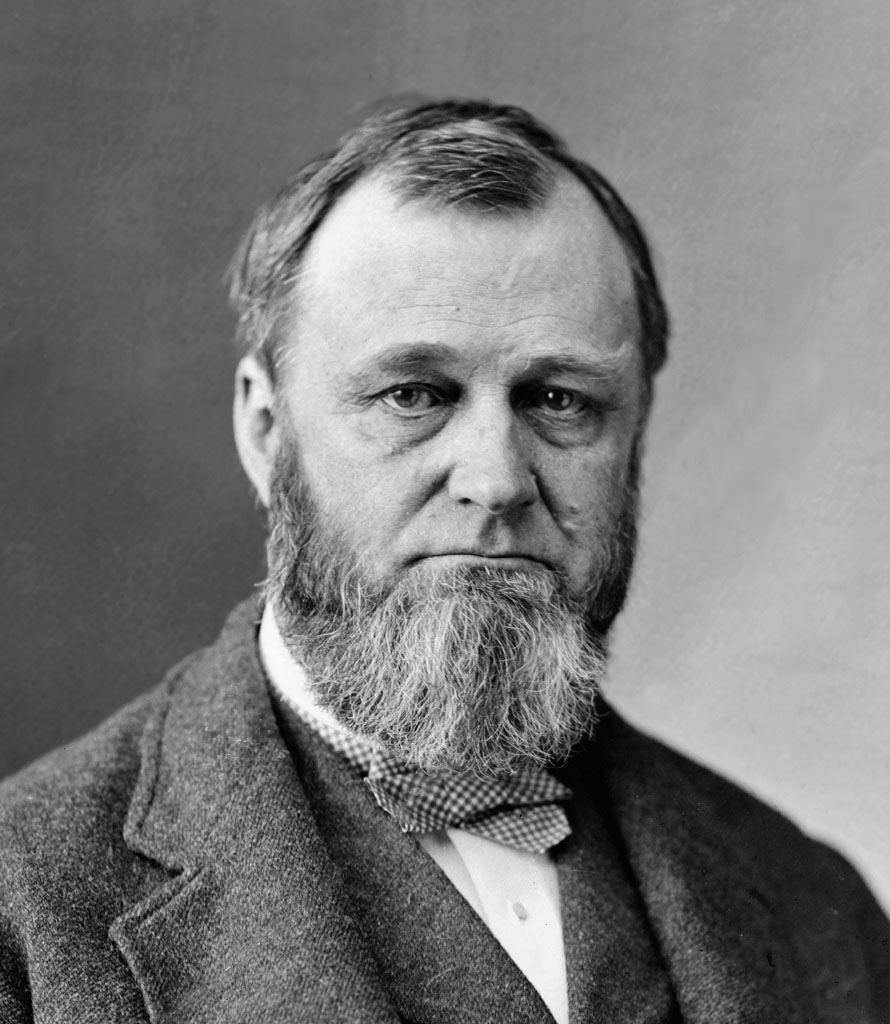
0 sources
Spencer Fullerton Baird
Summary
Spencer Fullerton Baird is a human[1]. His place of birth was Reading[2]. He was born on February 3, 1823[3]. He passed away in Woods Hole[4]. He died on August 19, 1887[5]. He worked as a naturalist[6], curator[7], ornithologist[8], zoologist[9], and ichthyologist[10]. He has Wikipedia articles in 19 language editions, a strong signal of global cultural recognition.[11]
Key Facts
- Born in Reading[2], Spencer Fullerton Baird…
- Spencer Fullerton Baird died in Woods Hole[4].
- Spencer Fullerton Baird was born on February 3, 1823[3].
- Spencer Fullerton Baird was born on January 1, 1823[12].
- Spencer Fullerton Baird died on August 19, 1887[5].
- Spencer Fullerton Baird died on January 1, 1887[13].
- Burial took place at Oak Hill Cemetery[14].
- Spencer Fullerton Baird's mother was Lydia McFunn Baird[15].
- Spencer Fullerton Baird was married to Mary Helen Churchill Baird[16].
- Spencer Fullerton Baird held citizenship in United States[17].
- Spencer Fullerton Baird's professions included naturalist[6].
- Spencer Fullerton Baird's professions included curator[7].
- Spencer Fullerton Baird worked as an ornithologist[8].
- Spencer Fullerton Baird worked as a zoologist[9].
- Spencer Fullerton Baird worked as an ichthyologist[10].
- Spencer Fullerton Baird's professions included university teacher[18].
- Spencer Fullerton Baird's field of work was ornithology[19].
- Spencer Fullerton Baird's field of work was ichthyology[20].
- Spencer Fullerton Baird's field of work was herpetology[21].
- Spencer Fullerton Baird held the position of Secretary of the Smithsonian[22].
- Spencer Fullerton Baird was employed by Smithsonian Institution[23].
- Spencer Fullerton Baird was employed by Dickinson College[24].
- Spencer Fullerton Baird's education included a stint at Dickinson College[25].
- A notable student of Spencer Fullerton Baird was Robert Kennicott[26].
- A notable work attributed to Spencer Fullerton Baird is A history of North American birds[27].
Body
Origins and Family
Spencer Fullerton Baird's place of birth was Reading[2]. Recorded date of birth include February 3, 1823[3] and January 1, 1823[12]. His mother was Lydia McFunn Baird[15].
Education
Spencer Fullerton Baird was educated at Dickinson College[25].
Career and Affiliations
Recorded occupations include naturalist[6], curator[7], ornithologist[8], zoologist[9], ichthyologist[10], and university teacher[18]. Fields of work include ornithology[19], a branch of zoology[28]; ichthyology[20], a branch of zoology[29]; and herpetology[21], a branch of zoology[30]. Employers include Smithsonian Institution[23], an institution[31], in United States[32], founded in 1846[33], headquartered in Washington, D.C.[34] and Dickinson College[24], a college[35], in United States[36], founded in 1783[37], headquartered in Carlisle[38]. Spencer Fullerton Baird held the position of Secretary of the Smithsonian[22]. A notable student of him was Robert Kennicott[26]. He supervised Robert Kennicott as a doctoral student[39].
Works and Contributions
Notable works include A history of North American birds[27], a version, edition or translation[40], written by Thomas Mayo Brewer[41]; Natural History Illustrations[42], a version, edition or translation[43], written by David Starr Jordan[44]; The water birds of North America[45], a version, edition or translation[46], written by Thomas Mayo Brewer[47]; Outlines of American ornithology : part 1, Land birds[48], a version, edition or translation[49]; Report upon the invertebrate animals of Vineyard Sound and adjacent waters, with an account of the physical features of the region[50]; and Catalogue of North American birds, chiefly in the Museum of the Smithsonian Institution[51], a version, edition or translation[52], written by Smithsonian Institution[53]. Things named for Spencer Fullerton Baird include Baird's Junco[54], a taxon[55] and Tantilla bairdi[56], a taxon[57].
Recognition
Awards received include Fellow of the American Academy of Arts and Sciences[58], a fellowship award[59] and Honorary Fellow of the Royal Society Te Apārangi[60].
Personal Life
Among Spencer Fullerton Baird's spouses was Mary Helen Churchill Baird[16].
Death and Burial
Recorded date of death include August 19, 1887[5] and January 1, 1887[13]. Spencer Fullerton Baird died in Woods Hole[4]. He is buried at Oak Hill Cemetery[14].
Why It Matters
Spencer Fullerton Baird has Wikipedia articles in 19 language editions, a strong signal of global cultural recognition.[11] He is known by 12 alternative names across languages and contexts.[61]
He has been cited as an influence by Robert Ridgway[62], a botanist[63], 1850–1929[64], of United States[65], awarded the Brewster Medal[66], specialised in ornithology[67].
Entities named for him include Baird's Junco[54], a taxon[55] and Tantilla bairdi[56], a taxon[57].
His notable doctoral advisees include Robert Kennicott[68], an explorer[69], 1835–1866[70], of United States[71], specialised in zoology[72].
FAQs
Where was Spencer Fullerton Baird born?
Spencer Fullerton Baird was born in Reading[2].
Where did Spencer Fullerton Baird die?
Spencer Fullerton Baird died in Woods Hole[4].
Who were Spencer Fullerton Baird's parents?
Spencer Fullerton Baird's mother was Lydia McFunn Baird[15].
Who was Spencer Fullerton Baird married to?
Spencer Fullerton Baird's spouses include Mary Helen Churchill Baird[16].
What did Spencer Fullerton Baird do for work?
Spencer Fullerton Baird worked as naturalist[6], curator[7], ornithologist[8], zoologist[9], and ichthyologist[10].
Where did Spencer Fullerton Baird go to school?
Spencer Fullerton Baird was educated at Dickinson College[25].
What awards did Spencer Fullerton Baird receive?
Honors received include Fellow of the American Academy of Arts and Sciences[58] and Honorary Fellow of the Royal Society Te Apārangi[60].
Who did Spencer Fullerton Baird influence?
Spencer Fullerton Baird has been cited as an influence by Robert Ridgway[62].