
Shamil
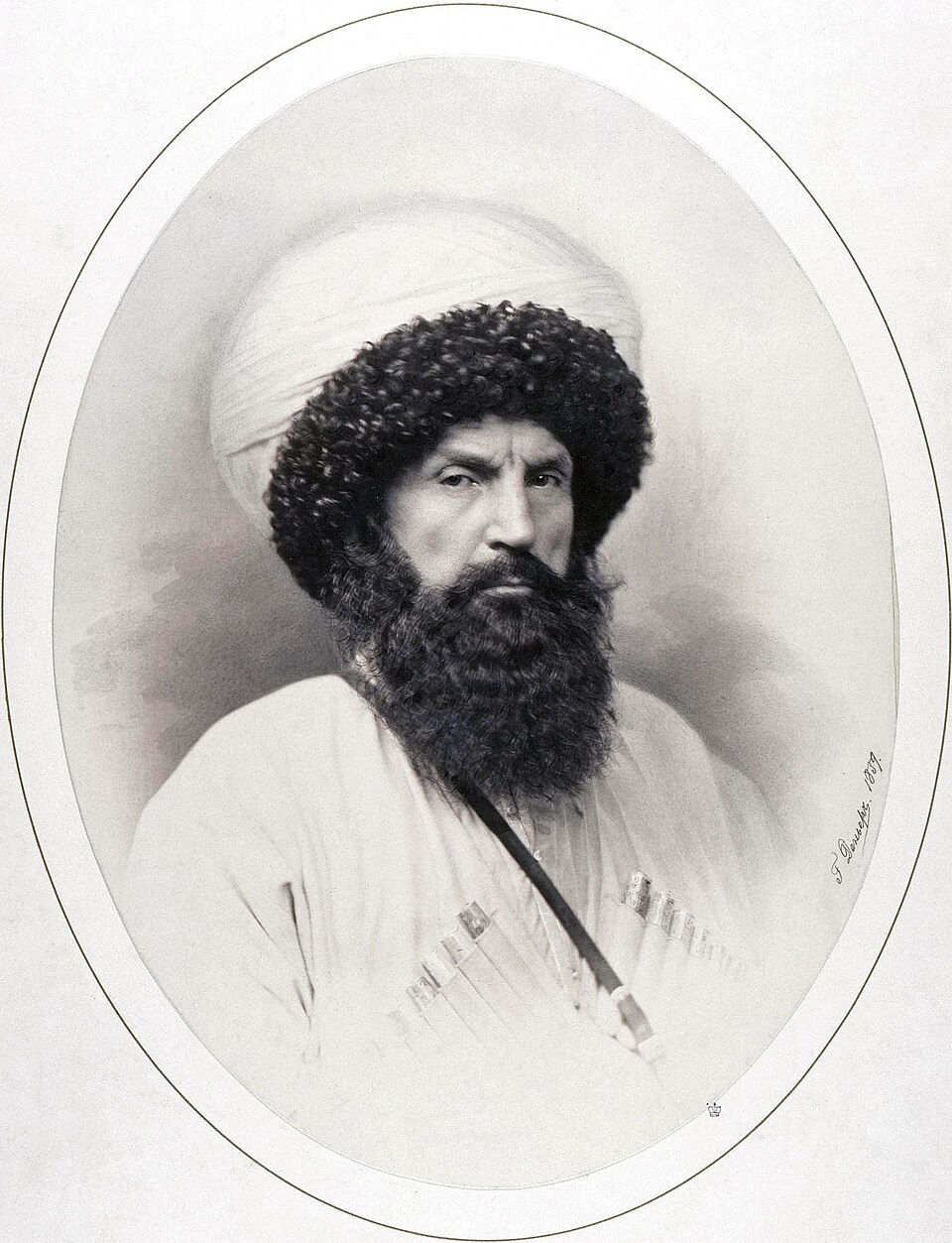
0 sources
Shamil
Summary
Shamil is a human[1]. Born in Gimry[2], he… he was born on June 26, 1797[3]. He passed away in Medina[4]. He died on February 4, 1871[5]. He worked as a warrior[6], imam[7], and qadi[8]. He has Wikipedia articles in 25 language editions, a strong signal of global cultural recognition.[9]
Key Facts
- Born in Gimry[2], Shamil…
- Shamil passed away in Medina[4].
- Shamil was born on June 26, 1797[3].
- Shamil was born on January 1, 1797[10].
- Shamil died on February 4, 1871[5].
- Shamil died on January 1, 1871[11].
- Burial took place at Al-Baqi'[12].
- A child of Shamil was Dzhamalddin bin Shamil[13].
- A child of Shamil was Gazi Muhammad[14].
- A child of Shamil was Muhammad Shafi[15].
- A child of Shamil was Muhammed Kâmil[16].
- Shamil held citizenship in Russian Empire[17].
- Shamil held citizenship in Ottoman Empire[18].
- Shamil is identified as part of the Avars ethnic group[19].
- Shamil's professions included warrior[6].
- Shamil's professions included imam[7].
- Shamil's professions included qadi[8].
- Shamil held the position of imam of Dagestan[20].
- Shamil's religion is recorded as Sunni Islam[21].
- Shamil is recorded as male[22].
- Shamil's instance of is recorded as human[23].
- Shamil's Commons category is recorded as Imam Shamil[24].
- Shamil's military, police or special rank is recorded as generalissimo[25].
- Shamil was part of the conflict Caucasian War[26].
- Shamil was part of the conflict Crimean War[27].
Body
Origins and Family
Shamil was born in Gimry[2]. Recorded date of birth include June 26, 1797[3] and January 1, 1797[10]. He is identified as part of the Avars ethnic group[19].
Education
Shamil studied under Jamal ad-Din[28].
Career and Affiliations
Recorded occupations include warrior[6], imam[7], and qadi[8]. Shamil held the position of imam of Dagestan[20].
Personal Life
Children include Dzhamalddin bin Shamil[13], 1829–1858[29]; Gazi Muhammad[14], a military personnel[30], 1833–1902[31]; Muhammad Shafi[15], a military officer[32], 1840–1906[33], of Russian Empire[34], awarded the Order of Saint Anna, 3rd class[35]; and Muhammed Kâmil[16], a military officer[36], 1863–1951[37], of Ottoman Empire[38]. His religion is recorded as Sunni Islam[21].
Death and Burial
Recorded date of death include February 4, 1871[5] and January 1, 1871[11]. Shamil died in Medina[4]. He is buried at Al-Baqi'[12].
Works and Contributions
Things named for Shamil include Shamilsky District[39], a municipal district[40], in Russia[41], founded in 1929[42]; Shamilkala[43], an urban-type settlement in Russia[44], in Russia[45]; Imam Shamil Battalion[46], an armed organization[47], headquartered in North Caucasus[48]; and Shamil Tarpishchev[49], a tennis player[50], b. 1948[51], of Russia[52], awarded the Order of Honour[53], specialised in tennis[54].
Why It Matters
Shamil has Wikipedia articles in 25 language editions, a strong signal of global cultural recognition.[9] He is known by 43 alternative names across languages and contexts.[55]
Entities named for him include Shamilsky District[39], a municipal district[40], in Russia[41], founded in 1929[42]; Shamilkala[43], an urban-type settlement in Russia[44], in Russia[45]; Imam Shamil Battalion[46], an armed organization[47], headquartered in North Caucasus[48]; and Shamil Tarpishchev[49], a tennis player[50], b. 1948[51], of Russia[52], awarded the Order of Honour[53], specialised in tennis[54].
FAQs
Where was Shamil born?
Shamil's place of birth was Gimry[2].
Where did Shamil die?
Shamil died in Medina[4].