
Sewall Wright
0 sources
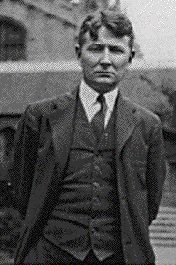
Sewall Wright was born on December 21, 1889, in Melrose [1][2][3][4][5][6] and died on March 3, 1988, in Madison [3][1][2][4][6]. He was the son of Elizabeth Quincy Wright [7] and pursued his education at Galesburg High School, Lombard College, the University of Illinois system, and Harvard University [1][8]. Wright worked as a biologist, geneticist, statistician, and university teacher , with his primary field of study being population genetics .
His professional career included employment with the United States Department of Agriculture from 1915 to 1925, the University of Chicago from 1926 to 1955, and the University of Wisconsin–Madison from 1955 to 1960 [1][8]. He received numerous accolades, including the Balzan Prize, Thomas Hunt Morgan Medal, National Medal of Science, Darwin Medal, Kimber Genetics Award, and Josiah Willard Gibbs Lectureship, among others [9][10][8][11][12]. Wright was also a member of the Royal Society, National Academy of Sciences, American Academy of Arts and Sciences, and American Philosophical Society [13][8].
Sewall Wright
Summary
Sewall Wright is a human[1]. His place of birth was Melrose[2]. He was born on December 21, 1889[3]. He died in Madison[4]. He died on March 3, 1988[5]. He worked as a biologist[6], geneticist[7], statistician[8], and university teacher[9]. He ranks in the top 0.72% of human entities by monthly Wikipedia readership (214 views/month, #7,224 of 1,000,298).[10]
Key Facts
- Sewall Wright was born in Melrose[2].
- Sewall Wright died in Madison[4].
- Sewall Wright was born on December 21, 1889[3].
- Sewall Wright died on March 3, 1988[5].
- Sewall Wright's father was Philip Green Wright[11].
- Sewall Wright's mother was Elizabeth Quincy Wright[12].
- Sewall Wright held citizenship in United States[13].
- Sewall Wright's professions included biologist[6].
- Sewall Wright worked as a geneticist[7].
- Sewall Wright worked as a statistician[8].
- Sewall Wright worked as a university teacher[9].
- Sewall Wright's field of work was population genetics[14].
- Among Sewall Wright's employers was United States Department of Agriculture[15].
- Among Sewall Wright's employers was University of Chicago[16].
- Among Sewall Wright's employers was University of Wisconsin–Madison[17].
- Sewall Wright's education included a stint at Galesburg High School[18].
- Sewall Wright's education included a stint at Lombard College[19].
- Sewall Wright was educated at University of Illinois system[20].
- Sewall Wright was educated at Harvard University[21].
- Sewall Wright's doctoral advisor was William Ernest Castle[22].
- Sewall Wright received the Balzan Prize[23].
- Sewall Wright received the Thomas Hunt Morgan Medal[24].
- Sewall Wright received the National Medal of Science[25].
- Sewall Wright received the Darwin Medal[26].
- Sewall Wright received the Kimber Genetics Award[27].
Body
Origins and Family
Sewall Wright's place of birth was Melrose[2]. He was born on December 21, 1889[3]. His father was Philip Green Wright[11]. His mother was Elizabeth Quincy Wright[12].
Education
Educated at Galesburg High School[18], a high school[28], in United States[29], founded in 1861[30]; Lombard College[19], a college[31], in United States[32], founded in 1853[33]; University of Illinois system[20], a state university system[34], in United States[35], founded in 1867[36], headquartered in Urbana[37]; and Harvard University[21], a private university[38], in United States[39], founded in 1636[40], headquartered in Cambridge[41]. Sewall Wright's doctoral advisor was William Ernest Castle[22]. He studied under William Ernest Castle[42].
Career and Affiliations
Recorded occupations include biologist[6], geneticist[7], statistician[8], and university teacher[9]. Sewall Wright's field of work was population genetics[14]. Employers include United States Department of Agriculture[15], a ministry of agriculture[43], in United States[44], founded in 1862[45], headquartered in Washington, D.C.[46]; University of Chicago[16], a private university[47], in United States[48], founded in 1890[49], headquartered in Chicago[50]; and University of Wisconsin–Madison[17], a public research university[51], in United States[52], founded in 1848[53]. Doctoral students include Robert R. Sokal[54] and Thomas Park[55].
Recognition
Awards received include Balzan Prize[23], a science award[56], in Switzerland[57], founded in 1961[58]; Thomas Hunt Morgan Medal[24], a biology award[59], in United States[60], founded in 1981[61]; National Medal of Science[25], a science award[62], in United States[63], founded in 1963[64]; Darwin Medal[26], a science award[65], in United Kingdom[66], founded in 1890[67]; Kimber Genetics Award[27], a science award[68], in United States[69], founded in 1955[70]; and Josiah Willard Gibbs Lectureship[71], an award[72], in United States[73], founded in 1923[74].
Death and Burial
Sewall Wright died on March 3, 1988[5]. He passed away in Madison[4].
Works and Contributions
Things named for Sewall Wright include ASN Award for Distinguished Achievement in the Conceptual Unification of the Biological Sciences[75], a science award[76], in United States[77], founded in 1991[78].
Why It Matters
Sewall Wright ranks in the top 0.72% of human entities by monthly Wikipedia readership (214 views/month, #7,224 of 1,000,298).[10] He has Wikipedia articles in 22 language editions, a strong signal of global cultural recognition.[79] He is known by 13 alternative names across languages and contexts.[80]
He has been cited as an influence by Napoleon Chagnon[81], an anthropologist[82], 1938–2019[83], of United States[84], specialised in anthropology[85]; Jay Laurence Lush[86], a biologist[87], 1896–1982[88], of United States[89], awarded the National Medal of Science[90], specialised in genetics[91]; and Motoo Kimura[92], a biologist[93], 1924–1994[94], of Empire of Japan[95], awarded the Order of Culture[96], specialised in population genetics[97].
He is credited with the discovery of path analysis[98], a statistical method[99]. Entities named for him include ASN Award for Distinguished Achievement in the Conceptual Unification of the Biological Sciences[75], a science award[76], in United States[77], founded in 1991[78].
His notable doctoral advisees include Robert R. Sokal[100], an anthropologist[101], 1926–2012[102], of United States[103], awarded the Guggenheim Fellowship[104], specialised in biology[105].
FAQs
Where was Sewall Wright born?
Born in Melrose[2], Sewall Wright…
Where did Sewall Wright die?
Sewall Wright passed away in Madison[4].
Who were Sewall Wright's parents?
Sewall Wright's father was Philip Green Wright[11]. Sewall Wright's mother was Elizabeth Quincy Wright[12].
What did Sewall Wright do for work?
Sewall Wright worked as biologist[6], geneticist[7], statistician[8], and university teacher[9].
Where did Sewall Wright go to school?
Sewall Wright was educated at Galesburg High School[18], Lombard College[19], University of Illinois system[20], and Harvard University[21].
What awards did Sewall Wright receive?
Honors received include Balzan Prize[23], Thomas Hunt Morgan Medal[24], National Medal of Science[25], and Darwin Medal[26].
Who did Sewall Wright influence?
Sewall Wright has been cited as an influence by Napoleon Chagnon[81], Jay Laurence Lush[86], and Motoo Kimura[92].
What did Sewall Wright discover?
Sewall Wright is credited as discoverer of path analysis[98].