
Second Temple
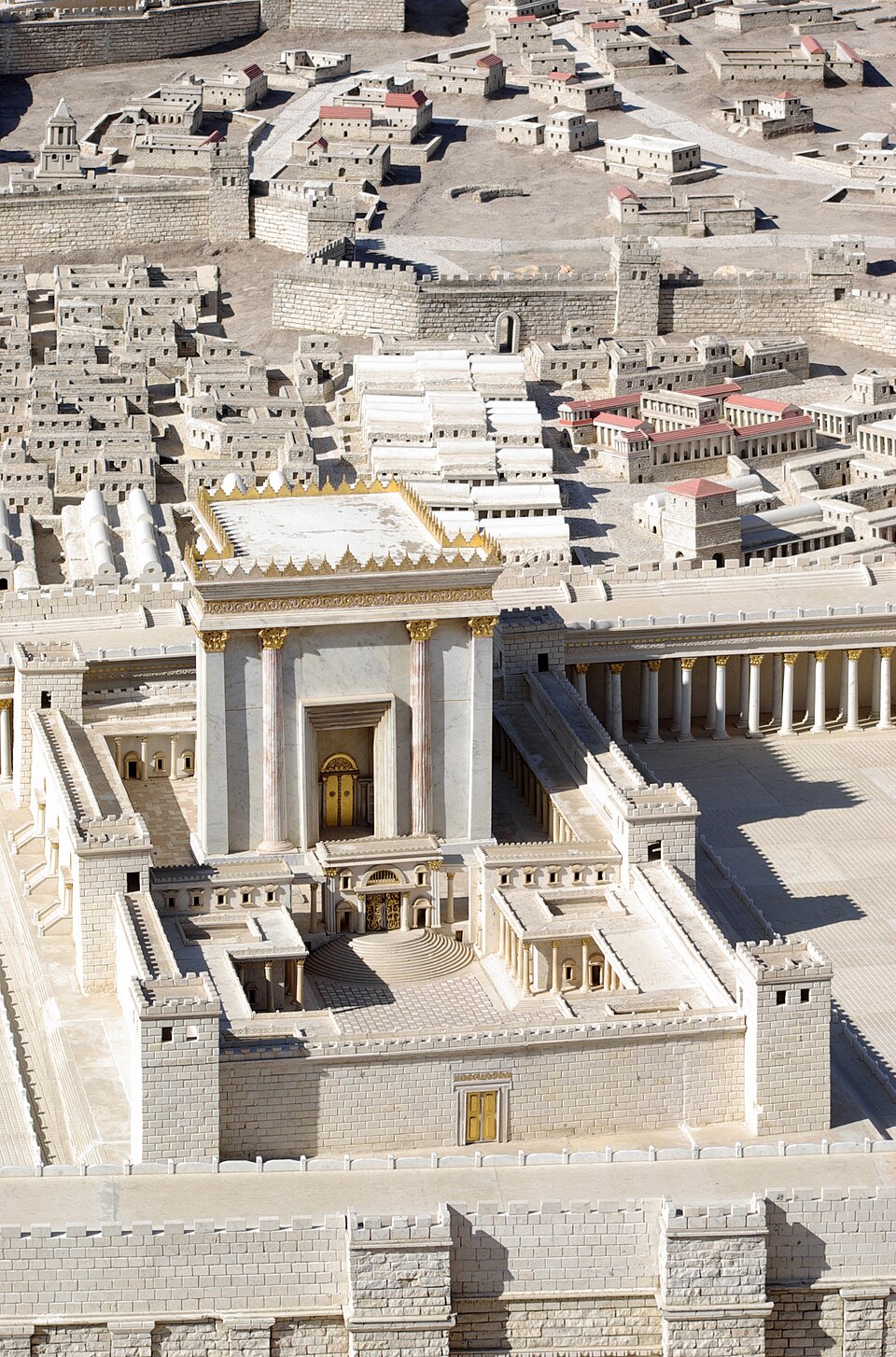
0 sources
Second Temple
Summary
Second Temple is a destroyed building or structure[1]. It has Wikipedia articles in 27 language editions, a strong signal of global cultural recognition.[2]
Key Facts
- Second Temple's religion is recorded as Judaism[3].
- Second Temple is located in Jerusalem[4].
- Second Temple is in the country of Kingdom of Judah[5].
- Second Temple's instance of is recorded as destroyed building or structure[6].
- Second Temple's instance of is recorded as structure of worship[7].
- Second Temple's structure replaced by is recorded as Dome of the Rock[8].
- Second Temple's structure replaced by is recorded as Al-Aqsa Mosque[9].
- Second Temple is part of Temple in Jerusalem[10].
- Second Temple's Commons category is recorded as Second Jewish temple in Jerusalem[11].
- Second Temple began on 516 BC[12].
- Second Temple ended on August 30, 70[13].
- Second Temple's coordinate location is recorded as {'lat': 31.778055555555554, 'lon': 35.235277777777775}[14].
- Second Temple's significant event is recorded as Siege of Jerusalem[15].
- Second Temple's dedicated to is recorded as Tetragrammaton[16].
- Second Temple's topic's main category is recorded as Category:Second Temple[17].
- Second Temple's described by source is recorded as Jewish Encyclopedia of Brockhaus and Efron[18].
- Second Temple's native label is recorded as {'lang': 'he', 'text': 'בֵּית הַמִּקְדָּשׁ הַשֵּׁנִי'}[19].
- Second Temple dates from the ancient history[20].
- Second Temple's culture is recorded as Hebrews[21].
Body
Geography
Second Temple is in the country of Kingdom of Judah[5]. It is located in Jerusalem[4]. It is part of Temple in Jerusalem[10].
Designation and Status
Recorded instance of include destroyed building or structure[6] and structure of worship[7]. Second Temple's religion is recorded as Judaism[3].
Cultural Significance
Things named for Second Temple include it period[22], a historical period[23], in Kingdom of Israel[24].
Why It Matters
Second Temple has Wikipedia articles in 27 language editions, a strong signal of global cultural recognition.[2] It is known by 26 alternative names across languages and contexts.[25]
Entities named for it include it period[22], a historical period[23], in Kingdom of Israel[24].