
Scouting for Boys
non-fiction work by Robert Baden-Powell, 1st Baron Baden-Powell
Press Enter · cited answer in seconds
0 sources
Scouting for Boys
Summary
Scouting for Boys is a written work[1]. It has Wikipedia articles in 24 language editions, a strong signal of global cultural recognition.[2]
Key Facts
- Scouting for Boys authored Robert Baden-Powell, 1st Baron Baden-Powell[3].
- Scouting for Boys's instance of is recorded as written work[4].
- Scouting for Boys's illustrator is recorded as Robert Baden-Powell, 1st Baron Baden-Powell[5].
- Scouting for Boys's genre is non-fiction[6].
- Scouting for Boys's genre is essay[7].
- Scouting for Boys's Commons category is recorded as Scouting for Boys[8].
- Scouting for Boys's language of work or name is recorded as English[9].
- Scouting for Boys's country of origin is recorded as United Kingdom[10].
- Scouting for Boys was released on January 24, 1908[11].
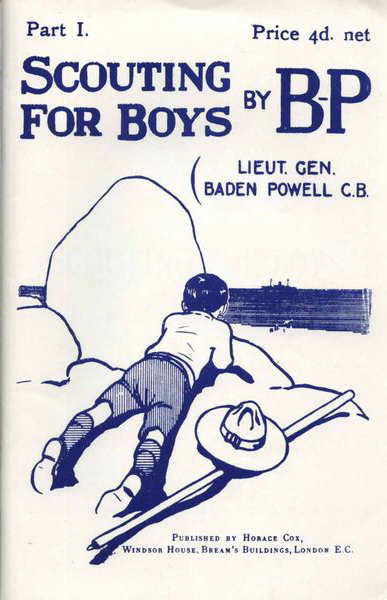
- Scouting for Boys's cover art by is recorded as John Hassall[12].
- Scouting for Boys's has edition or translation is recorded as Q108409573[13].
- Scouting for Boys's topic's main category is recorded as Category:Scouting for Boys[14].
- Scouting for Boys's main subject is scouting[15].
- Scouting for Boys's title is recorded as {'lang': 'en', 'text': 'Scouting for boys'}[16].
- Scouting for Boys's copyright status is recorded as public domain[17].
- Scouting for Boys's copyright status is recorded as public domain[18].
Body
Designation and Status
Scouting for Boys's instance of is recorded as written work[4].
Why It Matters
Scouting for Boys has Wikipedia articles in 24 language editions, a strong signal of global cultural recognition.[2] It is known by 9 alternative names across languages and contexts.[19]