
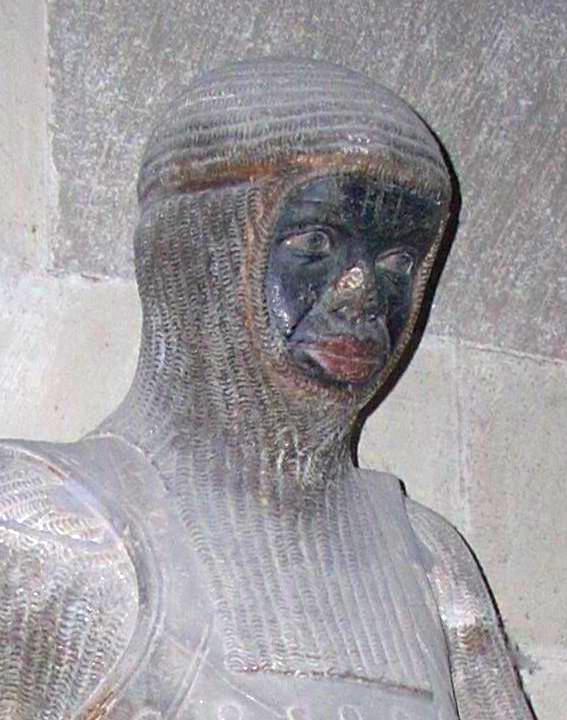
Saint Maurice
0 sources
Saint Maurice
Summary
Saint Maurice is a human[1]. His place of birth was Thebes[2]. He was born on 250[3]. He passed away in Saint-Maurice[4]. He died on January 1, 287[5]. He worked as a soldier[6]. He ranks in the top 0.66% of human entities by monthly Wikipedia readership (2,608 views/month, #6,607 of 1,000,298).[7]
Key Facts
- Born in Thebes[2], Saint Maurice…
- Saint Maurice died in Saint-Maurice[4].
- Saint Maurice was born on 250[3].
- Saint Maurice died on January 1, 287[5].
- Saint Maurice held citizenship in Ancient Rome[8].
- Saint Maurice worked as a soldier[6].
- Saint Maurice's religion is recorded as Christianity[9].
- Saint Maurice is recorded as male[10].
- Saint Maurice's instance of is recorded as human[11].
- Saint Maurice is part of Theban Legion[12].
- Saint Maurice's Commons category is recorded as Saint Maurice[13].
- Saint Maurice's military, police or special rank is recorded as centurion[14].
- Saint Maurice's canonization status is recorded as saint[15].
- The cause of death was decapitation[16].
- Saint Maurice's given name is recorded as Maurits[17].
- Saint Maurice's given name is recorded as Mauritius[18].
- Saint Maurice's feast day is recorded as September 22[19].
- Saint Maurice's topic's main category is recorded as Category:Saint Maurice[20].
- Saint Maurice's Commons gallery is recorded as Saint Maurice[21].
- Saint Maurice's described by source is recorded as Encyclopædia Britannica 11th edition[22].
- Saint Maurice dates from the Roman Empire[23].
- Saint Maurice's iconographic symbol is recorded as sword[24].
Body
Origins and Family
Saint Maurice was born in Thebes[2]. He was born on 250[3].
Career and Affiliations
Saint Maurice worked as a soldier[6].
Personal Life
Saint Maurice's religion is recorded as Christianity[9].
Death and Burial
Saint Maurice died on January 1, 287[5]. He passed away in Saint-Maurice[4]. The cause of death was decapitation[16].
Works and Contributions
Things named for Saint Maurice include St. Moritz[25], a Municipality of Switzerland[26], in Switzerland[27]; San Maurizio al Monastero Maggiore[28], a church building[29], in Italy[30], founded in 1503[31]; Morizkirche[32], a church building[33], in Germany[34]; Saint-Maurice church[35], a church building[36], in France[37]; Church of him[38], a church building[39], in Czech Republic[40], founded in 1403[41]; Saint-Maurice[42], a church building[43], in France[44], founded in 1895[45]; Basilique Saint-Maurice d'Épinal[46], a church building[47], in France[48]; and Nanterre Cathedral[49], a Catholic cathedral[50], in France[51].
Why It Matters
Saint Maurice ranks in the top 0.66% of human entities by monthly Wikipedia readership (2,608 views/month, #6,607 of 1,000,298).[7] He has Wikipedia articles in 23 language editions, a strong signal of global cultural recognition.[52] He is known by 52 alternative names across languages and contexts.[53]
Entities named for him include St. Moritz[25], a Municipality of Switzerland[26], in Switzerland[27]; San Maurizio al Monastero Maggiore[28], a church building[29], in Italy[30], founded in 1503[31]; Morizkirche[32], a church building[33], in Germany[34]; Saint-Maurice church[35], a church building[36], in France[37]; Church of him[38], a church building[39], in Czech Republic[40], founded in 1403[41]; and Saint-Maurice[42], a church building[43], in France[44], founded in 1895[45].
FAQs
Where was Saint Maurice born?
Saint Maurice was born in Thebes[2].
Where did Saint Maurice die?
Saint Maurice passed away in Saint-Maurice[4].
What did Saint Maurice do for work?
Saint Maurice worked as soldier[6].