
Saichō
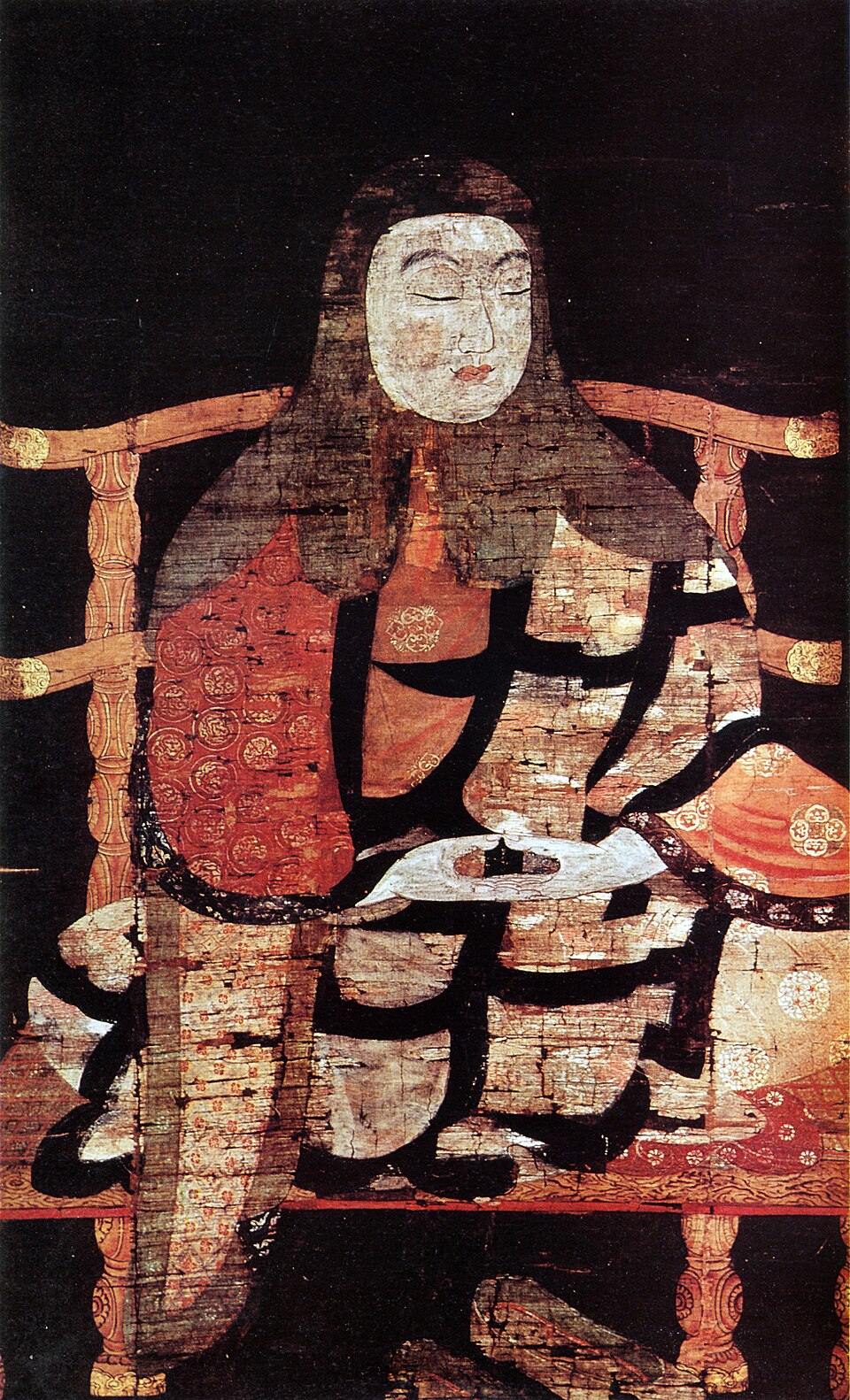
0 sources
Saichō
Summary
Saichō is a human[1]. He was born in Shiga district[2]. He was born on September 15, 767[3]. He died in Mount Hiei[4]. He died on June 26, 822[5]. He worked as a Buddhist monk[6], calligrapher[7], and philosopher[8]. He has Wikipedia articles in 21 language editions, a strong signal of global cultural recognition.[9]
Key Facts
- Saichō was born in Shiga district[2].
- Saichō passed away in Mount Hiei[4].
- Saichō was born on September 15, 767[3].
- Saichō died on June 26, 822[5].
- Burial took place at Enryaku-ji Temple[10].
- Saichō's father was Mitsuno Momoe[11].
- Saichō held citizenship in Japan[12].
- Japanese was Saichō's native language[13].
- Saichō worked as a Buddhist monk[6].
- Saichō's professions included calligrapher[7].
- Saichō's professions included philosopher[8].
- A notable student of Saichō was Kōjō[14].
- A notable student of Saichō was Gishin[15].
- A notable student of Saichō was Taihan[16].
- A notable student of Saichō was Q11394818[17].
- A notable student of Saichō was Ennin[18].
- A notable student of Saichō was Ensai[19].
- A notable work attributed to Saichō is An Essay on the Protection of the Nation[20].
- A notable work attributed to Saichō is The Regulations for the Students of the Mountain School[21].
- Saichō's religion is recorded as Tendai[22].
- Saichō is recorded as male[23].
- Saichō's instance of is recorded as human[24].
- Saichō's Commons category is recorded as Saicho[25].
- Saichō's topic's main category is recorded as Category:Saicho[26].
- Saichō studied under Gyōhyō[27].
Body
Origins and Family
Born in Shiga district[2], Saichō… he was born on September 15, 767[3]. His father was Mitsuno Momoe[11]. Japanese was his native language[13].
Education
Studied under Gyōhyō[27], 0722–0797[28], of Japan[29]; Daosui[30], a Buddhist monk[31]; and Q11664471[32], a monk[33], of Tang dynasty[34].
Career and Affiliations
Recorded occupations include Buddhist monk[6], calligrapher[7], and philosopher[8]. Notable students include Kōjō[14], a Buddhist monk[35], 0779–0858[36], of Japan[37]; Gishin[15], a Buddhist monk[38], 0781–0833[39]; Taihan[16], a Buddhist monk[40], 0778–0900[41], of Japan[42]; Q11394818[17], a monk[43], 0772–0837[44]; Ennin[18], a Buddhist monk[45], 0793–0864[46], of Japan[47]; and Ensai[19], a Buddhist monk[48], of Japan[49].
Works and Contributions
Notable works include An Essay on the Protection of the Nation[20], a literary work[50], founded in 0818[51] and The Regulations for the Students of the Mountain School[21], a literary work[52].
Personal Life
Saichō's religion is recorded as Tendai[22].
Death and Burial
Saichō died on June 26, 822[5]. He passed away in Mount Hiei[4]. He is buried at Enryaku-ji Temple[10].
Why It Matters
Saichō has Wikipedia articles in 21 language editions, a strong signal of global cultural recognition.[9] He is known by 34 alternative names across languages and contexts.[53]
FAQs
Where was Saichō born?
Saichō was born in Shiga district[2].
Where did Saichō die?
Saichō died in Mount Hiei[4].
Who were Saichō's parents?
Saichō's father was Mitsuno Momoe[11].
What did Saichō do for work?
Saichō worked as Buddhist monk[6], calligrapher[7], and philosopher[8].