
Rudyard Kipling
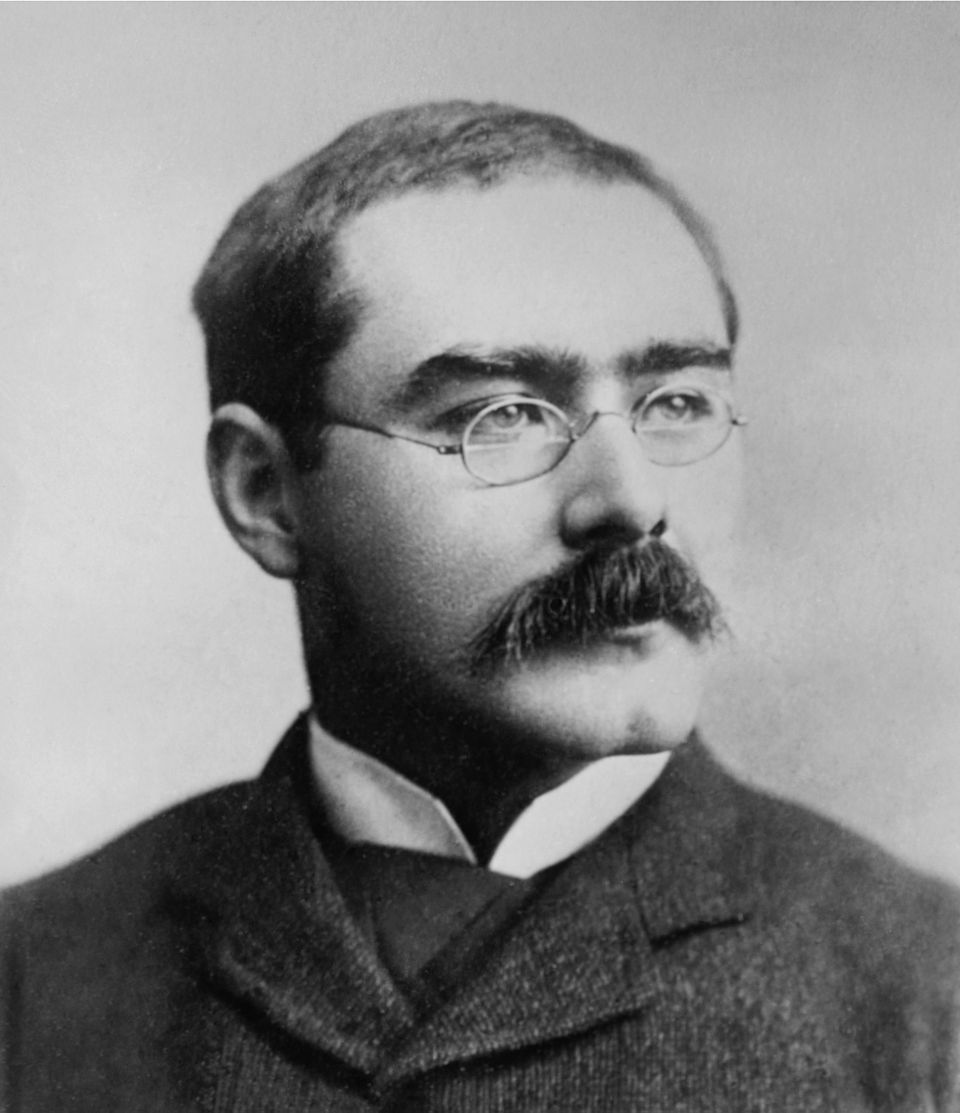
0 sources
Rudyard Kipling
Summary
Rudyard Kipling is a human[1]. Born in Mumbai[2], he… he was born on December 30, 1865[3]. He died in London[4]. He died on January 18, 1936[5]. He worked as a writer[6], poet[7], novelist[8], war correspondent[9], and children's writer[10]. He ranks in the top 0.33% of human entities by monthly Wikipedia readership (97,908 views/month, #3,318 of 1,000,298).[11]
Key Facts
- Born in Mumbai[2], Rudyard Kipling…
- Rudyard Kipling passed away in London[4].
- Rudyard Kipling was born on December 30, 1865[3].
- Rudyard Kipling died on January 18, 1936[5].
- Burial took place at Westminster Abbey[12].
- Rudyard Kipling is buried at Golders Green Crematorium[13].
- Rudyard Kipling's father was John Lockwood Kipling[14].
- Rudyard Kipling's mother was Alice MacDonald Kipling[15].
- Among Rudyard Kipling's spouses was Caroline Starr Balestier[16].
- A child of Rudyard Kipling was John Kipling[17].
- A child of Rudyard Kipling was Elsie Bambridge[18].
- A child of Rudyard Kipling was Josephine Kipling[19].
- Rudyard Kipling held citizenship in United Kingdom[20].
- Rudyard Kipling held citizenship in United Kingdom of Great Britain and Ireland[21].
- English was Rudyard Kipling's native language[22].
- Rudyard Kipling is identified as part of the English people ethnic group[23].
- Rudyard Kipling worked as a writer[6].
- Rudyard Kipling worked as a poet[7].
- Rudyard Kipling worked as a novelist[8].
- Rudyard Kipling's professions included war correspondent[9].
- Rudyard Kipling's professions included children's writer[10].
- Rudyard Kipling's professions included autobiographer[24].
- Rudyard Kipling's field of work was literature[25].
- Rudyard Kipling's field of work was creative and professional writing[26].
- Rudyard Kipling's field of work was journalism[27].
Body
Origins and Family
Rudyard Kipling's place of birth was Mumbai[2]. He was born on December 30, 1865[3]. His father was John Lockwood Kipling[14]. His mother was Alice MacDonald Kipling[15]. He is identified as part of the English people ethnic group[23]. English was his native language[22].
Education
Rudyard Kipling was educated at United Services College[28].
Career and Affiliations
Recorded occupations include writer[6], poet[7], novelist[8], war correspondent[9], children's writer[10], and autobiographer[24]. Fields of work include literature[25], a type of arts[29]; creative and professional writing[26], an academic discipline[30]; journalism[27], an industry[31]; poetry[32], a literary form[33]; travel literature[34], a literary genre[35]; and children's and young adult literature[36], a sub-set of literature[37]. Among Rudyard Kipling's employers was University of St Andrews[38]. He held the position of Rector of the University of St Andrews[39].
Recognition
Awards received include Nobel Prize in Literature[40], a literary award[41], in Sweden[42], founded in 1901[43]; Fellow of the Royal Society of Literature[44], a fellowship award[45], in United Kingdom[46]; Lektorix[47]; doctor honoris causa from the University of Paris[48]; honorary doctorate from the University of Strasbourg[49]; and honorary degree[50].
Personal Life
Among Rudyard Kipling's spouses was Caroline Starr Balestier[16]. Children include John Kipling[17], a military personnel[51], 1897–1915[52], of United Kingdom of Great Britain and Ireland[53]; Elsie Bambridge[18], 1896–1976[54], of United Kingdom of Great Britain and Ireland[55]; and Josephine Kipling[19], 1892–1899[56].
Death and Burial
Rudyard Kipling died on January 18, 1936[5]. He died in London[4]. The cause of death was ulcer[57]. Recorded place of burial include Westminster Abbey[12] and Golders Green Crematorium[13].
Works and Contributions
Things named for Rudyard Kipling include Bagheera kiplingi[58], Kipling[59], Rudyard Township[60], HMS Kipling[61], and Kipling Gardens[62].
Why It Matters
Rudyard Kipling ranks in the top 0.33% of human entities by monthly Wikipedia readership (97,908 views/month, #3,318 of 1,000,298).[11] He has Wikipedia articles in 30 language editions, a strong signal of global cultural recognition.[63] He is known by 96 alternative names across languages and contexts.[64]
He has been cited as an influence by Roald Dahl[65], a screenwriter[66], 1916–1990[67], of Norway[68], awarded the Edgar Awards[69]; Jorge Luis Borges[70], a translator[71], 1899–1986[72], of Argentina[73], awarded the Gran Premio de Honor de la SADE[74]; H. L. Mencken[75], a satirist[76], 1880–1956[77], of United States[78]; Gene Wolfe[79], a writer[80], 1931–2019[81], of United States[82], awarded the Nebula Award for Best Novella[83], specialised in science fiction[84]; Rosemary Sutcliff[85], a writer[86], 1920–1992[87], of United Kingdom[88], awarded the Carnegie Medal[89]; and Christina Lamb[90], a journalist[91], b. 1965[92], of United Kingdom[93], awarded the Officer of the Order of the British Empire[94], specialised in journalism[95].
Works attributed to him include The Jungle Book[96], a literary work[97]; If—[98]; The White Man's Burden[99]; Boots[100]; Rikki-Tikki-Tavi[101]; and Kim[102]. Entities named for him include Bagheera kiplingi[58], Kipling[59], Rudyard Township[60], HMS Kipling[61], and Kipling Gardens[62].
FAQs
Where was Rudyard Kipling born?
Born in Mumbai[2], Rudyard Kipling…
Where did Rudyard Kipling die?
Rudyard Kipling passed away in London[4].
Who were Rudyard Kipling's parents?
Rudyard Kipling's father was John Lockwood Kipling[14]. Rudyard Kipling's mother was Alice MacDonald Kipling[15].
Who was Rudyard Kipling married to?
Rudyard Kipling's spouses include Caroline Starr Balestier[16].
What did Rudyard Kipling do for work?
Rudyard Kipling worked as writer[6], poet[7], novelist[8], war correspondent[9], and children's writer[10].
Where did Rudyard Kipling go to school?
Rudyard Kipling was educated at United Services College[28].
What awards did Rudyard Kipling receive?
Honors received include Nobel Prize in Literature[40], Fellow of the Royal Society of Literature[44], Lektorix[47], and doctor honoris causa from the University of Paris[48].
Who did Rudyard Kipling influence?
Rudyard Kipling has been cited as an influence by Roald Dahl[65], Jorge Luis Borges[70], H. L. Mencken[75], and Gene Wolfe[79].