
Royal Air Force Fighter Command
0 sources
Summary
Royal Air Force Fighter Command is a military aviation[1]. It draws 120 Wikipedia views per month (military_aviation category, ranking #2 of 2).[2]
Key Facts
- Royal Air Force Fighter Command is in the country of United Kingdom[3].
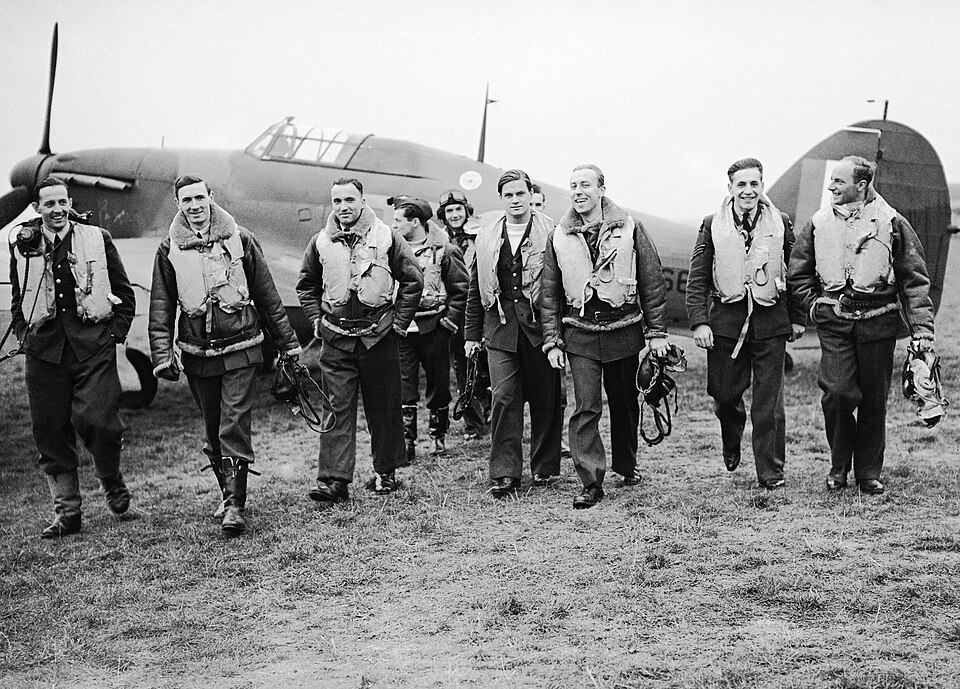
- Royal Air Force Fighter Command's image is recorded as Piloci 303.jpg[4].
- Royal Air Force Fighter Command's instance of is recorded as military aviation[5].
- Royal Air Force Fighter Command's instance of is recorded as command[6].
- Royal Air Force Fighter Command's headquarters location is recorded as RAF Bentley Priory[7].
- Royal Air Force Fighter Command's part of is recorded as Royal Air Force[8].
- Royal Air Force Fighter Command's has use is recorded as fighter aircraft[9].
- Royal Air Force Fighter Command's Commons category is recorded as Royal Air Force Fighter Command[10].
- +1936-07-14T00:00:00Z marks the founding of Royal Air Force Fighter Command[11].
- Royal Air Force Fighter Command was dissolved in +1968-00-00T00:00:00Z[12].
- Royal Air Force Fighter Command's participated in conflict is recorded as World War II[13].
- Royal Air Force Fighter Command's Freebase ID is recorded as /m/028bvc[14].
- Royal Air Force Fighter Command's replaced by is recorded as Royal Air Force Strike Command[15].
- Royal Air Force Fighter Command's motto text is recorded as {'lang': 'en-gb', 'text': 'Offence Defence'}[16].
- Royal Air Force Fighter Command's order of battle is recorded as RAF Fighter Command Order of Battle 1940[17].
Body
Founding
+1936-07-14T00:00:00Z marks the founding of Royal Air Force Fighter Command[11].
Identity
Royal Air Force Fighter Command's part of is recorded as Royal Air Force[8].
Operations
Royal Air Force Fighter Command's headquarters location is recorded as RAF Bentley Priory[7].
Dissolution
Royal Air Force Fighter Command was dissolved in +1968-00-00T00:00:00Z[12].
Why It Matters
Royal Air Force Fighter Command draws 120 Wikipedia views per month (military_aviation category, ranking #2 of 2).[2] It has Wikipedia articles in 14 language editions, a strong signal of global cultural recognition.[18] It is known by 23 alternative names across languages and contexts.[19]