
Robert Recorde
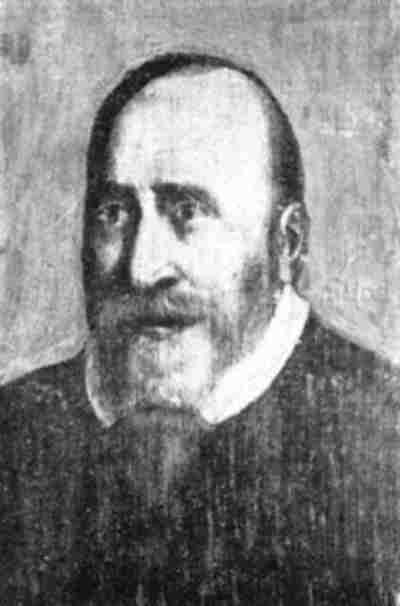
0 sources
Summary
Robert Recorde is a human[1]. His place of birth was Tenby[2]. He was born on 1512[3]. He died in London[4]. He died on January 1, 1558[5]. He worked as a mathematician[6], physician[7], and philosopher[8]. He has Wikipedia articles in 23 language editions, a strong signal of global cultural recognition.[9]
Key Facts
- Robert Recorde was born in Tenby[2].
- Robert Recorde passed away in London[4].
- Robert Recorde was born on 1512[3].
- Robert Recorde was born on 1510[10].
- Robert Recorde died on January 1, 1558[5].
- Robert Recorde is buried at St Mary's Church, Tenby[11].
- Robert Recorde held citizenship in Wales[12].
- Robert Recorde's professions included mathematician[6].
- Robert Recorde's professions included physician[7].
- Robert Recorde's professions included philosopher[8].
- Robert Recorde's field of work was mathematics[13].
- Among Robert Recorde's employers was All Souls College[14].
- Robert Recorde was employed by University of Cambridge[15].
- Robert Recorde was employed by Royal Mint[16].
- Robert Recorde's education included a stint at University of Cambridge[17].
- Robert Recorde was educated at University of Oxford[18].
- A notable work attributed to Robert Recorde is The Whetstone of Witte[19].
- A notable work attributed to Robert Recorde is The Ground of Arts[20].
- A notable work attributed to Robert Recorde is The Castle of Knowledge[21].
- Robert Recorde is recorded as male[22].
- Robert Recorde's instance of is recorded as human[23].
- Robert Recorde's Commons category is recorded as Robert Recorde[24].
- Robert Recorde's given name is recorded as Robert[25].
- Robert Recorde's described by source is recorded as Dictionary of National Biography, 1885–1900[26].
- Robert Recorde's described by source is recorded as Brockhaus and Efron Encyclopedic Dictionary[27].
Body
Origins and Family
Born in Tenby[2], Robert Recorde… Recorded date of birth include 1512[3] and 1510[10].
Education
Educated at University of Cambridge[17], a collegiate university[28], in United Kingdom[29], founded in 1209[30], headquartered in Cambridge[31] and University of Oxford[18], a collegiate university[32], in United Kingdom[33], founded in 1096[34], headquartered in Oxford[35].
Career and Affiliations
Recorded occupations include mathematician[6], physician[7], and philosopher[8]. Robert Recorde's field of work was mathematics[13]. Employers include All Souls College[14], a college of the University of Oxford[36], in United Kingdom[37], founded in 1438[38], headquartered in Oxford[39]; University of Cambridge[15], a collegiate university[40], in United Kingdom[41], founded in 1209[42], headquartered in Cambridge[43]; and Royal Mint[16], a mint[44], in United Kingdom[45], founded in 0886[46], headquartered in Llantrisant[47].
Works and Contributions
Notable works include The Whetstone of Witte[19], a literary work[48]; The Ground of Arts[20], a literary work[49]; and The Castle of Knowledge[21].
Death and Burial
Robert Recorde died on January 1, 1558[5]. He died in London[4]. Burial took place at St Mary's Church, Tenby[11].
Why It Matters
Robert Recorde has Wikipedia articles in 23 language editions, a strong signal of global cultural recognition.[9]
He is credited with the discovery of equals sign[50], a comparison sign[51]. Works attributed to him include The Whetstone of Witte[52], a literary work[53].
FAQs
Where was Robert Recorde born?
Robert Recorde was born in Tenby[2].
Where did Robert Recorde die?
Robert Recorde died in London[4].
What did Robert Recorde do for work?
Robert Recorde worked as mathematician[6], physician[7], and philosopher[8].
Where did Robert Recorde go to school?
Robert Recorde was educated at University of Cambridge[17] and University of Oxford[18].
What did Robert Recorde discover?
Robert Recorde is credited as discoverer of equals sign[50].