
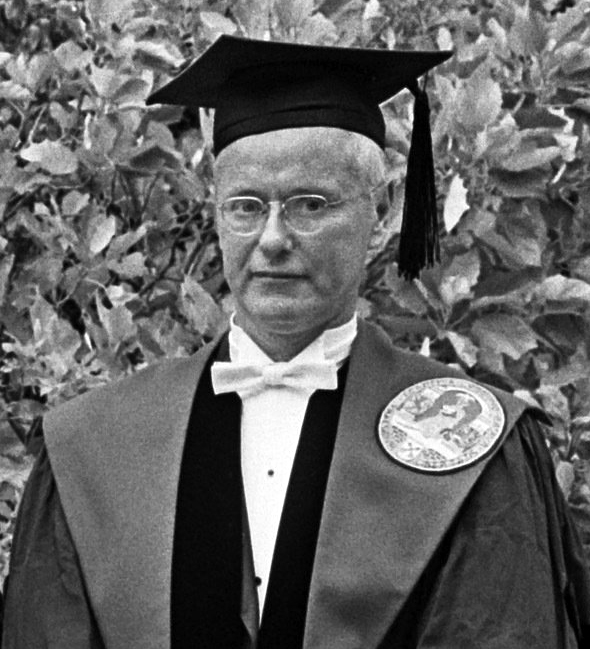
Robert K. Merton
0 sources
Summary
Robert K. Merton was born on July 4, 1910[1], in Philadelphia[2]. He died on February 23, 2003[3], in New York City[4]. He worked as a sociologist[5] and university teacher[6]. He ranks in the top 0.7% of human entities by monthly Wikipedia readership (2,775 views/month, #7,023 of 1,000,298).[7]
Key Facts
- Spouse: Harriet Zuckerman[8]
- Child: Robert C. Merton[9]
- Country of citizenship: United States[10]
- Field of work: sociology[11]
- Position held: President of the American Sociological Association[12]
- Employer: Columbia University[13], Tulane University[14]
- Educated at: Temple University[15], Harvard University[16], South Philadelphia High School[17]
- Doctoral advisor: Pitirim Sorokin[18], Talcott Parsons[19], George Sarton[20], Lawrence Joseph Henderson[21]
- Notable work: Social Theory and Social Structure[22]
- Award received: Guggenheim Fellowship[23], MacArthur Fellows Program[24], National Medal of Science[25], John Desmond Bernal Prize[26], W.E.B. Du Bois Career of Distinguished Scholarship award[27], Derek John de Solla Price Award[28], honorary doctor of the University of Madrid Complutense[29], Honorary doctor of Leiden University[30], honorary doctorate of the University of Oslo[31]
- Member of: Royal Swedish Academy of Sciences[32], National Academy of Sciences[33], American Academy of Arts and Sciences[34], American Philosophical Society[35], British Academy[36], Polish Academy of Sciences[37]
- Sex or gender: male[38]
- Doctoral student: Morton Kaplan[39], Seymour Martin Lipset[40]
- Commons category: Robert K. Merton[41]
- Academic degree: doctorate[42]
- Family name: Merton[43]
- Given name: Robert[44], King[45]
- Topic's main category: Category:Robert K. Merton[46]
- Commons gallery: Robert K. Merton[47]
- Student of: George Sarton[48]
- Described by source: Armenian Soviet Encyclopedia, vol. 7[49]
- Languages spoken, written or signed: English[50]
Why It Matters
Robert K. Merton has Wikipedia articles in 25 language editions, a strong signal of global cultural recognition.[51] He is known by 45 alternative names across languages and contexts.[52]
He has been cited as an influence by George C. Homans[53], an economist[54], 1910–1989[55], of United States[56], awarded the W.E.B. Du Bois Career of Distinguished Scholarship award[57] and Piotr Sztompka[58], a sociologist[59], b. 1944[60], of Poland[61], awarded the Medal of the National Education Commission[62], specialised in sociology[63].
He is credited with the discovery of Stigler's law of eponymy[64], an empirical law[65].
His notable doctoral advisees include Seymour Martin Lipset[66], a sociologist[67], 1922–2006[68], of United States[69], awarded the Guggenheim Fellowship[70], specialised in sociology[71] and Morton Kaplan[72], a political scientist[73], 1921–2017[74], of United States[75], specialised in political science[76].
FAQs
Where was Robert K. Merton born?
Robert K. Merton was born in Philadelphia[2].
Where did Robert K. Merton die?
Robert K. Merton passed away in New York City[4].
Who was Robert K. Merton married to?
Robert K. Merton's spouses include Harriet Zuckerman[8].
What did Robert K. Merton do for work?
Robert K. Merton worked as a sociologist[5] and university teacher[6].
Where did Robert K. Merton go to school?
Robert K. Merton was educated at Temple University[15], Harvard University[16], and South Philadelphia High School[17].
What awards did Robert K. Merton receive?
Honors received include Guggenheim Fellowship[23], MacArthur Fellows Program[24], National Medal of Science[25], and John Desmond Bernal Prize[26].
Who did Robert K. Merton influence?
Robert K. Merton has been cited as an influence by George C. Homans[53] and Piotr Sztompka[58].
What did Robert K. Merton discover?
Robert K. Merton is credited as discoverer of Stigler's law of eponymy[64].