
Red Rail
species of bird (extinct)
Press Enter · cited answer in seconds
0 sources
Summary
Red Rail is a fossil taxon[1]. It ranks in the top 4% of fossil_taxon entities by monthly Wikipedia readership (77 views/month).[2]
Key Facts
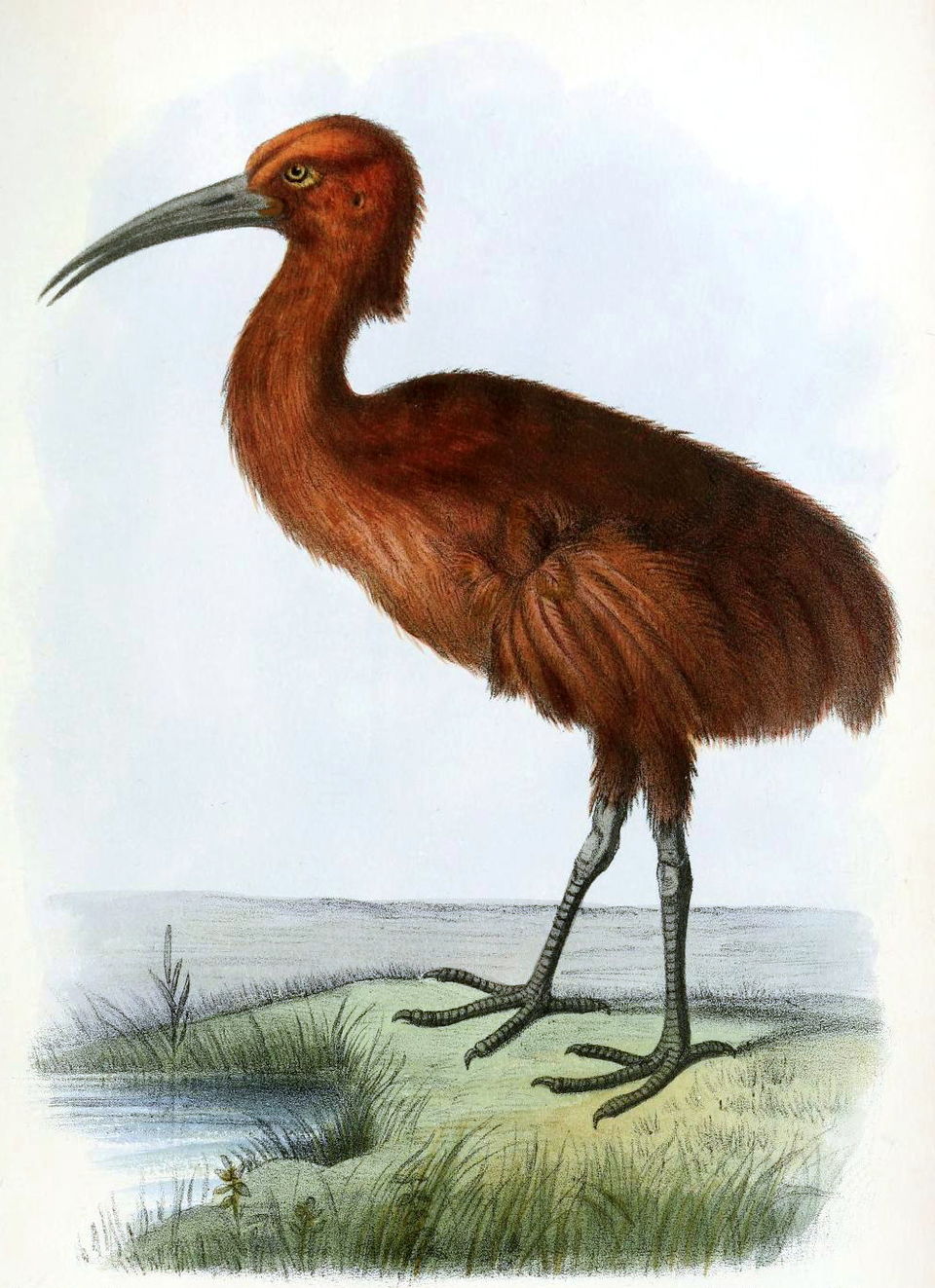
- Red Rail's image is recorded as Aphanapteryx bonasiaIbis1869P007AA.jpg[3].
- Red Rail's instance of is recorded as fossil taxon[4].
- Red Rail's taxon rank is recorded as species[5].
- Red Rail's IUCN conservation status is recorded as extinct species[6].
- Red Rail's parent taxon is recorded as Aphanapteryx[7].
- Red Rail's taxon range map image is recorded as Mauritius island location.svg[8].
- Red Rail's endemic to is recorded as Mauritius Island[9].
- Red Rail's taxon name is recorded as Aphanapteryx bonasia[10].
- Red Rail's Commons category is recorded as Aphanapteryx[11].
- Red Rail's IUCN taxon ID is recorded as 22728884[12].
- Red Rail's Freebase ID is recorded as /m/0dz6g2[13].
- Red Rail's BHL page ID is recorded as 38665779[14].
- Red Rail's Encyclopedia of Life ID is recorded as 45513910[15].
- Red Rail's BioLib taxon ID is recorded as 159818[16].
- Red Rail's Fossilworks taxon ID is recorded as 370499[17].
- Red Rail's GBIF taxon ID is recorded as 5789332[18].
- Red Rail's taxon common name is recorded as {'lang': 'en', 'text': 'Red Rail'}[19].
- Red Rail's taxon common name is recorded as {'lang': 'de', 'text': 'Mauritius-Ralle'}[20].
- Red Rail's taxon common name is recorded as {'lang': 'es', 'text': 'Rascón Rojo'}[21].
- Red Rail's taxon common name is recorded as {'lang': 'ca', 'text': 'rascló rogenc'}[22].
- Red Rail's taxon common name is recorded as {'lang': 'cs', 'text': 'chřástal rezavý'}[23].
- Red Rail's taxon common name is recorded as {'lang': 'et', 'text': 'mauritiuse metsruik'}[24].
- Red Rail's taxon common name is recorded as {'lang': 'ru', 'text': 'Маврикийский пастушок'}[25].
- Red Rail's taxon common name is recorded as {'lang': 'ja', 'text': 'モーリシャスクイナ'}[26].
- Red Rail's taxon common name is recorded as {'lang': 'da', 'text': 'Mauritiusskovrikse'}[27].
Why It Matters
Red Rail ranks in the top 4% of fossil_taxon entities by monthly Wikipedia readership (77 views/month).[2] It has Wikipedia articles in 22 language editions, a strong signal of global cultural recognition.[28] It is known by 25 alternative names across languages and contexts.[29]