
Rashomon
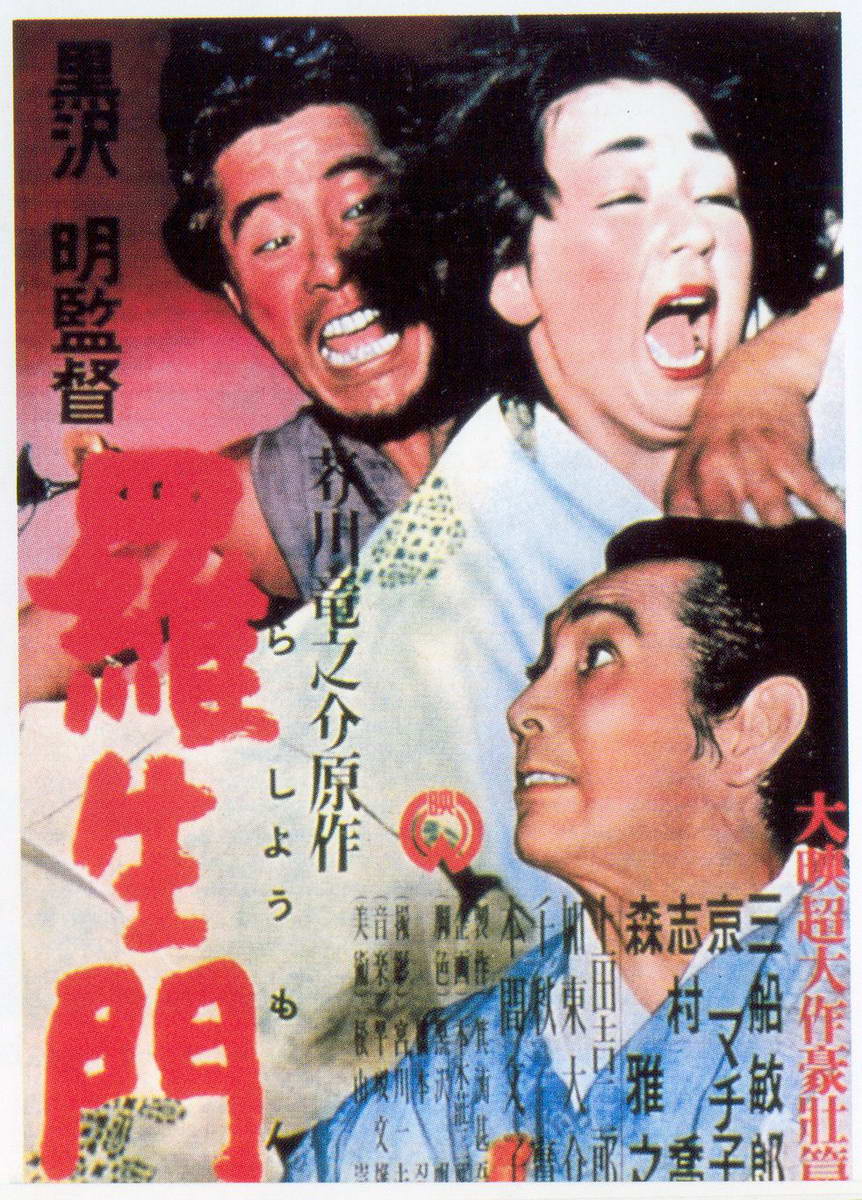
0 sources
Rashomon
Summary
Rashomon is a film[1]. Rashomon ranks in the top 2% of film entities by monthly Wikipedia readership (3,254 views/month).[2]
Key Facts
- Rashomon is the creator of Akira Kurosawa[3].
- Rashomon received the Golden Lion[4].
- Rashomon received the Academy Honorary Award[5].
- Rashomon's instance of is recorded as film[6].
- Rashomon was directed by Akira Kurosawa[7].
- Shinobu Hashimoto wrote the screenplay for Rashomon[8].
- Akira Kurosawa wrote the screenplay for Rashomon[9].
- Ryūnosuke Akutagawa wrote the screenplay for Rashomon[10].
- Rashomon's composer is recorded as Fumio Hayasaka[11].
- Rashomon's genre is drama film[12].
- Rashomon's genre is crime film[13].
- Rashomon's genre is flashback film[14].
- Rashomon's genre is samurai cinema[15].
- Rashomon's genre is medieval film[16].
- Rashomon's based on is recorded as In a Grove[17].
- Rashomon's based on is recorded as Rashōmon[18].
- A cast member of Rashomon was Toshirō Mifune[19].
- A cast member of Rashomon was Machiko Kyō[20].
- A cast member of Rashomon was Masayuki Mori[21].
- A cast member of Rashomon was Takashi Shimura[22].
- A cast member of Rashomon was Minoru Chiaki[23].
- Rashomon's collection is recorded as Museum of Modern Art[24].
- Rashomon's production company is recorded as Kadokawa Pictures[25].
- Rashomon's production company is recorded as Daiei Film[26].
- Rashomon's director of photography is recorded as Kazuo Miyagawa[27].
Body
Authorship and Creation
Rashomon was directed by Akira Kurosawa[7]. Screenwriters include Shinobu Hashimoto[8], Akira Kurosawa[9], and Ryūnosuke Akutagawa[10]. Cast members include Toshirō Mifune[19], Machiko Kyō[20], Masayuki Mori[21], Takashi Shimura[22], and Minoru Chiaki[23]. Rashomon is the creator of Akira Kurosawa[3].
Publication
Publication dates include August 25, 1950[28], August 4, 1952[29], August 23, 1951[30], December 26, 1951[31], and April 18, 1952[32]. The original language of Rashomon was Japanese[33]. Genres include drama film[12], crime film[13], flashback film[14], samurai cinema[15], and medieval film[16]. Rashomon was distributed by video on demand[34].
Subject and Themes
Main subjects include human nature[35], self-image[36], crime[37], witness[38], reliability[39], and storytelling[40].
Reception
Awards received include Golden Lion[4], a film award[41], in Italy[42], founded in 1949[43], headquartered in Venice[44] and Academy Honorary Award[5], an Academy Awards[45], in United States[46], founded in 1928[47]. Reviews include 9.2/10[48], 98%[49], 98/100[50], 8.1/10[51], and 4.2/5[52].
Cultural Impact
Things named for Rashomon include Rashomon effect[53], a phenomenon[54].
Why It Matters
Rashomon ranks in the top 2% of film entities by monthly Wikipedia readership (3,254 views/month).[2] Rashomon has Wikipedia articles in 28 language editions, a strong signal of global cultural recognition.[55] Rashomon is known by 47 alternative names across languages and contexts.[56]
Entities named for Rashomon include Rashomon effect[53], a phenomenon[54].
FAQs
What awards did Rashomon receive?
Honors received include Golden Lion[4] and Academy Honorary Award[5].