
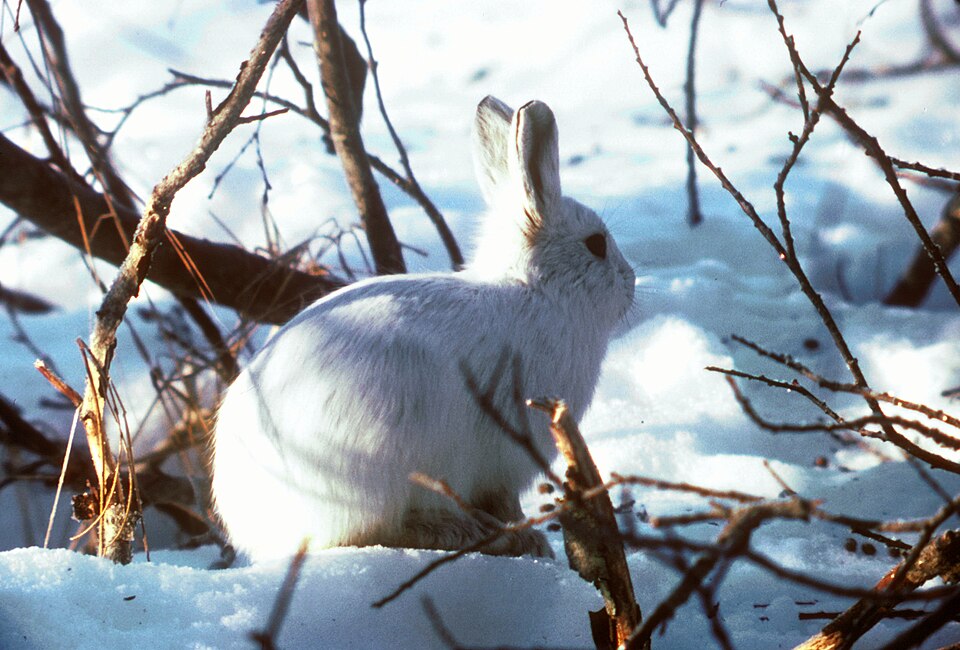
rabbits and hares
0 sources
rabbits and hares
Summary
rabbits and hares is a taxon[1]. It ranks in the top 0.33% of taxon entities by monthly Wikipedia readership (5,044 views/month, #649 of 195,241).[2]
Key Facts
- rabbits and hares's instance of is recorded as taxon[3].
- rabbits and hares is classified at the rank of family[4].
- rabbits and hares belongs to the parent taxon Lagomorpha[5].
- Under binomial nomenclature, rabbits and hares is Leporidae[6].
- rabbits and hares's Commons category is recorded as Leporidae[7].
- rabbits and hares began on -53000000-00-00T00:00:00Z[8].
- rabbits and hares's topic's main category is recorded as Category:Leporidae[9].
- rabbits and hares's Commons gallery is recorded as Leporidae[10].
- rabbits and hares's depicted by is recorded as Rabbits and hares in the arts[11].
- rabbits and hares's described by source is recorded as Nordisk familjebok[12].
- rabbits and hares's described by source is recorded as Gujin Tushu Jicheng[13].
- rabbits and hares's described by source is recorded as Pauly–Wissowa[14].
- rabbits and hares is commonly known as {'lang': 'nb', 'text': 'harefamilien'}[15].
Body
Classification
Under binomial nomenclature, rabbits and hares is Leporidae[6]. It is classified at the rank of family[4]. It belongs to the parent taxon Lagomorpha[5]. It is commonly known as {'lang': 'nb', 'text': 'harefamilien'}[15].
Identifiers
rabbits and hares's iNaturalist taxon ID is recorded as 43095[16]. rabbits and hares's NCBI taxonomy ID is recorded as 9979[17]. rabbits and hares's Encyclopedia of Life ID is recorded as 1689[18]. rabbits and hares's GBIF taxon ID is recorded as 9379[19]. rabbits and hares's ITIS TSN is recorded as 180110[20].
Discovery and Description
Things named for rabbits and hares include Sanitz[21], a small regional center[22], in Germany[23] and Red Hare[24], an individual animal[25].
Why It Matters
rabbits and hares ranks in the top 0.33% of taxon entities by monthly Wikipedia readership (5,044 views/month, #649 of 195,241).[2] It has Wikipedia articles in 28 language editions, a strong signal of global cultural recognition.[26] It is known by 54 alternative names across languages and contexts.[27]
Entities named for it include Sanitz[21], a small regional center[22], in Germany[23] and Red Hare[24], an individual animal[25].