
Orphism
0 sources
Summary
Orphism is an art movement[1]. Orphism has Wikipedia articles in 22 language editions, a strong signal of global cultural recognition.[2]
Key Facts
- Orphism's field of work was abstract art[3].
- Orphism is credited with the discovery of Guillaume Apollinaire[4].
- A notable work attributed to Orphism is Prismes électriques[5].
- A notable work attributed to Orphism is Disks of Newton (Study for Fugue in Two Colors)[6].
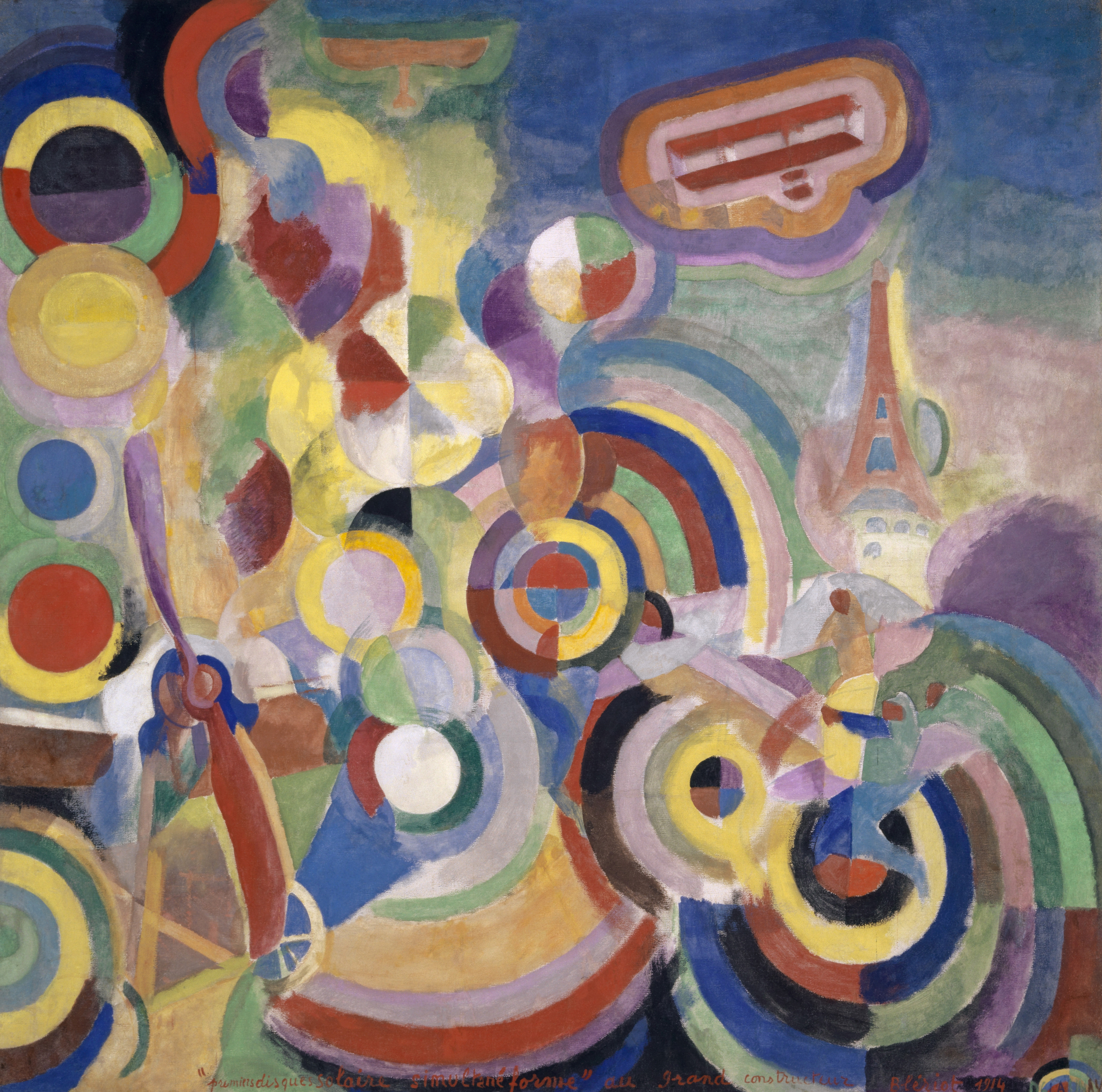
- A notable work attributed to Orphism is Hommage to Blériot[7].
- Orphism was influenced by Fauvism[8].
- Orphism was influenced by Paul Signac[9].
- Orphism was influenced by Michel Eugène Chevreul[10].
- Orphism was influenced by Charles Henry Lee[11].
- Orphism's instance of is recorded as art movement[12].
- Orphism's instance of is recorded as style of painting[13].
- Orpheus is named after Orphism[14].
- Le Bestiaire ou Cortège d'Orphée is named after Orphism[15].
- Orphism is part of cubism[16].
- Orphism's Commons category is recorded as Orphism[17].
- Orphism's said to be the same as is recorded as simultanism[18].
- Orphism's said to be the same as is recorded as Synchromism[19].
- 1912 marks the founding of Orphism[20].
- Orphism's topic's main category is recorded as Category:Orphism (art)[21].
- Orphism's different from is recorded as Orphism[22].
- Orphism's significant person is recorded as Robert Delaunay[23].
- Orphism's significant person is recorded as Stanton Macdonald-Wright[24].
- Orphism's significant person is recorded as Morgan Russell[25].
- Orphism's significant person is recorded as František Kupka[26].
Body
Definition and Type
Recorded instance of include art movement[12] and style of painting[13].
Origins
Things named after include Orpheus[14], a mythological Greek character[27] and Le Bestiaire ou Cortège d'Orphée[15], a literary work[28], written by Guillaume Apollinaire[29]. 1912 marks the founding of Orphism[20].
Use and Application
Orphism is part of cubism[16].
Movements and Schools
Acknowledged influences include Fauvism[8], an art movement[30], founded in 1904[31]; Paul Signac[9], a painter[32], 1863–1935[33], of France[34], awarded the Legion of Honour[35], specialised in painting[36]; Michel Eugène Chevreul[10], a chemist[37], 1786–1889[38], of France[39], awarded the Grand Cross of the Legion of Honour[40], specialised in organic chemistry[41]; and Charles Henry Lee[11], a librarian[42], 1859–1927[43], of France[44], specialised in history of mathematics[45].
Why It Matters
Orphism has Wikipedia articles in 22 language editions, a strong signal of global cultural recognition.[2] Orphism is known by 6 alternative names across languages and contexts.[46]
Orphism has been cited as an influence by Rayonism[47], an art movement[48].
FAQs
Who did Orphism influence?
Orphism has been cited as an influence by Rayonism[47].