
Orcus
dwarf planet in kuiper belt
Press Enter · cited answer in seconds
0 sources
Orcus
Summary
Orcus is a plutino[1]. Orcus has Wikipedia articles in 28 language editions, a strong signal of global cultural recognition.[2]
Key Facts
- Orcus is credited with the discovery of Michael E. Brown[3].
- Orcus is credited with the discovery of Chadwick Trujillo[4].
- Orcus is credited with the discovery of David L. Rabinowitz[5].
- Orcus's instance of is recorded as plutino[6].
- Orcus's instance of is recorded as dwarf planet[7].
- Orcus is named after Orcus[8].
- Orcus followed 90481 Wollstonecraft[9].
- Orcus was followed by (90483) 2004 DM4[10].
- Orcus's minor planet group is recorded as trans-Neptunian object[11].
- Orcus's minor planet group is recorded as plutino[12].
- Orcus's minor planet group is recorded as dwarf planet[13].
- Orcus's Commons category is recorded as 90482 Orcus[14].
- Orcus's parent astronomical body is recorded as Sun[15].
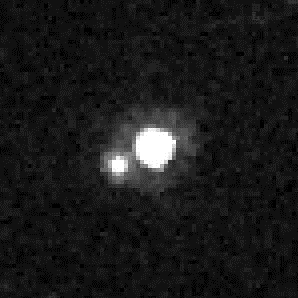
- Orcus's child astronomical body is recorded as Vanth[16].
- Orcus's Unicode character is recorded as 🝿[17].
- Orcus's provisional designation is recorded as 2004 DW[18].
- Orcus's time of discovery or invention is recorded as February 17, 2004[19].
- Orcus's significant event is recorded as naming[20].
- Orcus's topic's main category is recorded as Category:90482 Orcus[21].
- Orcus's orbital eccentricity is recorded as {'amount': '+0.22618'}[22].
- Orcus's apparent magnitude is recorded as {'amount': '+19.1'}[23].
- Orcus's absolute magnitude is recorded as {'amount': '+2.2'}[24].
- Orcus's absolute magnitude is recorded as {'amount': '+2.14'}[25].
- Orcus's color index is recorded as {'amount': '+0.68'}[26].
- Orcus's color index is recorded as {'amount': '+0.37'}[27].
Body
Definition and Type
Recorded instance of include plutino[6] and dwarf planet[7].
Origins
Orcus is named after Orcus[8].
Why It Matters
Orcus has Wikipedia articles in 28 language editions, a strong signal of global cultural recognition.[2] Orcus is known by 20 alternative names across languages and contexts.[28]