
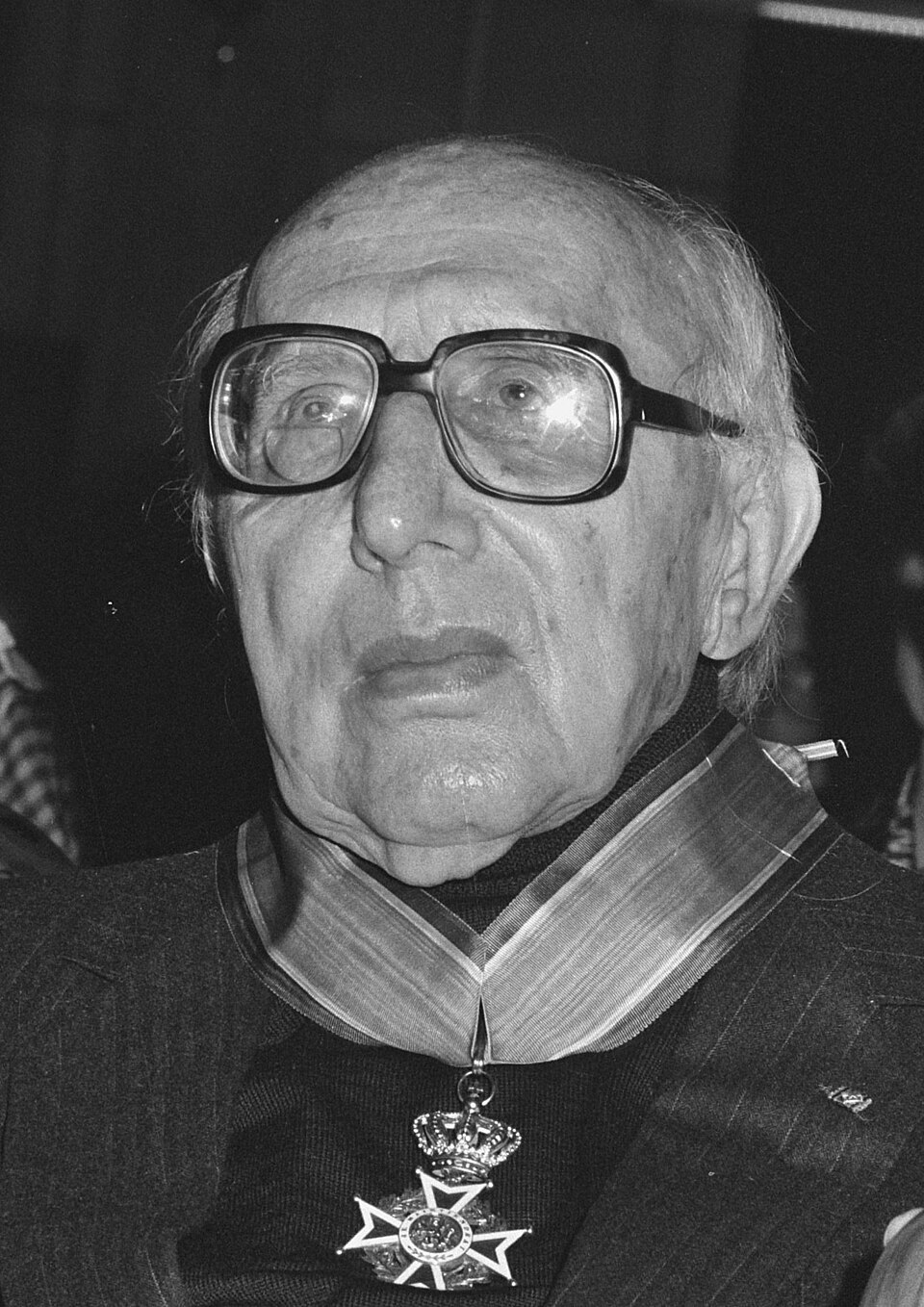
Norbert Elias
0 sources
Summary
Norbert Elias was born on June 22, 1897[1], in Wrocław[2]. He died on August 1, 1990[3], in Amsterdam[4]. He worked as a writer[5], sociologist[6], university teacher[7], philosopher[8], and musicologist[9]. He ranks in the top 0.72% of human entities by monthly Wikipedia readership (2,876 views/month, #7,188 of 1,000,298).[10]
Key Facts
- Place of burial: Westgaarde[11]
- Country of citizenship: United Kingdom[12], Germany[13]
- Occupation: poet[14], psychologist[15], philosopher of culture[16]
- Field of work: philosophy[17], sociology[18]
- Employer: Ruhr University Bochum[19], London School of Economics and Political Science[20], Bielefeld University[21], University of Leicester[22]
- Educated at: Heidelberg University[23], University of Wrocław[24], University of Freiburg[25]
- Doctoral advisor: Richard Hönigswald[26]
- Notable work: The Civilizing Process[27]
- Award received: Knight Commander's Cross of the Order of Merit of the Federal Republic of Germany[28], Commander of the Order of Orange-Nassau[29], Theodor W. Adorno Award[30], Commander's Cross of the Order of Merit of the Federal Republic of Germany[31], honorary doctor of the University of Strasbourg-II[32], International Nonino Prize[33]
- Member of: Blau-Weiss[34]
- Influenced by: Max Weber[35]
- Sex or gender: male[36]
- Commons category: Norbert Elias[37]
- Archives at: German Literature Archive Marbach[38]
- Academic degree: doctorate[39]
- Family name: Elias[40]
- Given name: Norbert[41]
- Topic's main category: Category:Norbert Elias[42]
- Work location: Leicester[43]
- Student of: Karl Mannheim[44]
- Languages spoken, written or signed: German[45], English[46], Dutch[47]
- Name in native language: Norbert Elias[48]
Why It Matters
Norbert Elias has Wikipedia articles in 25 language editions, a strong signal of global cultural recognition.[49] He is known by 22 alternative names across languages and contexts.[50]
He has been cited as an influence by Anthony Giddens, Baron Giddens[51], a politician[52], b. 1938[53], of United Kingdom[54], awarded the Princess of Asturias Award for Social Sciences[55], specialised in sociology[56]; Bernard Lahire[57], a sociologist[58], b. 1963[59], of France[60], awarded the Knight of the Legion of Honour[61], specialised in sociology[62]; Monique Pinçon-Charlot[63], a sociologist[64], b. 1946[65], of France[66], awarded the Knight of the Legion of Honour[67], specialised in bourgeoisie[68]; and Eric Wolf[69], an anthropologist[70], 1923–1999[71], of United States[72], awarded the Guggenheim Fellowship[73], specialised in history[74].
Works attributed to him include The Civilizing Process[75], a literary work[76].
FAQs
Where was Norbert Elias born?
Norbert Elias was born in Wrocław[2].
Where did Norbert Elias die?
Norbert Elias died in Amsterdam[4].
What did Norbert Elias do for work?
Norbert Elias worked as a writer[5], sociologist[6], university teacher[7], philosopher[8], and musicologist[9].
Where did Norbert Elias go to school?
Norbert Elias was educated at Heidelberg University[23], University of Wrocław[24], and University of Freiburg[25].
What awards did Norbert Elias receive?
Honors received include Knight Commander's Cross of the Order of Merit of the Federal Republic of Germany[28], Commander of the Order of Orange-Nassau[29], Theodor W. Adorno Award[30], and Commander's Cross of the Order of Merit of the Federal Republic of Germany[31].
Who did Norbert Elias influence?
Norbert Elias has been cited as an influence by Anthony Giddens, Baron Giddens[51], Bernard Lahire[57], Monique Pinçon-Charlot[63], and Eric Wolf[69].