
Nitobe Inazō
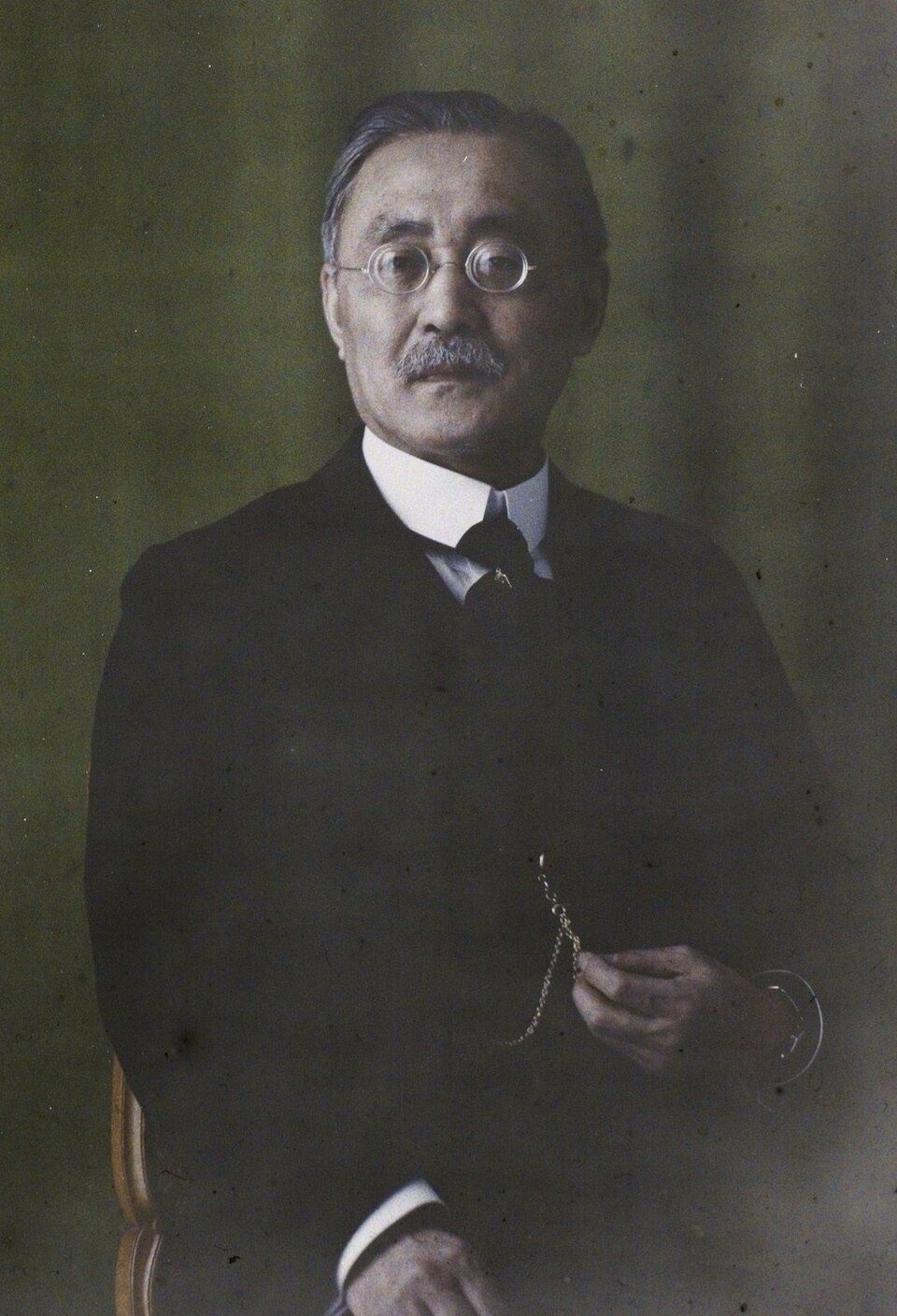
0 sources
Nitobe Inazō
Summary
Nitobe Inazō is a human[1]. His place of birth was Morioka[2]. He was born on September 1, 1862[3]. He died in Royal Jubilee Hospital[4]. He died on October 15, 1933[5]. He worked as a lexicographer[6], linguist[7], diplomat[8], writer[9], and Esperantist[10]. He ranks in the top 0.72% of human entities by monthly Wikipedia readership (3,058 views/month, #7,189 of 1,000,298).[11]
Key Facts
- Nitobe Inazō's place of birth was Morioka[2].
- Nitobe Inazō passed away in Royal Jubilee Hospital[4].
- Nitobe Inazō was born on September 1, 1862[3].
- Nitobe Inazō died on October 15, 1933[5].
- Nitobe Inazō is buried at Tama Cemetery[12].
- Nitobe Inazō's father was Nitobe Jūjirō[13].
- Among Nitobe Inazō's spouses was Mary Patterson Elkinton Nitobe[14].
- Nitobe Inazō held citizenship in Japan[15].
- Nitobe Inazō worked as a lexicographer[6].
- Nitobe Inazō worked as a linguist[7].
- Nitobe Inazō's professions included diplomat[8].
- Nitobe Inazō worked as a writer[9].
- Nitobe Inazō's professions included Esperantist[10].
- Nitobe Inazō's professions included economist[16].
- Nitobe Inazō's field of work was philosophy[17].
- Nitobe Inazō's field of work was ethics[18].
- Nitobe Inazō's field of work was bushido[19].
- Nitobe Inazō held the position of member of the House of Peers[20].
- Nitobe Inazō was employed by Tokyo Imperial University[21].
- Nitobe Inazō was employed by Kyoto Imperial University[22].
- Among Nitobe Inazō's employers was Takushoku University[23].
- Nitobe Inazō was employed by Tokyo Woman's Christian University[24].
- Nitobe Inazō was employed by Tokyo Bunka Junior College[25].
- Among Nitobe Inazō's employers was Sapporo Agricultural College[26].
- Nitobe Inazō was educated at Tokyo English School[27].
Body
Origins and Family
Nitobe Inazō was born in Morioka[2]. He was born on September 1, 1862[3]. His father was Nitobe Jūjirō[13].
Education
Educated at Tokyo English School[27]; Sapporo Agricultural College[28], a college[29], in Japan[30]; and Martin Luther University Halle-Wittenberg[31], a public university[32], in Germany[33], founded in 1502[34], headquartered in Halle (Saale)[35].
Career and Affiliations
Recorded occupations include lexicographer[6], linguist[7], diplomat[8], writer[9], Esperantist[10], and economist[16]. Fields of work include philosophy[17], an academic discipline[36]; ethics[18], a branch of philosophy[37]; and bushido[19], an honor system[38], in Japan[39]. Employers include Tokyo Imperial University[21], an Imperial universities of Japan[40], in Empire of Japan[41], founded in 1897[42]; Kyoto Imperial University[22], an Imperial universities of Japan[43], in Empire of Japan[44], founded in 1897[45]; Takushoku University[23], a private university[46], in Japan[47], founded in 1900[48]; Tokyo Woman's Christian University[24], a university[49], in Japan[50], founded in 1918[51], headquartered in Suginami[52]; Tokyo Bunka Junior College[25], a college[53], in Japan[54], founded in 1927[55]; and Sapporo Agricultural College[26], a college[56], in Japan[57]. Nitobe Inazō held the position of member of the House of Peers[20]. A notable student of him was Iwanaga Yūkichi[58].
Works and Contributions
A notable work attributed to Nitobe Inazō is Bushido: The Soul of Japan[59]. Things named for him include Nitobe Memorial Garden[60], a Japanese gardens outside Japan[61], in Canada[62].
Recognition
Nitobe Inazō received the Order of the Sacred Treasure, 1st Class[63].
Personal Life
Among Nitobe Inazō's spouses was Mary Patterson Elkinton Nitobe[14].
Death and Burial
Nitobe Inazō died on October 15, 1933[5]. He died in Royal Jubilee Hospital[4]. The cause of death was pancreatitis[64]. He is buried at Tama Cemetery[12].
Why It Matters
Nitobe Inazō ranks in the top 0.72% of human entities by monthly Wikipedia readership (3,058 views/month, #7,189 of 1,000,298).[11] He has Wikipedia articles in 18 language editions, a strong signal of global cultural recognition.[65] He is known by 46 alternative names across languages and contexts.[66]
Works attributed to him include Bushido: The Soul of Japan[67], a written work[68]. Entities named for him include Nitobe Memorial Garden[60], a Japanese gardens outside Japan[61], in Canada[62].
FAQs
Where was Nitobe Inazō born?
Nitobe Inazō was born in Morioka[2].
Where did Nitobe Inazō die?
Nitobe Inazō died in Royal Jubilee Hospital[4].
Who were Nitobe Inazō's parents?
Nitobe Inazō's father was Nitobe Jūjirō[13].
Who was Nitobe Inazō married to?
Nitobe Inazō's spouses include Mary Patterson Elkinton Nitobe[14].
What did Nitobe Inazō do for work?
Nitobe Inazō worked as lexicographer[6], linguist[7], diplomat[8], writer[9], and Esperantist[10].
Where did Nitobe Inazō go to school?
Nitobe Inazō was educated at Tokyo English School[27], Sapporo Agricultural College[28], and Martin Luther University Halle-Wittenberg[31].
What awards did Nitobe Inazō receive?
Honors received include Order of the Sacred Treasure, 1st Class[63].