
Mykola Lysenko
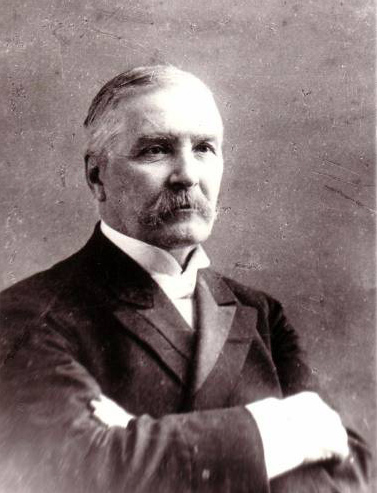
0 sources
Mykola Lysenko
Summary
Mykola Lysenko is a human[1]. His place of birth was Hrynky[2]. He was born on March 10, 1842[3]. He died in Kyiv[4]. He died on November 6, 1912[5]. He worked as a conductor[6], classical composer[7], pianist[8], music educator[9], and ethnomusicologist[10]. He ranks in the top 0.72% of human entities by monthly Wikipedia readership (207 views/month, #7,247 of 1,000,298).[11]
Key Facts
- Born in Hrynky[2], Mykola Lysenko…
- Mykola Lysenko passed away in Kyiv[4].
- Mykola Lysenko was born on March 10, 1842[3].
- Mykola Lysenko was born on 1842[12].
- Mykola Lysenko died on November 6, 1912[5].
- Mykola Lysenko died on 1912[13].
- Mykola Lysenko is buried at Baikove Cemetery[14].
- Mykola Lysenko's father was Lysenko Vitaly[15].
- Among Mykola Lysenko's spouses was Olha Antonivna Lypska[16].
- Mykola Lysenko was married to Olga O'Connor[17].
- A child of Mykola Lysenko was Ostap Lysenko[18].
- A child of Mykola Lysenko was Katerîna Masleannîkova[19].
- A child of Mykola Lysenko was Mariana Lîsenko[20].
- A child of Mykola Lysenko was Halyna Lysenko-Shylo[21].
- Mykola Lysenko held citizenship in Russian Empire[22].
- Mykola Lysenko's professions included conductor[6].
- Mykola Lysenko's professions included classical composer[7].
- Mykola Lysenko's professions included pianist[8].
- Mykola Lysenko worked as a music educator[9].
- Mykola Lysenko's professions included ethnomusicologist[10].
- Mykola Lysenko worked as a composer[23].
- Mykola Lysenko's field of work was music composing[24].
- Mykola Lysenko's field of work was conducting[25].
- Mykola Lysenko's field of work was music[26].
- Mykola Lysenko's field of work was composed musical work[27].
Body
Origins and Family
Mykola Lysenko was born in Hrynky[2]. Recorded date of birth include March 10, 1842[3] and 1842[12]. His father was Lysenko Vitaly[15].
Education
Educated at University of Music and Theatre Leipzig[28], a public university[29], in Germany[30], founded in 1843[31]; Taras Shevchenko National University of Kyiv[32], a public university[33], in Russian Empire[34], founded in 1834[35]; and National University of Kharkiv[36], a university[37], in Russian Empire[38], founded in 1805[39], headquartered in Freedom Square[40]. Studied under Carl Reinecke[41], Ernst Heinrich Leopold Richter[42], Nikolai Rimsky-Korsakov[43], and Alois Panoccini[44].
Career and Affiliations
Recorded occupations include conductor[6], classical composer[7], pianist[8], music educator[9], ethnomusicologist[10], and composer[23]. Fields of work include music composing[24], a type of arts[45]; conducting[25], an activity[46]; music[26], a type of arts[47]; composed musical work[27], a type of work of art[48]; and music composition[49], an academic discipline[50]. Employers include National University of Kharkiv[51], a university[52], in Russian Empire[53], founded in 1805[54], headquartered in Freedom Square[55] and Lysenko Music and Drama School[56], an educational institution[57], in Russian Empire[58], founded in 1899[59]. A notable student of Mykola Lysenko was Alexandra Mandelstam[60].
Works and Contributions
Notable works include Prayer for Ukraine[61], a musical work/composition[62], in Ukraine[63], founded in 1885[64]; Taras Bulba[65]; Natalka Poltavka[66]; Nocturne[67]; and Koza-Dereza[68]. Things named for Mykola Lysenko include Kharkiv National Academic Opera and Ballet Theatre M. V. Lysenka[69], an opera house[70], in Ukraine[71], founded in 1925[72]; Kyiv Secondary Specialized Music Boarding School named after him[73], a music school[74], in Ukraine[75], founded in 1934[76]; he House-Museum[77], a historic house museum[78], in Ukraine[79], founded in 1980[80]; and Lysenko Award[81], an award[82], in Soviet Union[83], founded in 1982[84].
Personal Life
Spouses include Olha Antonivna Lypska[16], a pianist[85], 1860–1900[86] and Olga O'Connor[17], a singer[87], 1854–1930[88]. Children include Ostap Lysenko[18], a musicologist[89], 1885–1968[90]; Katerîna Masleannîkova[19], 1880–1948[91]; Mariana Lîsenko[20], a pianist[92], 1887–1946[93]; and Halyna Lysenko-Shylo[21], a music educator[94], 1883–1965[95], of Russian Empire[96].
Death and Burial
Recorded date of death include November 6, 1912[5] and 1912[13]. Mykola Lysenko passed away in Kyiv[4]. Burial took place at Baikove Cemetery[14].
Why It Matters
Mykola Lysenko ranks in the top 0.72% of human entities by monthly Wikipedia readership (207 views/month, #7,247 of 1,000,298).[11] He has Wikipedia articles in 24 language editions, a strong signal of global cultural recognition.[97] He is known by 42 alternative names across languages and contexts.[98]
He has been cited as an influence by Larysa Moro-Borushenko[99], a pianist[100], b. 1944[101], of Brazil[102].
Entities named for him include Kharkiv National Academic Opera and Ballet Theatre M. V. Lysenka[69], an opera house[70], in Ukraine[71], founded in 1925[72]; Kyiv Secondary Specialized Music Boarding School named after him[73], a music school[74], in Ukraine[75], founded in 1934[76]; he House-Museum[77], a historic house museum[78], in Ukraine[79], founded in 1980[80]; and Lysenko Award[81], an award[82], in Soviet Union[83], founded in 1982[84].
FAQs
Where was Mykola Lysenko born?
Mykola Lysenko was born in Hrynky[2].
Where did Mykola Lysenko die?
Mykola Lysenko died in Kyiv[4].
Who were Mykola Lysenko's parents?
Mykola Lysenko's father was Lysenko Vitaly[15].
Who was Mykola Lysenko married to?
Mykola Lysenko's spouses include Olha Antonivna Lypska[16] and Olga O'Connor[17].
What did Mykola Lysenko do for work?
Mykola Lysenko worked as conductor[6], classical composer[7], pianist[8], music educator[9], and ethnomusicologist[10].
Where did Mykola Lysenko go to school?
Mykola Lysenko was educated at University of Music and Theatre Leipzig[28], Taras Shevchenko National University of Kyiv[32], and National University of Kharkiv[36].
Who did Mykola Lysenko influence?
Mykola Lysenko has been cited as an influence by Larysa Moro-Borushenko[99].